How Organized Retail Crime is Threatening the Retail Industry
 Organized
Retail Crime (ORC), the coordinated theft of merchandise for resale,
has grown exponentially in the U.S., necessitating increased
security measures and even causing store closures. The issue is
projected to escalate, demanding modern, tactical security solutions
that allow retailers and law enforcement to combat ORC while
maintaining a pleasant shopping environment. Organized
Retail Crime (ORC), the coordinated theft of merchandise for resale,
has grown exponentially in the U.S., necessitating increased
security measures and even causing store closures. The issue is
projected to escalate, demanding modern, tactical security solutions
that allow retailers and law enforcement to combat ORC while
maintaining a pleasant shopping environment.
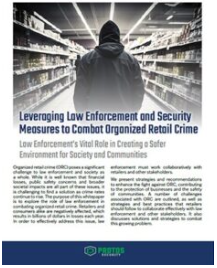
Cloud video security is a powerful tool in fighting ORC.
OpenEye's comprehensive
guide delves into the current methods for defining and measuring
ORC's impact on businesses and the economy. It explores effective
security strategies for mitigating inventory loss and enhancing the
shopping experience. The guide also highlights the advantages of
cloud video surveillance in tackling ORC, and how the integration of
other security systems can provide a more robust solution for
retailers.
Learn more
The U.S. Crime Surge
The Retail Impact
How San Francisco's Real Time
Investigation Center is Fighting Retail Theft
Rare look into SFPD hi-tech unit cracking down on crimes
A special unit in the San Francisco Police Department gave KTVU a rare
look on Wednesday into how they're now cracking down on crimes,
including retail theft.
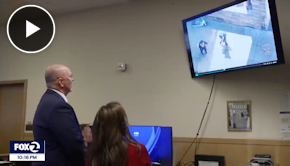 With
the help of technology, police recently caught thieves red-handed soon
after they robbed a high-end designer store in Union Square.
Investigators shared footage from a drone, surveillance camera and
officers' body cameras. With
the help of technology, police recently caught thieves red-handed soon
after they robbed a high-end designer store in Union Square.
Investigators shared footage from a drone, surveillance camera and
officers' body cameras.
They showed how the Real Time Investigation Center, launched about a
year ago, helped identify and arrest suspects in a retail theft last
Friday. Investigators said technology enabled them to nab the thieves
quickly.
Investigators with the Real Time Investigation Center said they were
able to retrieve the footage quickly after the theft was called into
dispatch. A drone was immediately launched from a stationery site to
track two of the 3 suspects.
Within minutes of the theft, police arrested
the two suspects and were able to recover most of the stolen goods.
Police said the swiftness of the arrests after the crime is critical to
prosecution.
"In this case, when you're able to solve something within the first 5
minutes, recover all the property, your case is that much stronger,"
said Maguire.
Police said the use of technology assisted in 500 felony arrests last
year. And just in the past week, it has helped in 32 felony arrests.
"I think it's working and doing exactly what we want it to do,"
said Lauren Ellis, owner of CK Contemporary, an art gallery at Union
Square. She supports the use of technology to prevent and solve crimes.
ktvu.com
Big Brother-Style LP?
Tesco introduces ‘big brother’ style self-service checkouts to stores
Tesco has become the latest supermarket to install cameras on
self-service checkouts, with one major difference, you can watch
yourself back. The new VAR-style tills record
shoppers as they scan their items, then playback video clips where
you’ve failed to scan an item properly.
Any shoppers trying to sneak past products or even a 25p bag at the
tills will receive a warning, stating: ‘It looks like that last item
didn’t scan. Please check you scanned it correctly before continuing.’
Tesco has not confirmed when the feature was added to the tills, but it
joins a number of supermarkets cracking down on shoplifters,
including Sainsbury’s, who introduced the technology to its stores
earlier this month.
Supermarket bosses believe thieves who can see
their illegal actions have been caught are far more likely to pay for
them, but customers haven’t taken to them so easily.
Tesco confirmed to Metro that the technology has been introduced, but
not across all of its stores. They did not confirm when the feature
was introduced, or how many shops it has been rolled out in so far.
After Sainsbury’s introduced the self-service checkout change, one
disgruntled shopper took to social media, declaring the move ‘more
big brother tactics with more surveillance’.
Others called for a boycott and urged supermarkets to lower the
price of their products.
metro.co.uk
Why Meat Theft is on the Rise - And
How Retailers Are Fighting Back
Organized retail crime rings have identified
meat as a lucrative item for theft
People Are Stealing Meat - And Grocery Chains Are Quietly Adjusting for
It
In recent years, a surprising trend has emerged in the retail world: the
rise of meat theft. Once considered an unlikely target, meat products
have become hot commodities for thieves, leading grocery chains to
quietly adjust their operations. From increased security measures to
changes in store policies, the impact of meat theft is reshaping the
shopping experience. Let’s explore the reasons behind this trend and how
retailers are responding.
How Grocers Are Navigating Increased Meat Theft
& More
1. The Rising Value of Meat Products
Meat has always been a staple in many households, but its value has
surged due to various factors. Inflation, supply chain disruptions, and
increased demand have all contributed to higher meat prices. This rise
in cost makes meat an attractive target for thieves seeking high-value
items. Unlike electronics or luxury goods, meat is perishable, making
it easier to resell quickly without detection. The combination of
high value and ease of resale has made meat a prime target in retail
theft.
2. Organized Retail Crime and Meat Theft
Organized retail crime rings have identified meat as a lucrative item
for theft. These groups often operate with precision, targeting
specific products and reselling them through illicit channels. The
perishable nature of meat requires swift operations, but the high demand
ensures quick turnover. Law enforcement agencies have noted an uptick in
such activities, linking them to broader criminal enterprises. The
involvement of organized crime elevates the seriousness of meat theft
beyond petty shoplifting.
3. Retailers Implementing Enhanced Security
Measures
In response to the surge in meat theft, grocery stores are adopting
various security measures. Some retailers have started locking up
high-value meat products or placing them in tamper-proof packaging.
Others are installing surveillance cameras and employing security
personnel to monitor vulnerable sections. These measures aim to
deter theft but can also impact the shopping experience for regular
customers. Balancing security and customer convenience remains a
challenge for retailers.
4. Impact on Consumers and Store Policies
|
Navigating the New Retail Landscape:
inkl.com
Canadian Police, Businesses & Security
Orgs Crack Down on ORC
Surge in organized retail crime prompts coordinated response from
Calgary police
In response to an uptick in theft and robbery from businesses, the
Calgary Police Service is joining forces with the Retail Council of
Canada, businesses and security organizations to clamp down on retail
crime.
The new approach comes after retail theft surpassed $9 billion
nationwide in 2024, according to CPS, with organized groups
increasingly targeting high-value goods for resale.
That recent rise in theft has led to increased security costs for
businesses, declining sales and growing concern among frontline
retail workers, CPS said in a Friday news release.
“Retail crime may seem like a victimless offence, but it has real
consequences for our community,” said Insp. Travis Juska with CPS. “It
affects business owners, employees and our city’s overall sense of
safety.”
CPS has already received approximately 400 calls for service from
retail stores this year, the release stated. Of those calls, 142
were in response to theft, while five related to robbery. In addition,
CPS has received 3,273 reports through the department’s online reporting
system.
As part of its new collaborative approach with the retail council and
security organizations, CPS is sharing intelligence on known
offenders and theft patterns; introducing a direct reporting channel
between police and security teams; and promoting crime prevention
tactics and training to retail businesses.
ca.news.yahoo.com
RELATED: Retail crime bust a part of
escalating, troubling trend, police say
Five years after George Floyd protests, police reform slows amid Bay
Area political shifts
‘Two steps forward, three steps back’:
Spirit of movement has endured, but the broader zeal for reforms has
been tempered by new political climate on public safety
Inside the violent Bay Area gang that got rich through street robberies
&uuid=(email))
Burnout Hitting Retail Workers Hard
Survey: 82% of retail employees feel 'regularly overwhelmed' at work
Retail workers say that understaffing and poor schedule management is
having an impact on their productivity.
That’s according to the 2025 Logile Labor Planning & Optimization Report
from AI-powered workforce solutions firm Logile, which found that
80% of retail workers say unpredictable
schedules and short-staffing add stress to their jobs, with 82% feeling
regularly overwhelmed at work. More than three-quarters (77%)
of retail workers say their store regularly loses sales due to poor
scheduling or staffing decisions.
More than half (51%) of retail workers said their store is
short-staffed during busy periods most of the time, with 25% saying
this happens almost every time their store gets busy. Nearly a third
(31%) of frontline workers are actively considering quitting due to poor
scheduling or lack of hours, with another 22% saying they’re close
to that point if conditions don’t improve.
Seventy-four percent of frontline associates say they’re open to
automated, traffic-based scheduling tools, but adoption hinges on trust.
Those surveyed said that systems must consistently deliver accurate,
fair schedules that earn buy-in over time.
“There’s a clear disconnect between plan and practice. Retailers
have made meaningful strides in prioritizing workforce initiatives, but
our research shows that many are still missing the opportunity to fully
connect their planning efforts with store-level reality,” said Purna
Mishra, founder and CEO of Logile. “By integrating real-time demand data
and modeling store-specific labor needs more accurately, retailers can
close the loop between planning and execution — improving service,
supporting staff and strengthening the bottom line.”
chainstoreage.com
Will Retailer's 'Eat the Tariffs'?
They Say No
Retailers won’t swallow Trump’s ‘eat the tariffs’ demand for much longer
before hiking prices
 The
retail industry is alerting President Trump that they can’t “eat” his
tariffs forever – and price increases are
likely to hit in the coming weeks, On The Money has learned. The
retail industry is alerting President Trump that they can’t “eat” his
tariffs forever – and price increases are
likely to hit in the coming weeks, On The Money has learned.
Whether this gets translated into higher official inflation numbers is
anyone’s guess at this point. But for many items enjoyed by Americans
who like cheap goods brought in from abroad – a majority of them from
China – these things will soon be getting a lot less cheap.
The warning to the president came weeks before his now-famous remarks
over Walmart’s announced plans to pass through tariff costs to
consumers, where in his own understated way, Trump shouted on social
media that the discount retailer should “EAT THE TARIFFS.”
Walmart was the first out of the gate about its need to raise prices.
However, Home Depot on Tuesday said it will continue to eat tariffs,
though sources in the retail industry doubt that will last forever
given the tight margins most retailers operate under.
When the price increases begin to spread, that could set up an
interesting catfight between the president and a huge chunk of the
business community.
The president believes Walmart, like many other big US companies, is
a highly profitable company and they should all do a solid for the
American people as corporate America adjusts to his new trade policy
that slaps a 10% levy on every country, plus additional taxes on certain
goods – and significantly higher tariffs on unscrupulous trading
partners like China.
nypost.com
RELATED: Retail’s latest tariff challenge?
Setting prices.
Apple Hit with Tariff Threat
Trump’s threat of 25% tariff on iPhones makes price hikes more likely
Apple is expected to unveil four new iPhone models in a matter of
months — and they might cost more than you expect. On Friday
morning, President Donald Trump threatened to impose a significant new
tariff on iPhones, seemingly in hopes of forcing the company to produce
its most lucrative product line domestically.
“I have long ago informed Tim Cook of Apple that I expect their iPhone’s
that will be sold in the United States of America will be manufactured
and built in the United States, not India, or anyplace else,” Trump said
in a post on Truth Social. “If that is not the case, a Tariff of at
least 25% must be paid by Apple to the U.S. Thank your [sic] for
your attention to this matter!”
Most consumers buying an iPhone around the world wind up with a
device produced in China, but Apple CEO Tim Cook said in early May
that the majority of new iPhones arriving in the United States would
come from assembly facilities in India.
Currently, Apple builds none of its iPhone models in the United States.
Even if it wanted to, the process of developing a domestic production
pipeline would be staggeringly expensive and would take years — the
first American-made iPhones probably wouldn’t ship until after Trump
leaves office, said Gerrit Schneemann, a senior analyst at Counterpoint
Research.
washingtonpost.com
Trader Joe’s, Patagonia take top spots in corporate reputation rankings
Retail Giants Expand Fuel Stations Amid Electric Vehicle Shift
Walmart Canada hiking pay of hourly and salaried employees
Last week's #1 article --
Grocery Stores Transform LP to Fight
Theft
Eyes wide open: How AI & vision tech are transforming loss prevention in
grocery
As theft rises along the grocery
aisles, retailers turn to emerging technology to mitigate losses—and pad
notoriously tight margins.
Grocery theft today is evolving into something more organized and
frequent. According to the National Retail Federation, retailers
across the board, including grocers, witnessed a 93% increase in annual
shoplifting incidents between 2019 and 2023. For an industry where
profitability balances on an impossibly thin profit margin, theft has
become a serious problem.
Employee vigilance still matters. But thanks to artificial
intelligence (AI), grocers finally have access to technologies that
place eyes everywhere—and understand whether the shopper in aisle 12
slipped the package of lobster meat in his overcoat, rather than putting
it back in the freezer.
“AI is giving grocers new vision—literally and strategically,”
says Donnafay MacDonald, research director at Info-Tech Research Group.
“I sat on a call with a vendor and they said, 'Watch this video and try
to detect who is stealing.' Nobody could detect it. But AI could.”
Grocery retailers are just now beginning to explore these technologies,
and incorporate them into their stores, from receiving decks to meat
counters to checkout zones and front doors. The digital eyes don’t
just watch and record: They analyze behavior and alert humans to theft
as it takes place in real time, and can identify people whose behavior
suggests strong potential for shoplifting.
Theft-mitigation strategies through AI include the ability to
identify repeat offenders when they walk through the front doors,
notify employees and watch potential thieves as they navigate the
aisles. The systems, too, help retailers understand what is being stolen
most often, and when.
newhope.com

|
|
America Leads the World on Retail
Cybersecurity
Interview with Georgina Macenzi: Why the USA Leads Retail Cybersecurity
Jim Taylor (JT): Georgina, you have
extensive experience working with Carrefour and Auchan. From your
perspective, how does the cybersecurity readiness of US supermarkets
compare to that of European retailers, especially in the UK?
Georgina Macenzi (GM): Without
doubt, the US is ahead in cybersecurity when it comes to retail.
American supermarkets like Walmart have made enormous investments in
building sophisticated defence systems. The scale and complexity of
their cybersecurity infrastructure are far greater than what we
typically see in Europe, where many retailers are still playing
catch-up.
JT: What makes Walmart stand out as a leader
in this field?
GM: Walmart’s approach is
comprehensive—they use AI-driven threat detection, real-time monitoring,
and a Zero Trust security model. This means no one, not even internal
employees, can move freely across their network without strict
verification. Plus, their dedicated Cyber Fusion Centre centralises all
security operations. The investment is huge, but it’s necessary when you
consider the volume of customer data they handle daily.
JT: Customer data protection has become a
central concern for supermarkets. How are US retailers managing this
aspect?
GM: Protecting customer data,
especially payment information, is paramount. US retailers have adopted
tokenisation and encryption techniques so actual card details are never
stored or transmitted in an unprotected form. Multi-factor
authentication and behavioural analytics further prevent fraud. It’s
about creating multiple layers of defence to protect not just the
company, but the consumer as well.
JT: How do European supermarkets, and
specifically those in the UK, measure up in protecting sensitive
customer data?
GM: UK supermarkets are making
progress—Tesco and Sainsbury’s have started implementing multi-factor
authentication and better encryption—but the overall cybersecurity
culture is still developing. There’s often a reliance on external
vendors rather than building strong in-house teams, which can limit
response times and adaptability. The regulatory focus on GDPR compliance
helps, but it’s mostly about data handling, not the proactive threat
detection we see in the US.
JT: What lessons should UK and European
retailers take from the US experience?
internationalsupermarketnews.com
'NRF Retail Cybersecurity Leadership
Award'
NRF to Recognize Leaders in Loss Prevention, Asset Protection and
Cybersecurity
Diane Brown, Vice President of IT
Risk Management at Ulta Beauty to receive NRF Retail Cybersecurity
Leadership Award
 The
NRF Retail Cybersecurity Leadership Award recognizes an individual’s
cumulative contributions to advancing the state of cybersecurity within
the retail industry. The 2025 recipient is: The
NRF Retail Cybersecurity Leadership Award recognizes an individual’s
cumulative contributions to advancing the state of cybersecurity within
the retail industry. The 2025 recipient is:
Diane Brown, Vice President of IT Risk Management at Ulta Beauty.
Brown joined the company in 2008 and has led Ulta Beauty’s efforts to
develop and expand its information security team. She has been a member
of the NRF IT Security Council since its founding in 2014 and has served
as chair since 2022. She also currently serves as a member of the Board
of Directors of the Retail and Hospitality ISAC (RH-ISAC).
“Diane Brown has demonstrated a deep understanding of the cybersecurity
challenges retailers face, and her invaluable expertise has served to
educate colleagues and peers on the importance of retail security,” said
Christian Beckner, NRF Vice President of Retail Technology and
Cybersecurity and Executive Director, Center for Digital Risk &
Innovation. “Her contributions to the field will leave a lasting impact
and will serve as an inspiration for future retail cybersecurity
leaders.”
As the leading authority and voice for the retail industry, NRF will
present these awards with retail security executives and leaders from
across the country at NRF PROTECT, June 23-25 at the Gaylord Texan
Resort in Grapevine, Texas.
nrf.com
Retail Facing Cyber Attack Spree
Fashion under fire: How can retail fend off cyber attacks?
A recent spate of attacks has
underlined the potential consequences for fashion retail. Experts weigh
in on the best defences.
The potential cost of cyber attacks on a fashion retail business was
laid bare this week. On Wednesday, British company Marks & Spencer
(M&S) revealed that a recent ransomware incident, which forced it to
temporarily suspend online trading, would cost it an estimated £300
million in the 2025/26 financial year.
“Over the last few weeks, we have been managing a highly
sophisticated and targeted cyber attack, which has led to a limited
period of disruption. We have tackled this head-on with incredible
spirit, teamwork and a deep sense of responsibility as we prioritised
serving our customers,” said M&S chief executive Stuart Machin in a
statement on Wednesday. The company said it expects the online
disruption to continue throughout June and into July. A statement on its
website discloses that some personal customer data has been taken, but
there is “no evidence that this data has been shared and it does not
include usable card or payment details, or account passwords”.
voguebusiness.com
NIST proposes new metric to gauge exploited vulnerabilities
|
|
How AI is Impacting Amazon Workers
Amazon coders say they’ve had to work harder, faster by using AI
Software engineers at Amazon say artificial intelligence is transforming
their work — not by replacing them, but by pressuring them to code faster, meet
higher output targets and rely more heavily on tools they don’t fully
control, according to a report.
The shift has sparked growing concerns that AI is turning once-thoughtful
work into an assembly line job, with some employees comparing it to the
automation wave that reshaped Amazon’s warehouses.
“My team is roughly half the size it was last year,”
one Amazon engineer told the New York Times, adding, “but we’re expected to
produce the same amount of code thanks to AI.” Engineers who spoke to the Times
describe a culture where AI adoption is technically optional, but failing to use
it risks falling behind.
Code that once took weeks to develop must now be delivered in days,
according to the Times. Feedback sessions are cut short. And developers are
being pushed to let AI not just suggest lines of code but write entire programs,
the Times reported.
“It’s more fun to write code than to read code,” said longtime programmer and
blogger Simon Willison. “When you’re working with these tools, [code review] is
most of the job.”
Amazon has defended the changes.
In a recent letter to shareholders, CEO Andy Jassy called generative AI a
tool for “productivity and cost avoidance,” especially in coding. “If we
don’t get our customers what they want as quickly as possible, our competitors
will,” he wrote.
nypost.com
Lawsuits Triggers Amazon Refunds
Amazon refunding some customers for purchases, some as far back as 2018
Amazon is refunding a 'very small subset' of
consumers for returns from past years. The decision comes amid a class-action
lawsuit filed over the issue. A judge declined to dismiss it last month.
Amazon is issuing refunds to a small collection of U.S. customers who had
issues with returns in the past. One customer's return dated back to 2018.
“Following a recent internal review, we identified a very small subset of
returns where we issued a refund without the payment completing, or where we
could not verify that the correct item had been sent back to us so no refund was
issued," Amazon spokesperson Maxine Tagay said in a statement sent to USA TODAY.
"There is no action required from customers to receive the refunds, and
we have fixed the payment issue and made process changes to more promptly
contact customers about unresolved returns going forward.”
Amazon hasn't detailed how many customers are getting refunds or the
total amount of the refunds.
delawareonline.com
Why Consumers Want Both an Amazon Prime and Walmart+ Membership |
&uuid=(email))



&uuid=(email))
&uuid=(email))
&uuid=(email))
&uuid=(email))
&uuid=(email))
&uuid=(email))
&uuid=(email))
&uuid=(email))

&uuid=(email))

&uuid=(email))
&uuid=(email))
&uuid=(email))
&uuid=(email))
&uuid=(email))
&uuid=(email))
&uuid=(email))
&uuid=(email))
&uuid=(email))
&uuid=(email))
&uuid=(email))
&uuid=(email))
&uuid=(email))
&uuid=(email))
&uuid=(email))
&uuid=(email))










&uuid=(email))




&uuid=(email))


&uuid=(email))
&uuid=(email))
&uuid=(email))

&uuid=(email))
&uuid=(email))
&uuid=(email))
&uuid=(email))
&uuid=(email))

&uuid=(email))