|
|




 |
|
|
 |
|
 |
John B.
Moore promoted to Sr. Manager Fraud Investigations for Macy's
|
|
See All the LP Executives 'Moving Up' Here | Submit
Your New Corporate Hires/Promotions or New Position |
|
 |
|
|
 
|
 |
|
Every condition that spikes theft shows up in the same six weeks
By Charisse Jacques, President, SAFR
 IHL
Group and Sensormatic asked retailers a simple question for their
2026 Beyond Shrink study. Under what conditions does your shrink go
up? The answers read like a holiday operating plan. Major
promotions and holiday shopping, 92%. High customer traffic, 91%.
Crowd surges, 89%. Extended store hours, 87%. Low staffing, 83%.
Every one of those lands between now and New Year’s. And they don’t
take turns. They stack up on the same weekends, in the same stores,
with the same worn-out teams.
Earlier in the year the numbers looked better. NRF and LPRC’s spring
survey found shoplifting incidents down 12.4%, and most retailers
credited their own investments in training, technology and security.
By fall the picture had flipped, with IHL finding 69% of retailers
reporting more shoplifting and 72% reporting more violence in their
stores.
Who walks through the gap
Half of retailers told NRF that repeat offenders increased last
year. On the Beyond Shrink release webinar, IHL’s Greg Buzek gave
the number I can’t shake: an honest customer visits one or two of
a chain’s stores a month, and a dishonest one visits six to eight.
Know when a repeat offender walks in
This is where face matching belongs on the holiday plan. We built
SAFR Guard to do one job at the front door. It matches faces
on the camera against a short list of people the retailer has
reviewed and approved for enrollment, typically known repeat
offenders. And it does this matching at up to 12 faces per second.
When someone on that list walks in, the right people get an alert.
Nobody has to sit in front of a monitor, and nobody has to remember
a face from a watchlist they glanced at in October.
For retailers who can act fast, it’s not too late to protect
high-shrink stores this holiday season. For everyone else with
limited resources, build your business case based on your repeat
losses this holiday season, and take action as the new year starts.
Click here to read the full article
The U.S. Crime Surge
The Retail Impact
Push to Pass Retail Crime Bill
Congress Should Pass CORCA Before Year End
When criminal networks steal
merchandise from trains, trucks, warehouses, and retailers, the damage
extends far beyond the companies whose names appear on the shipping
containers.
 Congress
has an opportunity to address that problem before the year ends. The
Combating Organized Retail Crime Act of 2025, known as CORCA, would
improve coordination against organized theft and strengthen tools for
pursuing the people who profit from it. The House passed the
legislation in May by a vote of 348–60. The Senate should build on that
bipartisan agreement and move it forward.
The economics are straightforward. Stolen goods must be replaced.
Damaged equipment must be repaired. Businesses spend more protecting
shipments and recovering from disruptions. Those expenses compete with
money that could otherwise support investment, wages, or lower prices.
Some costs are absorbed by businesses; others can reach customers.
Smaller firms, with fewer resources to manage a major loss or delayed
shipment, can be especially vulnerable.
The Association of American Railroads reports preliminary figures
showing more than 75,000 rail cargo theft incidents and over $200
million in losses during 2025. Those numbers cover railroads alone.
They also come with an important qualification: reporting practices are
evolving, making comparisons across years difficult. Even with that
limitation, the reported losses demonstrate a serious problem deserving
a practical response.
Consider how an organized operation can work. Goods stolen in one
jurisdiction can move through another before being resold somewhere
else. Different investigators may each see a piece of the same
enterprise. A successful arrest at one location may leave the
organizers, distribution channels, and financial operation intact.
Criminal networks benefit when authorities struggle to connect those
pieces across jurisdictional boundaries.
That is where federal coordination can serve a useful purpose.
CORCA would establish an Organized Retail and Supply Chain Crime
Coordination Center within Homeland Security Investigations. It would
connect federal investigators with state and local agencies and affected
businesses, helping them exchange information and identify broader
patterns. Local officers should have a reliable way to connect their
cases with investigations elsewhere.
The legislation also addresses how criminal operations move stolen
property and conceal their proceeds. For specified stolen-goods
offenses, it would allow prosecutors to aggregate value over twelve
months toward the $5,000 federal threshold. It would expand
money-laundering provisions, including coverage involving gift cards,
and authorize criminal forfeiture for specified offenses. These changes
would help investigators pursue repeated activity and the profits that
sustain it.
For those of us who favor limited government, protecting property and
enforcing laws against interstate criminal enterprises are appropriate
public responsibilities. Businesses should continue investing in
security and prevention. Government should perform its corresponding
role competently. When theft networks operate across state and national
borders, cooperation among the agencies responsible for investigating
them is a reasonable expectation.
realclearpolicy.com
UK's Crime Data Debate
Crime data changes may be distorting London high street risk scores
One in three ranked high streets
shifted risk group - but was it the street that changed, or the data?
The crime data insurers use to price London high street risk may be
responding to changes in how police record offences rather than changes
in actual risk on the street. That is one of the central findings of
a new study by Seenity, which sells risk intelligence software to
insurers, covering 488 of the capital’s high streets across two
three-year windows: 2016 to 2019 and 2023 to 2026.
Data shows that 29% of ranked high streets moved into a different
risk band between the two periods. When Seenity weighted crimes by
severity rather than counting them by volume, shoplifting and burglary
pulled in opposite directions. Shoplifting rose
74% across London high streets and theft from the person rose 53%.
Burglary, the heaviest-weighted high-volume crime in Seenity’s index,
fell 24%. Non-residential fires fell 17%, injury road collisions fell
16%, and nitrogen dioxide fell approximately 34%. Overall crime harm
rose 7%.
The gap between those two readings is the one commercial property and
retail underwriters should pay attention to. A pricing model that
counts crime incidents will produce a different risk assessment than one
that weights them by seriousness, and Seenity’s argument is that
most location scores still use the former.
Of the streets Seenity identified as most improved, all 22 recorded a
fall in burglary, ranging from 38% to 77% across the top ten. New
King’s Road in Fulham was used as an illustrative example, with overall
crime harm down 40%, burglary down 51% and vehicle crime down 66%
compared with the pre-pandemic baseline.
insurancebusinessmag.com
The Top Shoplifting Cities Aren't
Always What You Think
The 25 New Jersey Towns With the Most Shoplifting, According to FBI Data
If you've noticed more stuff locked behind plexiglass at your local CVS
or Target lately, you're not imagining things. Shoplifting has been a
hot topic in New Jersey for the last couple of years, with retailers
complaining about rising theft and lawmakers pushing tougher penalties
for organized retail crime rings.
You'd probably guess the state's biggest cities would dominate the list,
but that's not really how it works. Shoplifting follows the stores,
not the population. Towns with big malls, outlet centers, and busy
highway shopping corridors tend to rack up the highest numbers, even if
they don't have many residents. That's how a borough of about 27,000
people like Paramus ends up near the top, while Newark, the state's
biggest city, doesn't even crack the top 25.
It's also worth remembering what these numbers are and aren't. A high
count doesn't mean a town is unsafe to live in. In many cases, it
means the town is a regional shopping destination with a busy, proactive
police department that responds to and logs retail theft calls. Plenty
of shoplifting never gets reported, since stores don't always call the
police.
943thepoint.com
Tennessee Cities Battle Over Violent
Crime Rankings
Memphis billboard: Nashville No. 1 in violent crime
A billboard in Memphis paid for by an anonymous group is proclaiming
that Nashville is now the violent crime capital of Tennessee. The
billboard is on Interstate 240 near Getwell says “NASHVILLE IS #1 … IN
TN FOR HIGHEST VIOLENT CRIME TOTALS.”
The billboard cites statistics from the Major Cities Chiefs
Association, a professional organization of police executives
representing the largest cities in the United States and Canada.
According to that group, Nashville has recorded 3,154 total violent
crimes in January through June 2026, versus 2,972 in Memphis. The
number of homicides in Memphis was about three times that of Nashville,
but other categories were lower.
While Memphis made headlines last year for the nation’s highest rate
of violent crime per 100,000 residents according to FBI statistics,
Nashville’s crime numbers were not far behind Memphis’. Both cities were
in the top 10 in the nation for violent crime last year, according to
the FBI.
wreg.com
Crime rates go down again in Atlanta, city announces. Here's the data
LEPC Report Calls for Better Violent Crime Data

Closing Retail LP Execution Gaps
The Hidden Gap in Retail Loss
Prevention: Turning Risk Awareness Into Action
Retailers have more tools than ever to identify potential losses,
but translating those insights into consistent store-level action
remains a critical challenge for asset protection teams.
 By
the D&D Daily staff
Retail loss prevention and asset protection departments have access to
an expanding range of information, from inventory discrepancies and
transaction monitoring to incident reports, security footage and
operational audits. Yet identifying a vulnerability is only the first
step toward preventing a loss.
The more difficult challenge often involves ensuring that identified
risks are addressed consistently across stores, departments and
management teams.
A recurring inventory discrepancy, for example, might indicate a
receiving problem, an employee training issue or a weakness in existing
procedures. While an LP investigation can identify the likely cause,
preventing the problem from recurring may require cooperation from store
operations, inventory management and other departments.
This creates an important distinction between detecting problems and
correcting them.
Store managers already balance numerous competing responsibilities,
including staffing, customer service, merchandising and sales
performance. Even when loss prevention recommendations are understood,
implementing corrective measures can become difficult when resources are
limited or operational priorities shift.
For LP/AP leaders, the challenge is developing processes that make
corrective action measurable and sustainable.
That may include assigning clear responsibility for identified
vulnerabilities, establishing reasonable deadlines for improvements and
conducting follow-up reviews to determine whether corrective measures
are working.
Communication between corporate asset protection teams and frontline
employees is equally important. Procedures that appear
straightforward at the corporate level may create unexpected
difficulties in busy retail environments, particularly when staffing
levels or store layouts vary.
Recent industry discussions have increasingly emphasized the importance
of cross-functional collaboration and connecting loss prevention efforts
to broader business performance.
Ultimately, effective loss prevention requires more than
sophisticated technology, detailed reporting or comprehensive policies.
It depends on whether organizations can consistently translate those
resources into meaningful operational improvements.
For retailers looking to strengthen their LP/AP programs, one of the
most valuable questions may be surprisingly simple: Are identified
risks actually being resolved, or are the same problems continuing to
appear in the next report?
Walmart Closure Impact
What happens after Walmart leaves town is worse than expected
You might not shop at Walmart, but
its store closures could impact you more than you would have thought.
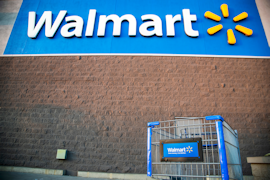 A
Walmart closure represents much more than an empty storefront and a
missing shopping destination, according to new research by marketing
researchers Vivek Astvansh of Binghamton University, Pushpinder Gill of
Toronto Metropolitan University, and Preetinder Kaur of the University
of Guelph.
In their study, “When the Anchor Closes: Walmart Store Closures and
Nearby Retail Activity,” the researchers examined 39 Walmart closures
across 20 states between 2019 and 2026 to test two competing economic
forces: whether nearby stores benefit from “competitive relief” or
suffer from “agglomeration loss” when a major traffic driver disappears.
Instead of benefiting from the departure of a major competitor, nearby
businesses experienced a significant decline in both customer traffic
and sales.
“An anchor’s closure can shrink economic activity across the
surrounding retail area, not merely shift the exiting store’s demand
to its neighbors,” the authors wrote in the study.
And the damage did not stop after the first few weeks. It became
worse over time, raising questions about what happens to the
restaurants, shops and services that depend on a major retailer to bring
customers through the door.
thestreet.com
Discount Retailers Continue Rapid
Expansion
Study: Discount chains' share of retail sales, store footprints to keep
growing
As consumers hunt for value,
discount retailers are rapidly opening new stores and seeing sales rise.
A recent report from Coresight Research estimates that U.S. mass
retail sales will surpass $1 trillion in 2026 and grow at a 5.4% CAGR
through 2030, while discount retailers’ market share will rise from
8.5% in 2025 to 9.3% by 2030.
Leading discount chains will add an estimated $29.7 billion in sales
by 2030 versus 2026, with Dollar General and Dollar Tree
contributing an estimated $19.7 billion. Five Below and Ollie’s Bargain
Outlet will lead percentage revenue growth, with projected CAGRs of
20.9% and 14.0%, respectively, through 2030.
Dollar General and Dollar Tree are the largest U.S. discount
retailers by store count, and have grown fast in the past five years
according to the report, adding about 4,537 net stores between August
2021 and August 2026 (Dollar General an estimated 3,052 and Dollar Tree
1,485). Five Below and Ollie’s Bargain Outlet are also expanding
their store networks.
Coresight noted that low prices, convenient locations and a
treasure-hunt shopping experience are the driving forces behind the
category’s success.
chainstoreage.com
October Retail Sales Rise 7.5%
Monthly retail sales from the US Commerce Department
Retail sales in the segments covered by Retail Dive rose 7.5% in
October compared to the same period last year, according to numbers
released Tuesday by the U.S. Department of Commerce.
E-commerce soared more than 10%, which UBS analyst Michael Lasser
said was likely due to the raft of promotional events in October
instigated by Amazon.
The healthy spending in many discretionary categories came despite a
30%-plus surge in spending at gas stations.
retaildive.com
Target’s Black Friday sale includes in-store gift card giveaway
The mass retailer is aiming to provide value
to budget-conscious shoppers and will give early deal access to paid
membership customers.
These 8 stores, restaurants have closed dozens of locations this year
Podcast: How to Bring AI into Your Safety Organization
Standard for Safety Apparel Updated
Gen Z Consumers Express Concern Over Handling a $500 Purchase, Survey
Says
|
|

|
All the News - One Place - One Source - One Time
Thanks to our sponsors/partners - Take the time to thank them as well
please.
If it wasn't for them The Daily wouldn't be here every day for you.
|
|
|
 |
|

 |
|

|
|
Sloth Lock and Fixture Security Additions Help Retailers Protect High-Risk
Merchandise
The New Reality of Retail Theft
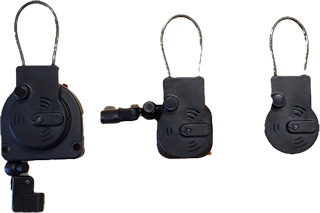 Today's
retailers face a difficult balancing act. Excessive security can cause friction
and frustrate shoppers, while insufficient protection can lead to unacceptable
shrink levels. Organized retail crime (ORC), grab-and-run incidents, and
opportunistic theft have forced retailers to seek solutions that secure products
while preserving open merchandising strategies that drive sales.
One of the most effective approaches is combining merchandise protection with
fixture-level security. CIS
Security Solutions has developed a strategy that addresses both challenges
through its Sloth Lock and a range of other fixture additions designed to allow
both accessibility and security, as well as appearance.
Meet the Sloth Lock
The Sloth Lock is simple, yet highly effective. It slows down unauthorized
product removal from retail displays by locking onto the rack and tethering the
item. The rack lock is engineered as part of the alarm top, which is used with
several styles of the CIS alarming tethers.
The Sloth Lock advantages:
-
Discourages opportunistic theft attempts.
-
Creates a visible deterrent effect.
-
Gives associates more opportunities to engage customers.
-
Supports open merchandising without requiring products to be
locked away.
Beyond the Product: Securing the Fixture
While merchandise protection devices receive most of the attention, thieves
often exploit the fixture itself. Displays, hooks, pegboards, and merchandising
hardware can become vulnerabilities when not adequately secured.
Recognizing this challenge, CIS Security Solutions offers a variety of fixture
additions that enhance overall display security, such as the Boot, the H-Run
Flex, the Sleeve, and the new Echo system.
Layered Protection Delivers Better Results
Loss prevention professionals understand that no single solution stops theft.
Operations and Merchandising want aesthetics and sales. The most successful
retail security programs use layered protection strategies to satisfy everyone.
The combination of using the Sloth Lock or other fixture additions combined with
the tethers supports this philosophy by:
-
Delaying unauthorized product removal.
-
Increasing offender visibility.
-
Preserving customer engagement.
-
Supporting associate intervention opportunities.
-
Reducing shrink without sacrificing sales.
Security That Supports the Shopping Experience
Solutions that effectively slow theft while keeping products accessible are
important.
The Sloth Lock proves thoughtful security design can support Asset Protection
objectives and Operations/Merchandising goals. Retailers can create a more
secure environment while continuing to offer the open, interactive shopping
experiences customers expect and want.
For more information contact
info@cisssinc.com or 772-287-7999
www.cisssinc.com |
|
 |
|
|
 |
|
|
Major Websites Hit by Cyber Attack
Cyber Attack Hits 178 Major Websites: Full List of Affected
Organizations
Hackers have planted malicious software on some of the world's most
popular websites, potentially exposing visitors to the theft of their
personal and financial information.
The attack affected websites belonging to 178 organizations,
including Zoom, CNN, HSBC, the BBC, IKEA, Salesforce, Equifax, Fox News,
Alaska Airlines and GitLab, according to researchers at
cybersecurity firm Report URI who identified the attack on Monday.
Hackers injected malicious JavaScript, a common computer language, into
scripts hosted by Optimizely, a company that provides software allowing
businesses to test different versions of websites.
The malicious JavaScript was designed to steal credit card details,
redirect cryptocurrency payments and target some iPhones and iPads.
Optimizely said in a status update on its website on Tuesday that "an
unauthorized party exploited a vulnerability" in its Experimentation
platform. "We've fixed the vulnerability and removed the injected code
from affected projects," it said.
How Did the Cyber Attack Happen?
Rather than hacking into 178 organizations separately, the attackers
exploited a vulnerability in Optimizely's website testing service, which
is used across numerous major websites.
Companies use the service to test changes to their websites, such as
different page layouts or features.
By tampering with the software, the hackers were able to place
malicious code on websites belonging to organizations that relied on it.
This meant visitors could encounter the software simply by opening an
affected website.
Researchers found that the malicious code was designed to carry out
several types of theft.
newsweek.com
Business Community Complains About
Cyber Regulations
White House task force says companies deserve liability relief for
AI-fueled cyberattacks
Regulatory standards for cyber
defenses are outdated, the government working group said after its
second meeting.
The Trump administration’s AI task force is encouraging regulatory
agencies not to take enforcement actions against companies that
experience cyberattacks resulting from AI overwhelming their defenses.
Instead, the task force said, federal agencies should “implement
limitations on regulatory liability for good-faith voluntary reporting
of cybersecurity vulnerabilities and incidents” when doing so is
“lawful, practical, and consistent with the interests of the American
people, including public health and safety.”
The regulatory flexibility should last for at least the next 12 months,
the task force said, “with the possibility of extension based on an
ongoing evaluation of the risk landscape.”
The task force said its goal was to ease regulatory requirements
that could “have a chilling effect on reporting and information sharing
at a time when reporting is critical to our broad risk mitigation
efforts.”
The business community has repeatedly complained to the federal
government that there are too many overlapping and contradictory
cybersecurity regulations, with compliance forcing some companies to
divert resources from incident response and defensive improvements. The
Trump administration, like its predecessor, has been exploring ways to
reduce regulatory complexity. The Cybersecurity and Infrastructure
Security Agency (CISA)’s forthcoming incident-reporting rule could
significantly increase that complexity, although the task force said it
supports the rulemaking and hopes that CISA establishes “clear and
practical reporting requirements that minimize duplication.”
The AI task force focused on the cybersecurity implications of
advancing AI capabilities during its Thursday meeting, according to
a readout from the White House.
cybersecuritydive.com
Google Warns of AI Hacking Threat
Agentic AI frameworks push hacking threat to ‘inflection point,’ Google
warns
The tech giant on Monday became the
latest high-profile authority to warn organizations about a new
generation of automated tools.
Hackers’ use of AI “has reached a critical inflection point”
thanks to the growing capabilities of open-source penetration-testing
frameworks, according to a new report from Google’s Threat Intelligence
Group.
“Adversary tradecraft has continued to transition beyond manual
prompting to deploying autonomous multi-agent offensive frameworks …
to execute multi-stage intrusions at greater operational velocity,”
Google researchers said on Monday.
One cyberattack campaign that targeted organizations in the aerospace
sector used the Cairn penetration-testing framework, Google said.
The report adds to a growing body of evidence that Artex and similar
frameworks have become essential tools for hackers, helping to empower
nation-state actors and low-level adversaries in dangerous new ways.
The FBI on Friday warned organizations that Artex posed a serious threat
to their networks. The framework “reduces the time required to chain
attack techniques, with some intrusions progressing from initial
targeting to privileged access in under three hours,” the bureau said in
an alert that highlighted several attack campaigns that the framework
helped enable.
cybersecuritydive.com
Suspected ransomware affiliate extradited to US over $500 million in
extortion demands
Apple splits Mac app permissions fearing overreaching AI agents |
|
|
 |
|
|
Holiday Shopping Scam Prevention
Holiday Shopping Scams: How to Shop Safely Online
As holiday shoppers hunt for discounts and last-minute gifts,
fraudulent websites, fake advertisements and delivery scams create new
opportunities for cybercriminals. Knowing the warning signs can help
consumers protect their money and personal information.
By
the D&D Daily staff
The holiday shopping season brings a surge in online purchases,
promotional emails and limited-time deals. But amid the convenience
and discounts, cybercriminals are looking to exploit shoppers who may be
moving quickly or distracted by holiday preparations.
One common threat involves fraudulent retail websites designed to
imitate legitimate businesses. These sites may feature familiar
logos, professional-looking product images and unusually low prices.
Some collect payments without delivering merchandise, while others
attempt to steal credit card information or personal details.
A convincing website isn't necessarily a trustworthy one.
Shoppers should examine unfamiliar web addresses carefully, research
sellers independently and be cautious of deals that appear too good to
be true. A secure HTTPS connection protects information in transit but
doesn't guarantee that a retailer is legitimate.
Social media advertisements present another potential risk.
Fraudsters can promote counterfeit storefronts through sponsored posts,
sometimes impersonating recognizable brands. Rather than clicking
unfamiliar advertisements, consumers can navigate directly to a
retailer's official website.
Delivery notifications are another popular tactic. Scam text
messages and emails may claim that a package cannot be delivered until
the recipient updates an address or pays a small fee. These messages
often contain links to fraudulent websites designed to capture payment
information.
Consumers should verify shipping problems directly through the retailer
or delivery company's official website or app instead of following
unsolicited links.
Payment methods also matter. Credit cards generally offer
stronger fraud protections than gift cards, wire transfers or
cryptocurrency payments. Shoppers should avoid sellers demanding
irreversible payment methods and regularly review account statements for
unauthorized charges.
For retailers and loss prevention professionals, consumer education
is an important part of protecting customer trust during the holiday
season. Clear communication about official websites, legitimate
promotions and delivery procedures can help shoppers distinguish
authentic retail interactions from fraudulent ones.
Ultimately, a few extra moments of verification can prevent a holiday
bargain from becoming an expensive mistake.
Veterans Targeted by Online Scams
Better Business Bureau warns veterans of rising compensation, legal, and
phishing scams
The Better Business Bureau is urging military veterans and their
families to watch out for targeted fraud schemes, including fake
benefit coaching, phishing attacks, and bogus legal or e-commerce
services.
In a weekly Doing Better Business segment, Jo Ann Deal with the Better
Business Bureau noted that just two recent Scam Tracker reports
involving a Shreveport veteran and a fake Shreveport business totaled
$10,000 in losses.
"Most importantly, we know that scammers target veterans and
government employees with the database breaches that we've had,"
Deal said. "If you have any issues about your pension or your payments,
those phone calls go directly to the VA."
The BBB advises veterans never to share Social Security numbers over
unsolicited calls or emails, shred mail with personal information,
avoid paying with cryptocurrency, and verify unfamiliar businesses
before sending money.
ktbs.com
How Amazon is supporting communities in 2026, from free meals to
affordable homes
Trump's China data center curb advances despite Amazon, Google, Meta
lobbying |
|
|

|
|
Atlanta, GA: 5 sentenced in Georgia retail theft ring that stole
more than $39,000 in merchandise
Five women have been sentenced for their roles in an organized
retail theft ring that stole more than $39,000 in merchandise from
stores across six Georgia counties, the district attorney’s office
announced Tuesday. The women pleaded guilty in separate hearings to
charges under Georgia’s Racketeer Influenced and Corrupt
Organizations (RICO) Act and related theft offenses. Each received a
20-year sentence, with prison terms ranging from two to six years.
Woodstock police began investigating on Sept. 19, 2023, after a
group of women stole 16 clothing items worth $715 from the Nike
Factory Store on Ridgewalk Parkway. Store management told police the
same women had stolen about $10,000 in merchandise on other
occasions over the previous nine months, according to the district
attorney’s office. While investigating, authorities identified five
suspects and linked them to 38 thefts committed between Nov. 21,
2022, and Aug. 7, 2024, in six Georgia counties, including Cherokee
County.
atlantanewsfirst.com
Hamilton County, OH: Update: Norwood bookstore owner sentenced in
major resell theft scheme
A Norwood comic bookstore owner will spend 3 to 4.5 years in prison
in connection with a reselling theft scheme. James Bird, the owner
of Paper Street Trading Company, pleaded guilty in September to
receiving stolen property and telecommunications fraud, according to
the Hamilton County Prosecutor’s Office. Prosecutors say Bird, 47,
of Elsmere, Kentucky, was the “mastermind” behind the scheme.
Starting in 2020, Bird operated a fencing company that would
purchase stolen items and over-the-counter health care products at
prices that were below market value, a press release says. The
merchandise included LEGOs and medications stolen from TJ Maxx,
Kroger, Walmart, Walgreens, Target and Meijer. He would then sell
the stolen goods on eBay and PayPal for profit, prosecutors say.
The Hamilton County Sheriff’s Office started investigating Bird’s
business years later. In February 2024, investigators recovered more
than $158,000 in stolen merchandise, plus more than $926,000 in
sales.
fox19.com
Cleveland, OH: Ohio man gets 9 years for stealing $104,000 in tools
in 10 counties
A Cuyahoga County man will spend nine years in prison after
admitting he stole more than $104,000 in merchandise from Rural King
stores across 10 Ohio counties, the Ohio Attorney General's Office
announced. Byron Carner, 35, of South Euclid, stole more than
$104,000 in merchandise, mostly tools, and sold it at pawn shops,
authorities say. He pleaded guilty to eight theft charges and one
count of engaging in a pattern of corrupt activity. He was sentenced
immediately.
kentucky.com
Detroit, MI: Pair charged with stealing over $42K from Meijer
A pair of accused shoplifters have been charged with organized
retail crime after stealing about $42,000 in goods in a series of
thefts from Meijer stores, the Macomb County Prosecutor's Office
announced on Tuesday, Nov. 17.
facebook.com
San Mateo, CA: Mother, 2 children arrested for allegedly stealing
$2,000 in merchandise from Bay Area malls
Philadelphia, PA: Suspect steals $1.5K worth of Pokémon cards from
Roxborough store

|
|
|
|

|
|
|
|

|
|
|
Shootings & Deaths
Colorado Springs, CO: Officer-Involved Fatal Shooting Following C-Store armed
robbery in Northeast Colorado Springs
On November 12, 2026, at approximately 12:40 AM, the Colorado Springs Police
Department (CSPD) received a call for service regarding a panic alarm activated
at a convenience store. Officers were dispatched to the location. While officers
were en route, at approximately 12:43 AM, a 911 call was received from an
employee at the same location, reporting that the store had been robbed at
gunpoint. CSPD officers arrived on scene and located an armed female suspect.
Upon contacting the suspect, she pointed a firearm at officers. Officers gave
her commands to drop the weapon, and she continued to point the weapon at
officers. The suspect failed to comply with officers’ commands, and at least one
officer fired at least one round, striking the suspect. Officers immediately
began providing medical aid until paramedics arrived and continued treatment.
Despite life-saving efforts, the suspect was pronounced deceased at the scene.
epcsheriffsoffice.com
Lauderdale County, AL: Fight at restaurant leads to fatal north Alabama
shooting, 1 dead
The Lauderdale County Sheriff’s Office said a shooting that left one dead on
County Road 71 is related to an earlier dispute at a fast food restaurant. LCSO
said deputies were dispatched around 7:33 a.m. Tuesday to a call of a fight
involving two men at a Jack’s Restaurant on U.S. 72 in Elgin. The sheriff’s
office said dispatcher received a second call of a shooting in the 7000 block of
County Road 71, while deputies were responding to the initial call of the fight
at Jack’s. Deputies at the County Road 71 incident found one man dead from an
apparent gunshot wound.
al.com
Buffalo, NY: Update: Dejuan Williams sentenced for 7-11 armed robbery; shot
store clerk, fired at cop, carjacked vehicle in Buffalo crime spree
Dejuan L. Williams, 43, also known as Juan Quionos, was sentenced Tuesday as a
persistent violent felony offender, according to the Erie County District
Attorney’s Office. The incident unfolded April 15 at a convenience store at
Prospect Avenue and Connecticut Street in Buffalo. Two Buffalo police officers
were approaching the store as customers when they saw an armed robbery underway
inside, prosecutors said. Williams opened the door and fired at one of the
officers when he saw them. The other officer fired back, striking Williams in
the arm. Prosecutors said Williams had already shot the 24-year-old store clerk
in the leg while trying to steal cash and cigarettes. Williams pleaded guilty in
September to all 12 charges against him, including attempted first-degree
murder, attempted second-degree murder, attempted robbery, attempted assault and
criminal possession of a weapon. Prosecutors did not offer him a reduced plea.
He was sentenced to two to four years in that case, to run concurrently with his
20-years-to-life sentence.
newyorkupstate.com
Pickens County, SC: Man charged for shooting driver in C-Store dispute
The Pickens County Sheriff’s Office confirmed that a man has been arrested in a
shooting that happened late on Nov. 6. Deputies said they responded to an
address in Easley around 10:50 p.m. in reference to a man suffering from a
gunshot wound. The man had been shot in the leg at a different location and was
taken to the hospital for treatment.
foxcarolina.com
Robberies, Incidents & Thefts
Halifax County, NC: Roanoke Rapids duo jailed in multi-county C-store robbery
probe
Two Roanoke Rapids residents have been arrested after a monthlong investigation
into a series of convenience store robberies across multiple North Carolina
jurisdictions. The Halifax County Sheriff’s Office says investigators from its
agency, Wilson Police, Bunn Police and the FBI Raleigh-Durham Safe Streets Task
Force worked together and followed leads to Roanoke Rapids. Devona Ussery is
charged with conspiracy to commit robbery with a dangerous weapon in Halifax
County, Wilson County and Bunn.
wcti12.com
Myrtle Beach, SC: Man sentenced to 10 years for smoke shop armed robbery
|
|
|
|

•
Auto – Hialeah, FL –
Burglary
•
Auto – Crawfordville,
AR – Burglary
•
C-Store – Millvale, PA
– Armed Robbery
•
C-Store – Lansing, MI
- Armed Robbery
•
C-Store – Darlington
County, SC – Armed Robbery
•
C-Store – Colorado
Springs, CO – Armed Robbery / Susp wounded
•
C-Store – Westlake, OH
– Robbery
•
Dollar – Myrtle Beach,
SC – Armed Robbery
•
Gaming – Philadelphia,
PA – Burglary
•
Jewelry – Lynnwood, WA – Robbery
•
Liquor – Sheldon, IA –
Burglary
•
Mall – Sam Mateo, CA -
Robbery
•
Restaurant – O’Neill,
NE - Burglary
•
Restaurant – Miami, FL
– Armed Robbery
•
Restaurant – Tucson,
AZ – Robbery
•
Tobacco – Lansing, MI
– Armed Robbery
•
Walmart – Craighead
County, AR – Robbery |
|
|
Daily Totals:
• 12 robberies
• 5 burglaries
• 1 shooting
• 1 killed |
|
|
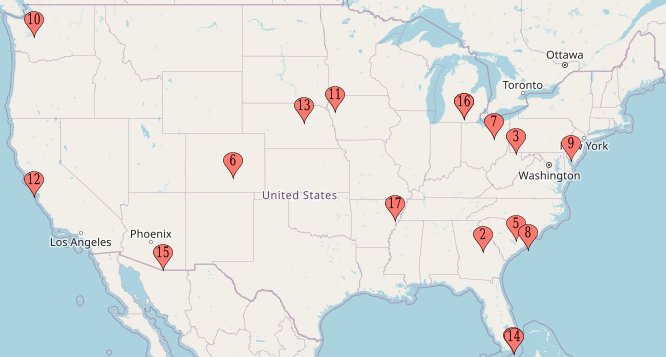
Click map to enlarge
|
|
|
|
|
 |
|
|
|

 |
|
|
Featured Job Spotlights
|
Help Your Colleagues - Your Industry - Build a
'Best in Class' Community
|
 |
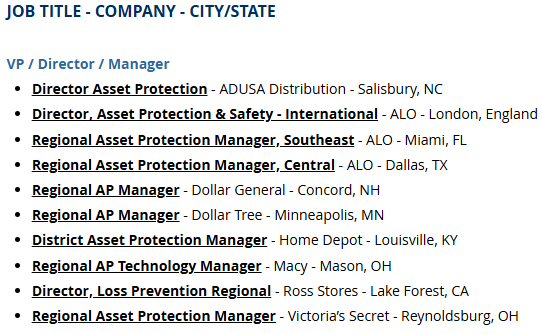
District Asset Prevention Manager
Massapequa, NY
As a District Asset Protection Manager, you will develop, teach, and
lead the implementation of the company’s asset protection, shortage control and
safety programs for all stores in your district. You will train, mentor, and
collaborate with store management and shortage control associates to ensure the
effective execution and proper implementation of company policies...
|

|
Director, Asset Protection & Safety - International
London, England
The Director of Asset Protection & Safety International, based out of
London, leads ALO’s enterprise protection strategy across international retail
markets, ensuring operational integrity, the safety of our people and guests,
and the protection of company assets...
|
Featured Jobs
To apply to any of today's Featured Jobs,
Click Here
 |
|
View Featured
Jobs
|
Post
Your Job
|
|
|
|
|
|

Insight,
humor & heart from
one of LP's most trusted voices |
|
|
Retail AP Might Be the World's Largest
Behavioral Science Experiment
Move a display and
behavior changes. Add visible surveillance and behavior changes. Put an
associate nearby and behavior changes. Change packaging, lighting,
signage, checkout design, or entrance configuration and... yep...
behavior changes. Retail AP isn't just about catching people doing bad
things. Much of the art is quietly changing the environment so fewer
people decide to try them in the first place.
Follow this space every day to see more of 'Hedgie's Hot Takes' |
|
|
|
Not getting the Daily? Is it ending up in your spam folder?
Please make sure to add d-ddaily@downing-downing.com to your contact list,
address book, trusted sender list, and/or company whitelist to ensure you
receive our newsletter.
Want to know how?
Read Here |
|
FEEDBACK
/
downing-downing.com
/
Advertise with The D&D Daily |
|
 |