&uuid=(email))
 |
|
&uuid=(email))
&uuid=(email))
&uuid=(email))
&uuid=(email))
&uuid=(email))
&uuid=(email))
&uuid=(email))
&uuid=(email))
&uuid=(email))
&uuid=(email))
&uuid=(email))
&uuid=(email))
&uuid=(email))
&uuid=(email))
&uuid=(email))


 |
|
|
 |
|
 |
Calandra Guiry promoted to Assistant Vice President, Loss
Prevention Operations for TJX Canada
|
|
See All the LP Executives 'Moving Up' Here | Submit
Your New Corporate Hires/Promotions or New Position |
|
&uuid=(email)) |
|
|
 &uuid=(email))
|
&uuid=(email)) |
|
What is organized retail crime? Definition, types & impact
Organized retail crime, sometimes called organized retail theft, refers
to coordinated, repeat, and profit-driven theft carried out by
individuals or organized retail groups who target retailers to resell
stolen merchandise. Unlike a single shoplifting incident,
organized retail crime (ORC) spans multiple stores, multiple
incidents, and often multiple jurisdictions, which is why it is so
difficult for any one retailer to see on its own.
.png) That
said, there is no single, universally accepted definition of organized
retail crime across the retail and law enforcement industries, and that
gap matters more than it might seem. That
said, there is no single, universally accepted definition of organized
retail crime across the retail and law enforcement industries, and that
gap matters more than it might seem.
What is organized retail crime (ORC)?
The Loss Prevention
Research Council (LPRC) surveyed 146 senior loss prevention
professionals, representing 60 retailers across grocery, general
merchandise, apparel, home improvement, and other sectors, and asked
them to define organized retail crime in their own words. The result was
116 different definitions, with no two identical.
That means that when two retailers, or a retailer and a law enforcement
agency, talk about organized retail crime, they may not be talking about
exactly the same thing. Definitions vary by retailer and by police
agency because each organization classifies incidents, sets dollar
thresholds, and tracks repeat activity differently.
Based on the common threads across those 116 definitions, LPRC
researcher Cory Lowe proposed a working definition: Organized retail
crime can be described as predatory crime in which one or more persons
of interest knowingly and intentionally coordinate or plan criminal
activity to victimize one or more retailers, on one or more occasions,
with the intent of financially profiting themselves or a broader
criminal enterprise, through the acquisition of cash, financial
instruments, or merchandise that can be resold, returned, or exchanged
for profit.
Three characteristics
show up consistently across definitions and form the closest thing
the retail industry has to common ground.
Read Auror's full article here
Read more articles from Auror
here

The U.S. Crime Surge
The Retail Impact
Many Americans Admit They've
Shoplifted Over Past Year
3 in 10 Americans say they’ve shoplifted with inflation cited: Survey
More than 3 in 10 Americans say they’ve shoplifted at least once over
the past year, according to a new LendingTree survey, up from 23%
who said the same in 2024.
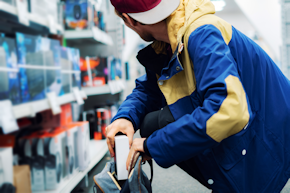 The
survey found 30% of respondents reported shoplifting within the past
year, with many citing inflation and broader economic pressures as
contributing factors. Among those who shoplifted, 90% said rising
prices and the economy played a role in their decision. The
survey found 30% of respondents reported shoplifting within the past
year, with many citing inflation and broader economic pressures as
contributing factors. Among those who shoplifted, 90% said rising
prices and the economy played a role in their decision.
Younger Americans were the most likely to shoplift, with nearly 4 in 10
Gen Z adults ages 18 to 29 and 38% of millennials ages 30 to 45
reporting they had shoplifted — compared with 24% of Gen X and 18% of
baby boomers. Men also reported shoplifting at higher rates than women,
36% vs. 23%.
Among respondents who said they’ve shoplifted, 37% said they did so
within the past year, up from 23% in LendingTree’s 2024 survey.
Additionally, 12% said they shoplift regularly, while 60% reported
shoplifting after age 16.
The survey also found widespread agreement that inflation is fueling
retail theft. Four in five Americans said higher prices have made people
more likely to shoplift, while 62% believe large retailers can absorb
the financial losses. That belief was more common among Gen Z and
millennials than Gen X or baby boomers.
Food and nonalcoholic beverages were the most commonly stolen items,
with 30% of respondents who shoplift reporting taking them. Clothing,
accessories and jewelry followed at 25%, while 20% said they had stolen
personal hygiene products.
Grocery stores were the most commonly reported target, with 39%
of respondents who shoplift saying they stole from them. They were
followed by dollar stores (28%), department stores (25%), retailers with
self-checkout (21%) and convenience stores (21%).
When asked which retailers were the easiest to shoplift from,
respondents most often named Walmart (47%), followed by Family Dollar
(21%), Amazon Fresh (14%), Kroger (11%) and Costco (10%). Another
14% said they weren’t sure.
newsnationnow.com
New Tough-on-Theft Policy Making
Headlines
Oregon county ditches soft-on-crime policies for retail theft, approves
stiffer penalties
Local leaders in Oregon’s Washington County have finally had enough
of the rampant retail theft in their communities, according to KOIN
News. The county, which resides in the greater Portland metropolitan
area, recently announced a new arrest and booking policy for local law
enforcement agencies.
Previously, law enforcement would merely issue a citation to appear
in court for retail theft suspects. The new policy calls for all
misdemeanor and felony suspects to be arrested and booked in Washington
County Jail when legally justified.
The DA says they have ‘zero tolerance’ for
retail theft
District Attorney Kevin Barton announced the new policy to local
businesses in a letter and requested crime to be reported to law
enforcement.
“In Washington County, a concerning number of criminals come into our
community to steal. From 2023 to 2025, over 60% of theft cases
referred to the DA for prosecution involved defendants who were not
Washington County residents,” said Barton. “During that same period,
approximately 21% of referred felony cases were committed by defendants
from Multnomah County. Put simply, Washington County and its vibrant
economy are a target for criminals.”
Barton calls the new hardline stance a “zero-tolerance policy in our
community for crime, including retail theft. With this renewed focus
on accountability and deterrence, we are sending a clear message to
criminals who commit theft in our community: you will be arrested and
prosecuted.”
This policy shift has been a few years in the making after the
district attorney’s office established a countywide retail theft task
force in 2022 and was awarded $3 million in grants to address this very
issue.
seattlered.com
One Year of New ORC Task Force
Northwest Ohio Organized Retail Crime Task Force marks one year with
dozens of arrests, convictions
A retail crime task force covering Lucas and Wood counties has reached
its one-year mark, producing 46 cases opened, 25 arrests, 17
indictments and 12 convictions, with more pending. The Northwest
Ohio Organized Retail Crime Task Force is focused on dismantling
theft rings operating in the region.
Investigators say thieves known as “boosters” steal merchandise from
retailers — including trading cards, electric bikes and home
renovation materials such as flooring — and sell the goods at a steep
discount to middlemen called “fencers.”
“But our task force, what we’re looking for is the people who steal the
stuff and then sell it to fences,” said Rod Smith, director of the
Northwest Ohio Organized Retail Crime Task Force. “The people who steal
the stuff, we call the boosters. And usually, they are addicted to some
kind of substance. And they are doing it to
feed their substance habit.”
Fencers then resell the stolen merchandise to the public, either
out of a private residence or online. Smith said the work is
resource-intensive, relying heavily on phone data and search warrants
for electronic devices.
“It’s very labor intensive. We do a lot of phone downloads when we
arrest a booster,” Smith said. “We’ll do a lot of phone downloads if we
happen to be able to arrest a physical fence. But it’s very search
warrant for electronic devices intensive.”
Smith does not recommend that members of the public intervene when they
witness a theft in progress. However, he said noting a suspect’s
license plate number and reporting it to police could aid investigators,
particularly given the use of license plate reading cameras.
13abc.com
Take Our Survey: Retail Crime & AI
The AI Insights Report on Retail Crime Prevention
 The
D&D Daily is launching new content to cover AI adoption and governance.
We're starting with an executive insights report focused on retail crime
and AI. The
D&D Daily is launching new content to cover AI adoption and governance.
We're starting with an executive insights report focused on retail crime
and AI.
This report will gather and analyze survey data, industry interviews,
and original research.
How you can get involved:
-
Take
the short survey here: The average time to take this
survey is about two minutes. Your responses will be anonymous.
We only request emails as a validity measure.
-
Participate in a
short interview: Talk to our publishing team for 10-15
minutes. You will have the opportunity to review and approve (or
decline) named inclusion in the report.
Contact us here.
Share your thoughts and stay tuned!
- The D&D Daily Team
RetailCrime.ai
is presented by The D&D Daily in partnership with
Telakus, a technology
training firm with direct experience publishing research content for
loss prevention and asset protection professionals.
Is crime down in Savannah? Here are the SPD numbers
Homicide, fraud and extortion all on the decline: StatCan data
&uuid=(email))
Strengthening In-Store Return Controls
Why In-Store Return Fraud Remains a Growing LP Challenge
 By
the D&D Daily staff By
the D&D Daily staff
Retail returns are designed to provide convenience and build customer
trust, but they also present opportunities for fraud that can create
significant losses for retailers. As return policies have become
more flexible and omnichannel shopping has expanded, loss prevention
teams continue to refine strategies for protecting the returns process
without creating unnecessary friction for legitimate customers.
In-store returns remain one of the most common points of
vulnerability. Fraud can take many forms, including returning stolen
merchandise for store credit, using counterfeit or altered receipts,
abusing receiptless return policies, or switching lower-value items into
higher-priced packaging before making a return. While each incident may
appear isolated, repeated abuse can create meaningful financial losses
over time.
Unlike traditional shoplifting, return fraud often occurs at the
customer service desk rather than on the sales floor. Associates are
expected to make quick decisions while maintaining a positive customer
experience, making consistent training and clearly defined procedures
especially important.
Many retailers now use technology to support the returns process.
Point-of-sale systems can flag unusual return activity, verify receipts
and digital purchase records, identify repeat return patterns, and
compare transactions against purchase histories. Enterprise analytics
can also help investigators identify organized return fraud schemes
operating across multiple store locations that may not be apparent at an
individual store.
Employee awareness remains equally important. Inspecting returned
merchandise, confirming that products match their original packaging
when appropriate, and escalating questionable transactions through
established procedures can help reduce losses while ensuring customers
receive consistent treatment. Standardized return policies and regular
refresher training also help associates recognize common fraud
indicators and apply policies fairly.
The challenge for retailers is balancing security with service.
Most customers are making legitimate returns and expect the process to
be quick and straightforward. Excessive verification or inconsistent
policy enforcement can negatively affect the customer experience, while
overly permissive practices may invite abuse.
As retailers continue investing in analytics, transaction monitoring,
and associate training, strengthening controls at the returns counter
is increasingly viewed as an important part of a comprehensive loss
prevention strategy. When supported by consistent policies and
well-trained employees, effective return management can help reduce
fraud while preserving the convenience customers expect.
AI is Shaking Up In-Store Shopping
How AI is Changing the In-store Experience
As retailers and brands continue to invest in AI, the impact on the
shopping experience and consumer behavior is transformative,
according to two research reports. The data also revealed gaps in
in-store operations but also opportunities to make improvements.
In a consumer survey of 4,000 shoppers in the U.S. and U.K. by
Bloomreach, the AI company offering personalization solutions for
digital commerce, researchers found that AI adoption at retail has
accelerated dramatically over the past year, “quickly moving from
novelty to necessity.”
In a separate survey of 250 U.S. retail executives and 500 U.S.
consumers, researchers at VoCoVo found that AI is rapidly changing
brick-and-mortar retailing. Until recently, AI was mostly used for
e-commerce and marketing. Now, the technology is being used in physical
stores—from loss prevention and inventory visibility to checkout
optimization and store associate communications.
“But the acceleration of AI has surfaced a tension: while retailers
are urgently adopting automation to address labor pressures, rising
theft and operational costs, consumers remain guided by trust,
transparency and comfort,” the report’s authors said. “Shoppers want
faster, easier experiences—but not at the expense of human connection or
privacy. This gap between technological ambition and emotional readiness
is becoming a central issue for U.S. retailers.”
On the consumer side, 42 percent of shoppers polled said faster
checkout is the number one improvement they want. And when it comes
to the human touch, 62 percent of consumers said they ask staff for help
when they cannot find an item. With AI, a whopping 80 percent of
shoppers said they are unsure how AI is used and express discomfort when
it feels like surveillance. Meanwhile, 37 percent of consumers said they
believe shoplifting has increased and associate it with stressful store
environments.
wwd.com
Business Impact of ICE Crackdown
Editorial: The ICE crackdowns in Chicago and Minneapolis took an
economic toll, too
Like the war against Iran and tariff battles under the Donald
Trump administration, the immigration crackdowns have dampened
growth, hurt business activity and imposed costs that are still being
calculated.
This page has long supported federal immigration laws, and we
acknowledge that federal authorities have the legal right, jurisdiction
and responsibility to carry out enforcement. But we were appalled by the
nature of last year’s incursion into our city, a chaotic spectacle that
pitted poorly trained federal agents against everyday Chicagoans.
The Twin Cities arguably had it even worse during Operation Metro
Surge earlier this year. Chicago’s metropolitan area is much bigger, yet
the Feds surged far more agents into Minnesota, often outnumbering local
police forces.
Many businesses were forced to close during an operation that
culminated in the fatal shootings of two U.S. citizens, prompting
nationwide protests. (So far, at least 10 have died in encounters with
immigration agents during Trump’s second term, and this page last week
called for a halt to traffic stops that have led to shootings).
In a study published last month, the City of Minneapolis said the
surge cost it nearly $700 million in lost economic activity, including
$445 million in lost business revenue and $152 million in lost wages.
chicagotribune.com
What's Really Causing the Cyclospora
Outbreak?
FDA Maintains Taylor Farms Link to Cyclospora Outbreak Despite False
Positive Test
The FDA is facing renewed scrutiny after acknowledging that a lettuce
sample initially linked to a multistate cyclosporiasis outbreak produced
a false-positive test result.
The agency had previously identified shredded iceberg lettuce sourced
from central Mexico and distributed by Taylor Farms as a possible
source of contamination, prompting voluntary recalls and the removal
of affected products from restaurant supply chains.
However, regulators now say that subsequent analysis found no
confirmed positive samples for the Cyclospora parasite. The FDA
later clarified that the lettuce sample initially believed to contain
Cyclospora was a false positive. Nevertheless, the agency said its
epidemiological and traceback data continue to support the investigation
and the voluntary recall involving Taylor Farms products.
Despite the testing error, the FDA maintains that epidemiological
evidence still points to lettuce as the likely source of the
outbreak, which has sickened thousands of people across dozens of
states.
retailwire.com
Hy-Vee introduces 30-minute delivery and pickup
Batteries Plus continues growing footprint in first half of 2026
Survey: Families plan to spend $250 per child on back-to-school supplies
|
|

|
All the News - One Place - One Source - One Time
Thanks to our sponsors/partners - Take the time to thank them as well
please.
If it wasn't for them The Daily wouldn't be here every day for you.
|
|
|
&uuid=(email)) |
|

&uuid=(email)) |
|
|

|
|
Siffron's Shogun Tag™ Duo
Small Tag. Big Protection.
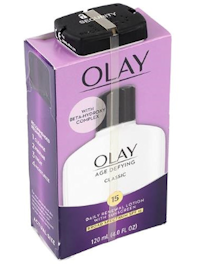 The
Shogun Tag™ Duo
is a versatile retail security solution that simplifies product application
while delivering powerful protection. Offering two easy application
methods—removable adhesive or reusable elastic banding—the Shogun Tag™ Duo makes
it simple to secure merchandise across multiple surfaces and packaging types.
This streamlined setup reduces installation time for associates while ensuring
consistent, reliable theft protection. The
Shogun Tag™ Duo
is a versatile retail security solution that simplifies product application
while delivering powerful protection. Offering two easy application
methods—removable adhesive or reusable elastic banding—the Shogun Tag™ Duo makes
it simple to secure merchandise across multiple surfaces and packaging types.
This streamlined setup reduces installation time for associates while ensuring
consistent, reliable theft protection.
Built with all the standard Shogun Tag™ functions, the Duo also adds the
flexibility of reusable banding, allowing tags to be reapplied as often as
needed. Clear banding can be used for a discreet application that won’t distract
from branding or product presentation, while integrated slots on the device
allow banding to be applied cleanly and securely.
For maximum security, the Shogun Tag™ Duo features 3-alarm protection: an alarm
sounds if the tag is tampered with or removed, if merchandise passes through an
EAS gate, and when the tag interacts with AM or RF antennas. This triple-layered
defense ensures merchandise is safeguarded at every point of contact, deterring
theft while maintaining a shopper-friendly experience.
Compact yet powerful, the Shogun Tag™ Duo measures just 1.26” W x 1.57” L x .38”
H, making it smaller than many competing solutions and ideal for planogram
efficiency. Cost-effective, reusable, and adaptable across multiple product
categories, the Shogun Tag™ Duo is the smart choice for retailers seeking a
low-cost, high-performance theft-prevention system.
Learn more here |
|
&uuid=(email)) |
|
|
 |
|
|
Cybersecurity's Growing LP Role
Why Cybersecurity Belongs in Every
Retail Loss Prevention Strategy
Digital threats can create the same
financial and operational losses as physical theft
By
the D&D Daily staff
Retail loss prevention has traditionally focused on protecting
merchandise, reducing shrink and preventing fraud inside stores. Today,
however, many of the risks facing retailers exist beyond the sales
floor. Cybersecurity has become an increasingly important part of
asset protection as retailers rely on interconnected technologies to
manage stores, inventory, payments and customer interactions.
Modern retail operations depend on point-of-sale systems,
self-checkout technology, inventory platforms, surveillance systems and
mobile devices that communicate across complex networks. A
cyberattack targeting any of these systems can disrupt operations, delay
transactions, expose sensitive information or create opportunities for
fraud.
Cybersecurity and physical security are also becoming more closely
connected. Many access control systems, video management platforms
and alarm systems operate on the same networks as other business
applications. Protecting those systems from unauthorized access helps
maintain the integrity of security operations and reduces the risk of
service interruptions.
Retail loss prevention teams are increasingly working alongside
information technology and cybersecurity professionals to identify
vulnerabilities, evaluate risks and respond to incidents. While each
department has different responsibilities, both share the goal of
protecting company assets and minimizing operational disruption.
Employee awareness also remains an important component of
cybersecurity. Phishing emails, weak passwords and unauthorized
software can create openings for attackers, making regular training and
clear security policies valuable across all levels of an organization.
As retailers continue expanding digital capabilities, cybersecurity
planning is becoming part of broader risk management efforts.
Security assessments, software updates, multi-factor authentication and
network monitoring can help reduce exposure while supporting business
continuity.
Cyber threats may not result in missing merchandise on a shelf, but
they can still produce significant financial losses, operational
challenges and reputational damage. For today's retail
organizations, effective loss prevention increasingly means protecting
both physical assets and digital infrastructure. As technology continues
to shape retail operations, collaboration between loss prevention, asset
protection, IT and cybersecurity teams will likely play an even greater
role in strengthening overall organizational resilience.
Coca-Cola Ransomware Attack Update
Threat group claims credit for ransomware attack on Coca-Cola’s dairy
unit
The attackers previously exploited
vulnerabilities or used stolen credentials for initial access.
A threat group called Anubis claimed credit for the ransomware attack
against Fairlife, the dairy products unit of Coca-Cola.
The group says it locked the servers at Fairlife and obtained 1TB of
data from the attack, according to researchers at Arctic Wolf.
Anubis is threatening to leak information if its demands are not met
within a week. Researchers provided screenshots posted on the group’s
data leak site
Coca-Cola was forced to suspend U.S. production at Fairlife while
it launched an investigation into the attack. Coca-Cola officials noted
there was no impact on the safety or quality of its dairy products.
Anubis often uses destructive tactics designed to undermine recovery
methods, according to researchers at Halcyon. Prior to encryption,
Anubis frequently shuts down the ability to create volume shadow copies
and prevents other security processes from helping companies restore
data.
Coca-Cola has not provided any details about the threat group linked to
the attack or how the attackers gained access to systems.
cybersecuritydive.com
AI Agents Using Human Logins
AI agents are still logging in as humans
Most large companies run more than one AI platform at the same time.
Developers pull up coding assistants, marketing teams lean on writing
tools, and analysts query enterprise search across separate vendors.
Single-provider setups keep giving way to mixed stacks as companies keep
their options open.
Credentials for AI agents come mostly from older methods.
Companies lean on service accounts, static API keys, and, in some cases,
shared human logins to authorize agent workflows. “We’re seeing a heavy
reliance on traditional service accounts and static API keys, and
unfortunately, we still see instances of shared human logins being used
to authorize agentic workflows,” Liu said.
The audit trail suffers when an agent runs under a person’s account. “When
an AI agent inherits a human’s login, you completely lose your audit
trail — you can no longer distinguish whether a critical action was
taken by an employee or autonomously by an algorithm,” she said. Okta’s
guidance puts three questions to every agent: where it runs, what it can
connect to, and what it can do. Demand is rising for dedicated non-human
identities that carry their own lifecycle management and access reviews.
helpnetsecurity.com
Digital Growth, Expansion and Cybersecurity Challenges
Microsoft SharePoint under attack via new exploit |
|
|
 |
|
|
AI Reshapes Online Shopping
AI hits high usage rates among shoppers
Artificial intelligence tools are
becoming an accepted part of the modern shopping journey.
More than two-thirds (68%) of surveyed users of Zip Co. Ltd. digital
financial services reported using an AI shopping tool within the past
three months, while 65% of those respondents said they engage with AI at
least weekly. Eight-in-10 (79%) respondents who shop with AI use it
for research and learning, while 66% use it to compare products, brands
or services and 77% say AI has some or a lot of influence on their
purchase decisions.
In addition, nearly half of surveyed AI shoppers (48%) said the
technology has helped them make purchase decisions faster, while
more than one-third (35%) said it has introduced them to new products or
brands they may not have otherwise considered.
Other findings from the entire survey cohort include:
-
Despite growing
adoption, 79% of respondents say they want full control over
final purchase decisions.
-
Slightly more than half
(51%) of respondents say they would be comfortable with AI
autonomously completing a purchase on their behalf.
These findings are
correlated in a recent survey from marketing agency LDWW. Roughly 70%
of respondents said they shop with AI today and plan to use it even more
in the future. In addition, data from marketing technology provider
Bloomreach reveals that more than 75% of consumers have leveraged next-gen
AI solutions to help them shop in the last six months.
“AI is reshaping how Americans shop, and our shoppers are leading
that shift," said Joe Heck, U.S. CEO., Zip Co. Ltd. "Whether it's
researching products, comparing alternatives, or validating a purchase,
AI is becoming an increasingly important part of the shopping journey."
chainstoreage.com
Amazon Price-Fixing?
‘We were at their mercy’: inside the Amazon tactics that hiked prices
across the internet
Internal emails revealed in court and interviews with ex-employees
describe how Amazon’s practices drove up prices for competitors like
Walmart and Target. Amazon denies price-fixing claims and says it works
to lower costs for consumers
For years, as many Americans have felt squeezed by the costs of basic
consumer goods, Amazon has deployed a variety of techniques that have
incentivized suppliers to push for higher product prices on other
retailers’ sites, California authorities claim in court.
In some internal emails, Amazon employees have flagged low product
prices on rival retailers’ sites as threats to Amazon’s own
profitability, and informed the products’ suppliers that their sales on
Amazon.com have been cut – or might soon be cut – going forward.
Other emails describe Amazon slashing its product prices to match
retail rivals like Walmart and Home Depot, then pushing suppliers to
compensate it for the revenue lost due to these lower prices.
To escape this financial pressure, some suppliers have responded with a
fast and cheap alternative: making sure the prices of their products
are higher with Amazon’s rivals, or pulling their products from
those rivals altogether, according to internal records cited in
litigation.
theguardian.com
J. Crew hires former Walmart e-commerce exec |
|
|
&uuid=(email))
|
|
Memphis, TN: 12 Indicted in $2M Cargo Theft Ring at Nike’s Memphis
Logistics Hub
Federal prosecutors have indicted 12 people for their involvement in an
organized cargo theft conspiracy targeting Nike’s North American
logistics center in Memphis, Tenn. According to documents unsealed by
the Department of Justice Tuesday, the defendants are accused of working
together and with others to transport stolen Nike retail product
throughout the U.S. between July 2021 and June 2024. The investigation
says the co-defendants stole at least $2 million in Nike product during
this timeframe. Six of the co-conspirators worked for Nike throughout
the theft ring.
wwd.com
Bloomfield Township police search for 8 people caught on camera stealing
113 items from Dick's Sporting Goods
The Bloomfield Township Police Department is investigating after eight
people were caught on camera stealing dozens of clothing items from the
shelves at a Dick's Sporting Goods. Police say that on July 19, 2026,
the three females and five males entered the store in the 2100 block of
S. Telegraph at about 5:15 p.m. Police say individuals whose identities
are currently unknown stole 113 items valued at $10,800. Bloomfield
Township police released footage of the retail theft, asking for the
public's help in identifying the group.
cbsnews.com
Santa Clara, CA: Suspect in Santa Clara robbery of $13,000 Pokémon card
box arrested in Newark
The suspect in a robbery of a Pokémon card box worth thousands has been
arrested after a three-week investigation, the Santa Clara Police
Department said in a press release on Tuesday. On June 22, officers
responded to a reported robbery at the Rivermark Plaza involving a
valuable box of unopened Pokémon cards. According to the robbery victim,
the stolen box was called "Pokémon Booster Box Sun & Moon: Team Up."
Police said the card box was worth an estimated $13,000. A similar item
was listed at the whopping price of $16,999.99 on eBay.
actionnewsnow.com
LA Man Linked To Coachella Valley Retail Theft Operation
A Los Angeles man was arrested Monday after authorities linked him to a
Southern California retail theft operation resulting in more than
$30,000 in stolen merchandise, including in the Coachella Valley,
according to the Riverside County Sheriff’s Department. Artavazd
Grigoryan, 59, was taken into custody without incident during the
execution of a search warrant at a home in the 65000 block of Rolling
Hills Drive in Desert Hot Springs. During the search, deputies recovered
over $7,000 in stolen goods. The investigation began June 19 when
deputies from the Palm Desert Sheriff’s Station responded to a theft
report in the 34000 block of Monterey Avenue in Rancho Mirage.
patch.com
&uuid=(email))
|
|
|
|
&uuid=(email))
|
|
|
|

|
|
|
Shootings & Deaths
Mason, OH: Employee dies in shooting at Carter Lumber
An employee was shot and killed at a manufacturing facility in Mason, Ohio,
Wednesday, company officials confirmed. A person of interest is in custody. It
happened around 1:15 p.m. at the Carter Lumber on Reading Road when police
responded to a report that an employee was shot inside one of the warehouses.
When officers arrived on scene, they found a man dead at the facility. The age
and identity of the man is unknown at this time. In a post to its Facebook page,
Carter Lumber confirmed one of their employees died in a shooting at the door
manufacturing facility. A person of interest has been taken into custody in
another jurisdiction, an officer on scene said. Details on the person of
interest as well as what led up to the shooting remains unclear.
wlwt.com
Hall County, GA: Update: FBI assisting in search for man accused of shooting,
killing woman inside convenience store
Hall County law enforcement officers are looking for a man they say is accused
of shooting and killing a woman at a convenience store in Gainesville. The FBI
confirmed Wednesday morning that they were assisting in the search for the Hall
County murder suspect.
wsbtv.com
Princess Anne, MD: Police Investigating Pharmacy Parking Lot Shooting
The Princess Anne Police Department is investigating a shooting that injured one
person on Tuesday afternoon. On Jul. 21, just before 4:30 p.m., officers
responded to the area of The Reserves on Hickory Road for a report of a subject
suffering from a gunshot wound. A preliminary investigation determined that the
shooting occurred in the parking lot of Karemore Pharmacy, where an unknown male
fired multiple shots at an occupied vehicle before fleeing the area. The victim
inside of the vehicle was transported for medical treatment, and is currently
reported to be in stable condition.
wmdt.com
Robberies, Incidents & Thefts
Twin Cities officer stabbed inside CVS store
A suspect is in custody after attacking a police officer at a CVS store
Maplewood, Minnesota Tuesday morning. According to the Maplewood Police
Department, at 11:45 a.m., Maplewood officers were dispatched to the CVS store
at the intersection of White Bear Avenue and County Road B East in response to
potential theft. After an officer initiated contact with the suspect, the
suspect attacked him with a knife. The officer, who sustained
non-life-threatening injuries. They were treated by EMS on the scene and then
taken to a local hospital.
fox9.com
Chicago, IL: DOJ: Federal jury convicts 3 men of violently robbing 14 bars and
liquor stores across Chicago, firing shots, and terrorizing victims
Charlotte, NC: Viral video shows Crumbl Cookies employees doing their hair
inside store
|
|
|
|

•
C-Store – Columbus, OH
– Armed Robbery
•
C-Store – Orange, CA –
Robbery
•
C-Store – Escambia
County, FL – Armed Robbery
•
C-Store – Rutland, VT
– Armed Robbery
•
Collectables - Santa
Clara, CA Robbery
•
Hardware – Portland,
OR – Burglary
•
Jewelry - Fayetteville, NC - Robbery
•
Jewelry - Erie, PA - Robbery
•
Motel – Selma, NC –
Armed Robbery
•
Restaurant – Staten
Island, NY – Burglary
•
Restaurant - Apopka,
FL – Burglary
•
Vape – Davenport, IA –
Robbery |
|
|
Daily Totals:
• 9 robberies
• 3 burglaries
• 0 shootings
• 0 killed |
|
|
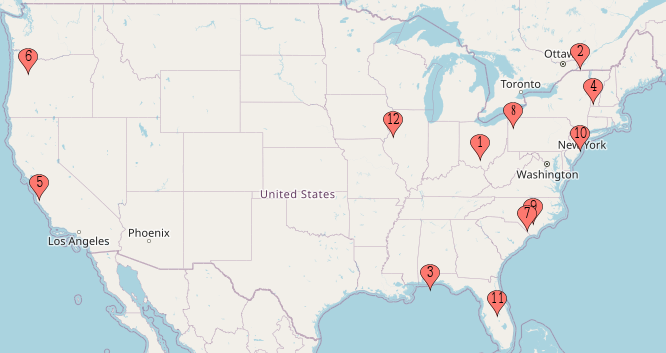
Click map to enlarge
|
|
|
|
|
&uuid=(email)) |
|
|
|

&uuid=(email)) |
|
|
Featured Job Spotlights
|
Help Your Colleagues - Your Industry - Build a
'Best in Class' Community
|
 |
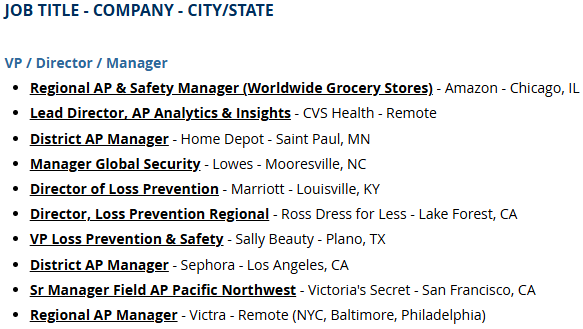
VP Loss Prevention & Safety
Plano, TX
Leads the enterprise-wide strategy for asset protection, loss
prevention, safety, security, and environmental compliance. Accountable for
minimizing financial and operational risk, strengthening internal controls, and
ensuring regulatory compliance across all locations...
|
 |
Lead Director, Asset Protection Analytics & Insights
Remote
The Director of AP Analytics and Investigations is responsible for
leveraging analytics, technology, and investigative strategies to support Asset
Protection operations, investigations, and risk mitigation efforts across the
organization...
|
Featured Jobs
To apply to any of today's Featured Jobs,
Click Here
 |
|
View Featured
Jobs
|
Post
Your Job
|
|
|
|
|
|

Insight,
humor & heart from
one of LP's most trusted voices |
|
|
Nobody Ever Brags About Their Easiest Deployment...
But They Remember It Forever.
Funny how that works. Successful
implementations rarely become conference presentations because...nothing
dramatic happened. Everything just worked. Quiet success isn't exciting
at cocktail hour, but it’s exactly what retailers hope for.
Follow this space every day to see more of 'Hedgie's Hot Takes' |
|
|
|
Not getting the Daily? Is it ending up in your spam folder?
Please make sure to add d-ddaily@downing-downing.com to your contact list,
address book, trusted sender list, and/or company whitelist to ensure you
receive our newsletter.
Want to know how?
Read Here |
|
FEEDBACK
/
downing-downing.com
/
Advertise with The D&D Daily |
|
 |
&uuid=(email))



&uuid=(email))
&uuid=(email))