&uuid=(email))
 |
|
&uuid=(email))
&uuid=(email))
&uuid=(email))
&uuid=(email))
&uuid=(email))
&uuid=(email))
&uuid=(email))
&uuid=(email))
&uuid=(email))
&uuid=(email))
&uuid=(email))
&uuid=(email))
&uuid=(email))
&uuid=(email))
&uuid=(email))


 |
|
&uuid=(email)) |
|
|
 |
|
 |
Keith
Gregory promoted to Director of Profit Asset Protection (North
America) for JD Finish Line
|
|
See All the LP Executives 'Moving Up' Here | Submit
Your New Corporate Hires/Promotions or New Position |
|
&uuid=(email)) |
|
|
 &uuid=(email))
|
&uuid=(email)) |
|

|
It's 'CIS Week' on the D&D Daily!
Follow along in the 'Vendor Spotlight'
column below as
CIS
showcases LP/AP solutions for the retail
industry
|
In Case You Missed It
The D&D Daily's Retail Crime Brief
Listen to Episode 1: Self-Checkout & ORC
Welcome to the Retail Crime Brief, a
new short-form audio series from the D&D Daily.
 Rather
than a full-length podcast, these brief episodes offer quick, focused
breakdowns of important retail crime and loss prevention topics shaping
the industry. Each installment takes a few minutes to explore a
specific trend, tactic or development that retail professionals
should have on their radar.
Episode 1: Self-Checkout & ORC
In this pilot episode, we examine how organized retail crime crews
are increasingly exploiting self-checkout systems — and why these
lanes have become one of the most attractive entry points for organized
theft operations across the United States.
From non-scans and ticket switching to coordinated distraction tactics,
self-checkout is being targeted in ways that create new challenges for
retailers and LP teams.
In this Retail Crime Brief, we take a closer look at how these
schemes work and why the issue is drawing growing attention across the
industry.
Click here
to listen to the first episode
The U.S. Crime Surge
The Retail Impact
Cargo Theft Losses Likely 10-15 Times
Higher Than Official Count
How cargo thieves are stealing millions of dollars in tech hardware
Energy drinks and sneakers give way
to pricey AI chips and RAM modules as favorite targets.
 Losses
from cargo theft have surged nationwide, jumping 60 percent last year
in the United States to a record $725 million, even as the number of
reported incidents remained essentially flat at about 3,600 cases a
year, according to theft prevention firm Verisk CargoNet. Losses
from cargo theft have surged nationwide, jumping 60 percent last year
in the United States to a record $725 million, even as the number of
reported incidents remained essentially flat at about 3,600 cases a
year, according to theft prevention firm Verisk CargoNet.
That’s due to a new twist on an old idea: There is plenty of money to
be made from stealing goods in transit. But it’s no longer about
just looting cartons of cigarettes or pallets of laundry detergent and
energy drinks.
Thieves today are targeting the pricey computer parts driving the AI and
tech booms, snatching high-speed RAM modules, advanced computer chips
and server racks as they flow toward the data centers and related
industries popping up across the country. The thieves are also using
increasingly sophisticated means to pull off their heists.
“It’s a push-pull thing — whatever is being pulled through the supply
chain at high speed, that’s what the bad guys are stealing,” said
Keith Lewis of CargoNet. “Right now, we’re seeing a chip shortage and
the emergence of AI data centers.”
The true scale of America’s cargo theft problem is hard to get a
handle on. There’s no official definition of cargo theft — it might
be categorized in some places as a stolen vehicle or it could be stolen
property. Manufacturers and the trucking industry often are reluctant to
discuss cases in detail because they involve so many different parties —
shippers, brokers, distributors and insurance companies among them.
“There’s a lot of finger-pointing,” Lewis said.
Losses are probably 10 to 15 times higher than
the official count, said Scott Cornell, a transportation risk
analyst and chairman of the Transported Asset Protection Association.
Cornell’s group is among the trade organizations pushing for cargo
theft to get more attention from federal authorities under a proposed
law targeting organized retail theft, such as coordinated shoplifting
scams. Last summer, at a Senate Judiciary Committee hearing on the
bill, trucking logistics executive Donna Lemm said companies hit by
cargo thefts are “reluctant to speak up and put a larger target on their
back.” Others fear reputational harm, she said.
Lemm also pointed out that the losses from cargo thefts increase
prices for consumers.
washingtonpost.com
Criminals Dodge Store Exit Policy
Home Depot confirms strict exit policy hiccups after five shoppers
arrested
 Home
Depot’s tough checkout exit rules appear to have failed after five
shoppers were arrested for theft. They used a variety of tactics –
including presenting a fake receipt – so they could walk out of a shop
with carts full of stolen items, officers said. Home
Depot’s tough checkout exit rules appear to have failed after five
shoppers were arrested for theft. They used a variety of tactics –
including presenting a fake receipt – so they could walk out of a shop
with carts full of stolen items, officers said.
Cedar City Police arrested the group after investigating multiple retail
thefts at the same store. Each of the five suspects is facing theft
charges after $5,000 worth of items were recovered in a police raid,
reported ABC4 on Saturday.
It follows the disappearance of an “extremely large quantity of stolen
merchandise” from a Home Depot branch in Cedar City, Utah. They
allegedly showed a fake receipt when exiting, cops said in court
filings. Or, distraction tactics would be used to avoid raising
suspicion.
Police later raided a property where they found an “extremely large
quantity of stolen merchandise from Home Depot,” according to the
filings.
The goods were stolen despite Home Depot’s strict exit policy.
Customers face more staff interventions, including receipt checks,
prior to leaving branches. Home Depot has also introduced systems
that lock carts, use video monitoring, and run AI alerts to flag
suspicious actions, reported AOL last month.
The Home Depot warned in 2025 that it was trying to tackle Organized
Retail Crime (ORC). This is a “large-scale, multi-jurisdictional
operation where criminals steal merchandise from a retailer with the
goal of re-selling the stolen goods – not theft for need, but theft for
greed,” it added.
the-sun.com
The Great Debate Over Falling Crime
What’s behind the ‘historic collapse’ in violent crime rates in major US
cities
The considerable decline in Newark’s homicide rate underscores a broader
trend nationwide: Violent crime, led by a drop in homicides, fell
sharply in many large US cities last year. And while the reasons are
complex and driven by a combination of many factors, the decrease
further cements a widespread decline that began in 2020.
“It’s a dramatic drop to an absolutely astonishing level,” Adam
Gelb, president and CEO of the Council on Criminal Justice, told CNN.
“It’s not just a drop. It’s an historic collapse in the homicide rate.”
The most recent Major Cities Chiefs Association survey – made up of
preliminary statistics compiled from 67 law enforcement agencies in the
US and Canada – shows homicides dropped about 19% last year compared
with the year prior. The report, released early last month, also
shows robbery was down almost 20%, rape was down almost 9% and
aggravated assault was down almost 10%.
The think tank zoomed in on year-end crime statistics from 40 large
cities and found homicides dropped 21% last year compared to 2024, the
largest single-year decline on record. It also projected when the FBI
puts out its year-end statistics the homicide rate will likely be the
lowest it’s been nationally since 1900.
The analysis reflects an overall downward trend in recent years,
after violent crime spiked during the Covid-19 pandemic, according to
year-end statistics compiled by the FBI through 2024.
While no one can pinpoint a single reason for the drop in violent crime,
analysts say it could be a combination of policing tactics,
technological advancements and preventive measures, such as violence
interrupters.
cnn.com
NYPD investigating explosive devices found outside Gracie Mansion as
"terrorism"
California’s Safest Small Cities
&uuid=(email))
How LP Can Use AI
AI Is Helping Retailers Identify Loss Before It Happens
 By
the D&D Daily staff By
the D&D Daily staff
Artificial intelligence is beginning to change how retailers approach
loss prevention by shifting focus from reacting to incidents after they
occur to identifying risks earlier in the process. Instead of relying
solely on investigations after shrink is discovered, some retailers are
using AI to detect operational signals that may indicate potential
loss before it happens.
One area where this is becoming more common is inventory movement.
Retailers generate large volumes of data from inventory scans, shelf
replenishment, receiving logs, and point-of-sale transactions.
Traditionally, loss prevention teams review these data points after
discrepancies appear during cycle counts or audits. AI tools can analyze
these data streams continuously, helping identify patterns that may
suggest a developing problem.
For example, an AI system might flag a store where inventory
adjustments are rising faster than historical averages or where product
movement patterns do not align with expected sales activity. This
type of analysis can help LP teams investigate issues such as scanning
errors, receiving discrepancies, or process breakdowns earlier than
traditional reporting methods would allow.
AI is also being used to identify operational friction points
that can contribute to shrink. Repeated inventory corrections, unusually
high out-of-stock reports, or inconsistencies between backroom and sales
floor counts can signal potential breakdowns in store processes. By
highlighting these trends, AI systems allow retailers to address
underlying operational issues that may lead to loss if left unresolved.
Another emerging use case involves employee workflow analysis.
Some retailers are using AI to review task completion patterns tied to
inventory handling or merchandising activities. If certain processes —
such as stockroom transfers or markdown execution — are consistently
delayed or performed outside expected timeframes, the system can
highlight those patterns for operational review.
Industry observers note that this type of early detection can allow
retailers to intervene before problems escalate into measurable shrink.
In many cases, the goal is not necessarily identifying wrongdoing, but
improving store processes that may inadvertently create opportunities
for loss.
As retailers continue to explore AI capabilities, many loss
prevention teams see value in using the technology to complement
traditional tools. By helping identify operational risks earlier, AI
may allow retailers to address potential loss proactively while
improving overall store execution.
AI in the Workplace
States Are Drawing a Hard Line on AI in the Workplace
A wave of new laws is rewriting the rules for how companies can use
artificial intelligence when they hire, manage, and fire workers.
California, Colorado, Illinois, and Texas
all have major AI employment regulations either already in effect or set
to kick in this year. And the legislation keeps coming.
Law firm Perkins Coie laid out the landscape in a detailed briefing this
week, flagging two new California bills that could significantly
raise the stakes for employers. Both bills are currently moving through
the state’s legislature.
The first, Senate Bill 947, takes direct aim at the growing use of AI
in workplace decisions. Under the measure, companies would be banned
from using automated systems as the sole basis for firing or
disciplining a worker. A human would have to review the decision — and
there would need to be supporting evidence, such as manager evaluations
or witness interviews, to back it up. If the evidence doesn’t hold up,
the AI’s recommendation gets thrown out.
The bill also targets a practice that has quietly spread in gig and
platform work: using customer ratings as the main factor in employment
decisions. That would be prohibited outright. Workers would also
have the right to sue their employers directly, with the possibility of
collecting damages, punitive awards, and legal fees. A $500 civil
penalty per violation would apply on top of that.
The second bill, SB 951, tackles mass layoffs driven by automation.
Right now, California companies must give workers 60 days’ notice before
a large-scale layoff. This bill would push that to 90 days and it would
require companies to spell out exactly which AI or automated tool
triggered the job cuts, who built it, and why it was used. The notice
threshold would also drop, capturing layoffs of as few as 25 workers,
down from the current 50.
pymnts.com
Tariff Refunds? Not So Fast
CBP says it can’t comply with court order for tariff refunds yet
The agency is confident it can
implement a process that streamlines returns for now-defunct Trump
administration levies in 45 days, according to a court filing.
U.S. Customs and Border Protection cannot currently comply with a
federal court order to begin issuing some refunds for Trump
administration tariffs that were invalidated last month, the agency
stated in a filing Friday.
In Friday’s filing, CBP said it was unable to comply with the order
because its technology and operations were not well suited to the task,
particularly given the scale of such an undertaking. However, the agency
confirmed that it aims to develop a process to streamline refunds,
targeting an implementation date in 45 days.
Under the proposed process, CBP expects to require importers to detail
entries subject to IEEPA tariffs to the agency. From there, the agency’s
Automated Commercial Environment, a portal that assesses and finalizes
entries, would validate each submission and recalculate tariffs owed
while removing the IEEPA levies. The system would still require CBP
personnel to verify and certify the refunds, with ACE aggregating the
total amounts by importer and liquidation date, according to the filing.
retaildive.com
Inflation Ticked Up in February
Numerator: Inflation picks up; prices rise 2.7% year over year
Prices for everyday household purchases increased 0.26% in February
2026 following a 0.24% decrease in January 2026 and a 0.23% increase
in December 2025. The monthly Numerator Consumer Goods Price Index (CGPI)
also indicates that prices for everyday goods are up 2.7% compared to
February 2025.
"February’s data is a reminder that the path back to price stability
won’t be linear," said Paul Stanley, senior economist, Numerator.
"After some welcome relief in January, inflation reaccelerated in
February, and the uptick suggests that cost pressures on everyday
essentials remain high. Consumers are still navigating a choppy pricing
environment, particularly lower-income and younger households who
continue to feel a disproportionate impact."
chainstoreage.com
Saks Global announces 15 more store closures, expands vendor base to 500
Target Challenges Retail Rivals With 300-Store Growth Plan
HazCom Violations Remain Widespread
|
|

|
All the News - One Place - One Source - One Time
Thanks to our sponsors/partners - Take the time to thank them as well
please.
If it wasn't for them The Daily wouldn't be here every day for you.
|
|
|
|
|
|

&uuid=(email)) |
|
|

|
|
Some Accessories are Necessities
The CIS Gen6 SR and
CIS Gen6 SP tethers have fixture accessories (necessities) to prevent sweeps and
keep your tethers organized, accessible and protected.
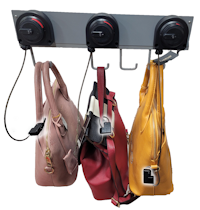 Gen6
SR Smart Release Lock and Gen6 SP with Smart Padlock makes it possible for you
to deactivate and release the merchandise from the lock at the end of the cable
where it is attached to the merchandise, while keeping that merchandise secure
to the fixtures. No longer deactivate from the alarm top! The Gen6 tethers allow
for trying on the product in comfort, while still protecting the merchandise
from sweeps. Gen6
SR Smart Release Lock and Gen6 SP with Smart Padlock makes it possible for you
to deactivate and release the merchandise from the lock at the end of the cable
where it is attached to the merchandise, while keeping that merchandise secure
to the fixtures. No longer deactivate from the alarm top! The Gen6 tethers allow
for trying on the product in comfort, while still protecting the merchandise
from sweeps.
-
The Sleeve is an all in one hang bar with
J-hooks and up to 5 Gen6 SR mounted on it, securing both the hangbar and the
product to the fixture.
-
The Boot wraps around the leg of the
4-way rack, holding 10 Gen6 SP tethers to secure hanging garments with Gen6
SP Slide and Smart Padlock Tags. Also available in clear plexi.
-
The Wall Mount holds up to 17 Gen6
tethers on a rail mounted to the wall hang slots.
-
The H-Rack Boot holds up to 16 Gen6
Tethers and mounts on the H-Rack center support bar or lower support bar for
discreet protection.
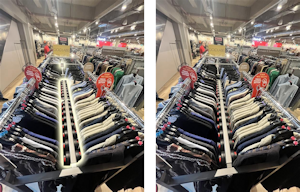 Store
associates and LP quotes about the Gen6 on the Sleeve and Boot: Store
associates and LP quotes about the Gen6 on the Sleeve and Boot:
-
“…You should see the videos of them trying to
roll the whole rack out the door. It wouldn’t fit!”
-
“It keeps things neater during the day.”
-
“I can turn it off and unhook it super fast
now. That’s way better!”
The Gen6 line is sustainable, so there is no need to
buy complete units if the batteries run down, the cable is cut, or the alarm
becomes damaged. Just buy what you need to keep going, saving on replacement,
replenishment, and labor costs while reducing landfill.
Let’s have a conversation! Call 772-287-7999 or email to
info@cisssinc.com.
www.cisssinc.com |
|
&uuid=(email)) |
|
|
 |
|
|
In Case You Missed It
RH-ISAC Announces Keynote Speakers for 2026 Cybersecurity Summit
Speakers from
Target and Walmart, along with notable industry thought leaders, will
headline the April event in Austin.
The Retail & Hospitality Information Sharing and Analysis Center
(RH-ISAC) has announced the keynote speakers for its annual
Cybersecurity
Summit, taking place 13-15 April 2026, in Austin, Texas. This
annual event brings together cybersecurity professionals from the retail
and hospitality sectors to discuss the current security landscape.
2026 Keynote Speakers
Tim Pappa, Walmart Global Tech --
Tim Pappa is an Incident Response Engineer – Cyber Deception Strategy,
Content Development, and Marketing, Cyber Deception Operations, Walmart
Global Tech. Before Walmart, Tim was a Supervisory Special Agent and
profiler with the Federal Bureau of Investigation’s (FBI) Behavioral
Analysis Unit (BAU), where he specialized in cyber deception and online
influence. Tim has held fellow roles at the Center for Strategic and
International Studies (CSIS) and the Aspen Institute, and he is the
author of the book Influencing the Influencers: Applying Whaley’s
Communication and Deception Frameworks to Terrorism and Insurgent
Narratives.
Jodie Kautt, Target -- Jodie Kautt,
SVP and CISO at Target, leads the company’s global cybersecurity
organization, which protects Target, its team members, and consumers
from cyber threats and fraud. Her team includes the 24×7 Cyber Fusion
Center, which integrates threat intelligence, advanced analytics, and
state-of-the-art technology to mitigate risks. In addition to
cybersecurity, Jodie oversees engineering and development teams that
build tools and technologies supporting Target’s Assets Protection
organization. She also chairs the NRF’s Fraud Prevention Professionals
Working Group, is a member of the Aspen Cybersecurity Group, and she
serves as the executive sponsor for Target’s Women’s Belonging
Community.
Bilyana Lilly, Author & Thought Leader
-- Dr. Bilyana Lilly specializes in security management, information
warfare, cyber risk, and business engagement, and she advises
organizations on strategies to strengthen resilience in cyberspace. She
is the author of Russian Information Warfare and Digital Mindhunters,
and serves as an adjunct fellow at the Foundation for the Defense of
Democracies (FDD). Bilyana is also on the advisory boards of NightDragon
and RunSafe Security, and she chairs the Democratic Resilience Track of
the Warsaw Security Forum. She also leads The Shadow Writers, a
community of intelligence professionals.
Allison Nixon & May Chen-Contino, Unit 221B
-- Allison Nixon specializes in modern threat intelligence, with a focus
on youth-driven cybercrime ecosystems and The Com. Her work involves
translating criminal network activity into actionable intelligence for
investigations. She has served as an expert for the media and
policymakers, appearing in outlets such as 60 Minutes, The New York
Times, and the HBO documentary Teen Hacker. May Chen-Contino is the CEO
of Unit 221B, a threat disruption company providing cybersecurity
solutions for enterprises and law enforcement. Her background includes
leadership roles at PayPal, eBay, and Forter. She has a professional
history of driving growth across technology sectors, including fintech,
e-commerce, and mental-health technology. rhisac.org
AI & Burnout
More AI tools, more burnout! New research explains why
Workflows built around multiple AI agents and constant tool switching
are adding cognitive strain across large enterprises. A recent
Harvard Business Review analysis describes this pattern as “AI brain
fry,” a form of mental fatigue tied to intensive use and oversight of AI
systems.
Employees increasingly manage clusters of agents that generate
code, synthesize information, and produce drafts at high speed.
Performance systems in some organizations reward activity metrics such
as token consumption and AI output volume. This structure pushes workers
to monitor more systems and outcomes within the same workday.
Researchers studying workforce and AI trends surveyed full time U.S.
employees at large companies across industries, roles, and seniority
levels. Respondents detailed patterns of AI use, work experiences,
and cognitive and emotional conditions tied to those workflows.
Participants described a “buzzing” sensation, mental fog, difficulty
focusing, slower decision making, and headaches after extended AI
oversight. Researchers define AI brain fry as mental fatigue from
excessive use or oversight of AI tools beyond a person’s cognitive
capacity.
Roles requiring sustained monitoring of AI systems demanded greater
mental effort and produced higher levels of fatigue and information
overload. Employees who said AI tools increased their workload also
reported heavier cognitive strain. Oversight demands combined with added
responsibilities expanded the number of outcomes employees had to track
during the workday.
helpnetsecurity.com
'Cyber Strategy for America'
Trump’s new cybersecurity strategy makes promises but lacks details
In a document released Friday, the
administration vowed to increase the government’s use of AI for rapid
cyber defense.
The Trump administration on Friday released a cybersecurity strategy
that commits the U.S. to disrupting malicious cyber threat actors,
protecting critical infrastructure, harnessing the power of AI and
reducing regulations on businesses.
The seven-page
Cyber Strategy for America offers no details about how the
government will implement the six pillars of President Donald
Trump’s ambitious cybersecurity agenda. But it is suffused with rhetoric
that echoes Trump’s “America First” messaging, boasting about U.S.
military operations against Iran and Venezuela and threatening to wreak
havoc on nations that attack the U.S. in cyberspace.
“Unlike other Administrations,” the document says, “the Trump
Administration will not tinker at the edges and apply partial measures
and ambiguous strategies that neglect the growing number and severity of
cyber threats.”
Instead, according to the strategy, the U.S. will embrace
“unprecedented coordination across government and the private sector
to invest in the best technologies and continue world-class innovation,
and to make the most of America’s cyber capabilities for both offensive
and defensive missions.”
cybersecuritydive.com
Why phishing still works today
State-linked actors targeted US networks in lead-up to Iran war |
|
|
|
&uuid=(email)) |
|
|
 |
|
|
Online Shopping Scams
Watch out for scams and stay safe while online shopping
The holiday season may be over, but online sales continue. Post-holiday
deals attract shoppers—and unfortunately, scammers. Fraud targeting
Veterans and their families often increases during this time as
criminals exploit online shopping and holiday generosity. VA wants
to empower Veterans and their families to recognize deceptive tactics
and refuse to engage with scammers.
An increase in post-holiday shopping deals create opportunities for
scammers to exploit Veterans and their families. Be alert for
e-commerce scams; fraudsters often create fake websites or impersonate
legitimate sellers offering steep discounts. Veterans may pay for items
that never arrive or receive counterfeit, low-quality products. Scammers
may also steal credit card information during transactions.
Most common red flags to watch for
Scammers often use similar tactics to pressure Veterans into acting
quickly. Be cautious if you encounter any of the following warning
signs:
-
Urgent or threatening
language.
-
Requests for payment
via gift cards, wire transfers, cryptocurrency, or prepaid gift
cards.
-
Unsolicited messages.
-
Misspelled or
suspicious website addresses.
-
Offers that seem too
good to be true.
-
Requests for login
credentials, one-time passcodes or sensitive information.
Tips to avoid e-commerce scams
-
Check reviews and
reputation: Search the company name on sites like
Trustpilot or the
Better Business Bureau. Use
Google’s
Safe Browsing site to verify if the URL is flagged as unsafe.
-
Verify social media
presence: Legitimate businesses usually have active social media
presence with real followers and engagement. Avoid accounts that are
new or inactive.
-
Check domain age and
registration: Use
WHOIS lookup
tools to confirm a website is registered. Recently registered
domains claiming to be a major brand are suspicious and potentially
a scam.
-
Examine the URL:
Look for “https” and a padlock icon. Watch for misspellings or extra
characters. Scammers often mimic legitimate domains (e.g.,
www.vacanteen.us/ instead of vacanteen.va.gov).
-
Check site quality:
Poor grammar, spelling errors or low-quality images can signal a
scam. Scammers often copy logos and layouts to appear credible.
-
Verify contact
details: Legitimate sites provide physical addresses, valid
email addresses and working phone numbers. Missing contact
information is suspicious.
-
Use trusted
retailers: Avoid buying directly from social media ads or
unverified websites.
news.va.gov
New Amazon AI Layer
Amazon launches AI-generated ‘canvas’ for sellers as e-commerce
platforms race to add AI tools
Amazon is adding a new layer to its AI tools for online sellers,
rolling out a feature that provides customized, interactive dashboards
and scenario planning in real time.
The new “dynamic canvas” in Amazon’s Seller Central displays data,
charts and different options for sellers in response to user prompts. It
expands the existing Seller Assistant, an AI chat tool that Amazon
introduced in 2024 and later upgraded with agentic capabilities.
“It’s the difference between giving someone a better calculator and
giving them a financial advisor who really understands their business
inside and out,” said Mary Beth Westmoreland, Amazon’s vice
president of Worldwide Selling Partner Experience, in an interview.
geekwire.com
Amazon cutting 49K desks, office space as company funnels billions into
AI
UPS’ future is less e-commerce, more SMB, B2B and healthcare: CFO |
|
|
&uuid=(email))
|
|
Medina Township, OH: Woman admitted to making more than 1,700 fraudulent
Home Depot returns, prosecutors say
A woman in Ohio made more than 1,700 fraudulent returns at Home Depot
locations in multiple states. Medina County prosecutors said Tracy A.
James used counterfeit driver’s licenses and aliases to obtain store
credit through fraudulent merchandise returns over several years at
numerous Home Depot locations. Some locations included: Brunswick Medina
Miamisburg Milford Wadsworth several Kentucky locations. Investigators
said James’s scheme totaled $266,699 in fraudulent store credit she
then used to buy merchandise she later resold online. The Medina
County Prosecutor’s Office indicted James on one count of
telecommunications fraud, a second-degree felony. She pleaded guilty on
Feb. 27. James was sentenced to five years of community control
supervision, 180 days in jail, and 100 hours of community service, and
was ordered to pay Home Depot $266,699 in restitution.
wrdw.com
Oak Brook, IL: Teens accused of stealing from three Oak Brook stores
Three teenagers from Chicago are being held in jail, accused of stealing
from three Oak Brook businesses Sunday afternoon. Two 16-year-old boys
and a 17-year-old girl are charged with burglary, retail theft and armed
violence, according to a news release from the DuPage County state’s
attorney’s office. According to prosecutors, the Alo store at Oakbrook
Center mall called police around 4:34 p.m. to report suspicious people.
The three are accused of stealing $1,906 worth of clothing. They then
took 24 items from a nearby Victoria’s Secret store, according to the
news release. Lastly, they took six items of clothing, worth $1,965,
from a Macy’s store, according to the release. Authorities said the
three possessed bear-repellent spray.
dailyherald.com
Chattanooga, TN: Amazon employee admits to stealing thousands in
merchandise 'for the thrill': deputies
A former Amazon employee was accused of stealing thousands in tech
merchandise. According to WTVC, citing the Hamilton County Sheriff's
Department, David Boehning of Chattanooga, Tennessee is facing an
embezzlement charge after authorities said he stole thousands of dollars
worth of phones and smartwatches from Amazon over a two-year period. The
Hamilton County Sheriff’s Department arrested David Boehning on
Wednesday in connection with a report filed in November 2025. A loss
prevention manager at Amazon told authorities Boehning stole more than
$11,000 worth of phones and smartwatches over the course of two years.
The manager said she confronted Boehning about the theft and that he
admitted to stealing the items while returning more than $4,000 worth of
products. The manager reportedly told officers Boehning said he stole
the items “for the thrill” and didn’t need the money.
local12.com
&uuid=(email))
|
|
|
|
&uuid=(email))
|
|
|
|

|
|
|
Shootings & Deaths
Grand Rapids, MI: Dave and Buster's security guard fired shots Saturday
Police have released new details about a weekend shooting outside Dave &
Buster’s on 28th Street that left a 17-year-old boy hospitalized. Kentwood
Police say officers responded around 8:34 p.m. Saturday, March 7, to reports of
shots fired at the entertainment complex at 3660 28th St. SE. When officers
arrived, they found a 17-year-old male with gunshot wounds. First responders
provided aid before he was taken to a local hospital, where he remains in the
intensive care unit as of Monday afternoon. Investigators say the shooting
followed an altercation that began inside the business and moved outside to the
parking lot near the front entrance. Capt. Tim Wierenga with the Kentwood Police
Department said multiple people were involved in a fight when the 17-year-old
retrieved a pistol and pointed it at several individuals. A 22-year-old Dave &
Buster’s employee working security then came outside. Police say that
surveillance video shows the 17-year-old then pointing the firearm towards the
guard. The security guard then fired at the teenager, according to Wierenga. The
employee was initially taken in for questioning but has since been released. He
is cooperating with investigators.
wzzm13.com
Pasco, WA: Pasco Man Found Fatally Shot by Pik a Pop Gas Pumps on North 4th Ave.
Robberies, Incidents & Thefts
Memphis, TN: Man says Home Depot has not reimbursed him after employee stole
$500 worth of his Bitcoin
A retired Midtown resident says a Home Depot employee stole $500 from his
Coinbase account while briefly holding his phone inside the store, and he says
the company has not taken action to help him recover the money. The man, who
asked to remain anonymous, says he went to the Home Depot on Poplar Avenue in
July to purchase a $10 item. He says he asked an employee for help locating it.
“He said, ‘Explain again what it is,’ and I said, ‘Well it’s right here. I’ve
got the website open. It’s on my phone.’ So, he said, ‘Well let me see that.’
So, I handed him the phone,” the victim said. The victim says the employee then
climbed a nearby stepladder with the phone, claiming to find better cell
service. The shopper said he grew uneasy with his phone now away from his line
of sight.
actionnews5.com
|
|
|
|

|
•
C-Store – Pasco, WA -
Armed Robbery / Cust killed
•
C-Store – Rome, GA –
Robbery
•
C-Store – Rome, GA –
Armed Robbery
•
C-Store - Washington
DC – Armed Robbery
•
C-Store – Binghamton,
NY – Armed Robbery
•
C-Store – Laredo, TX –
Robbery
•
C-Store – Boardman, OH
– Robbery
•
C-Store – Meadville,
PA – Robbery
•
CBD - Oklahoma City,
OK – Burglary
•
Cellphone - Douglas
County, GA - Robbery
•
Clothing – Champaign,
IL – Robbery
•
Clothing –
Hendersonville, TN - Burglary
•
Clothing – Macon, GA –
Burglary
•
Clothing – Oak Brook,
IL - Robbery
•
Clothing – Oak Brook,
IL - Robbery
•
Dollar – Lyon County,
JY – Robbery
•
Gas Station – Pulaski
County, KY – Burglary
• Jewelry – Newport News, VA – Robbery
• Jewelry – Victorville, CA – Robbery
• Jewelry – Mishawaka, IN – Robbery
• Jewelry – Council Bluffs, IA – Robbery
• Jewelry – Montebello, CA – Burglary
•
Liquor – Palm Harbor,
FL – Armed Robbery
•
Pawn – San Antonio, TX
– Armed Robbery
•
Target – Austin, TX –
Robbery
|
|
|
Daily Totals:
• 20 robberies
• 5 burglaries
• 1 shooting
• 1 killed |
|
|
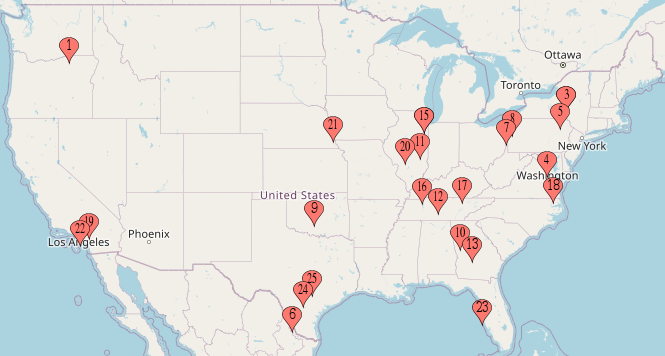
Click map to enlarge
|
|
|
|
|
&uuid=(email)) |
|
|
|

&uuid=(email)) |
|
|
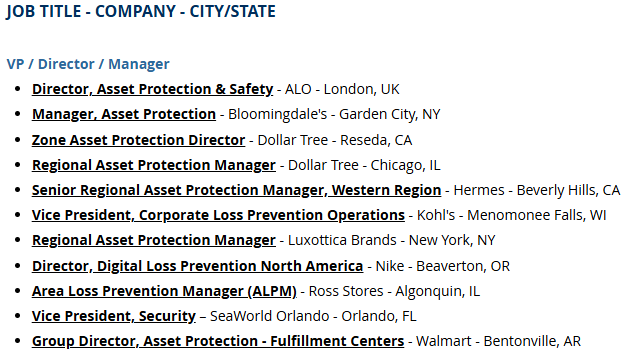
Featured Job Spotlights
|
Help Your Colleagues - Your Industry - Build a
'Best in Class' Community
|
 |
Vice President, Corporate Loss Prevention Operations
Menomonee Falls, WI
The Vice President of Loss Prevention Operations is responsible for
developing and executing a comprehensive strategy to reduce and prevent loss
across all aspects of the company’s operations. This role includes leadership of
the corporate loss prevention team, collaboration with senior management, and
the implementation of risk management programs...
|

|
Group Director, Asset Protection - Fulfillment Centers
Bentonville,
AR
The Group Director, Asset Protection – Fulfillment Centers is
responsible for leading the operations and strategy of the Asset Protection
department across Walmart’s Fulfillment Centers. This role ensures the safety,
security, and profitability of fulfillment operations by overseeing risk
management, crisis response, financial performance, and team leadership...
|
Featured Jobs
To apply to any of today's Featured Jobs,
Click Here
 |
|
View Featured
Jobs
|
Post
Your Job
|
|
|
|
|
|

Insight,
humor & heart from
one of LP's most trusted voices |
|
|
If It Generates Noise, They Won’t Use It
- Even If It’s "Technically Impressive"
More alerts is not better. More usable
signal is better. The tools that survive are the ones that make teams
feel calmer, not busier.
Follow this space every day to see more of 'Hedgie's Hot Takes' |
|
|
|
Not getting the Daily? Is it ending up in your spam folder?
Please make sure to add d-ddaily@downing-downing.com to your contact list,
address book, trusted sender list, and/or company whitelist to ensure you
receive our newsletter.
Want to know how?
Read Here |
|
FEEDBACK
/
downing-downing.com
/
Advertise with The D&D Daily |
|
 |
&uuid=(email))



&uuid=(email))
&uuid=(email))

&uuid=(email))