
ICE Activity Spills Into Retail
Enforcement actions are intersecting with
stores, staff & shoppers, raising difficult questions about what authority — if
any — businesses have in the moment.
Target
Stores Become ICE Battleground
Target faces protests after ICE detains US citizen employees at Minnesota store
Target has come under pressure from protesters and pols in its home state
of Minnesota after ICE agents detained two employees of the big box retailer who
were US citizens.
 Federal
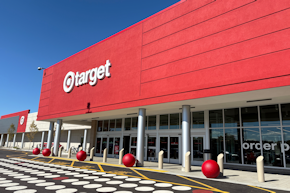
immigration agents detained the workers inside a Richfield, Minn., store on
Jan. 8 after a confrontation that began in the parking lot and spilled into
the vestibule, according to local officials and witness accounts. Federal
immigration agents detained the workers inside a Richfield, Minn., store on
Jan. 8 after a confrontation that began in the parking lot and spilled into
the vestibule, according to local officials and witness accounts.
One of the employees shouted, “I’m literally a US citizen!” as agents escorted
him toward a vehicle, The Wall Street Journal noted.
Minnesota state Rep. Michael Howard said the agents entered the store without
a warrant and physically detained the workers, while family members and
witnesses alleged the incident amounted to racial profiling.
The Department of Homeland Security later said on social media that one
individual had been arrested for “assaulting a federal law enforcement offers
[sic],” which the defendants’ families and local officials denied.
Protests erupted outside the Richfield Target store days after the
detentions, with demonstrators demanding the retailer take steps to protect
workers and customers from federal immigration agents operating on its
property.
Organizers said they asked Target to train employees on how to respond to
immigration agents, including informing them that access to private areas of
stores requires a signed warrant.
Protesters also urged the company to publicly oppose immigration enforcement
actions at its locations, arguing that Target’s silence had fueled anger in
a community already on edge.
nypost.com
What ICE Can & Can't Do at a Private Business
What is ICE is allowed to do at private businesses?
U.S. Immigration and Customs Enforcement is making arrests in Minnesota right
next to shoppers grabbing groceries. The tense encounters are
happening at places like Target, Walmart and other
private businesses.
Target appears to be a possible target for immigration enforcement in
Minnesota. It's one of several businesses where ICE agents have arrested
people, including staff, in both the parking lot and store itself.
What is ICE allowed to do at private businesses?
While Target and Walmart are private businesses, their parking lots and
stores are open to the public, including ICE. Similar rules apply to the
waiting room at a hospital or a reading area at a library.
"They can ask people questions, they can seize materials that happen to be
available in those spaces, they don't need permission to be there,"
Medeiros said.
A private business can have a public space, but it can also have private spaces.
One example is a back room that has a door labeled "employees only."
"The government does not have the authority to conduct investigations in
those private spaces unless they have permission to do so," Medeiros said.
A manager could give ICE permission to enter a private area or deny them.
If they aren't given permission to enter a private area, ICE agents would
have to provide a judicial warrant.
Public and private spaces aside, can a business simply make ICE leave? The
short answer is no, said Medeiros; however, staff can ask ICE agents to
leave. The ICE agents could continue to stay in the public spaces of the
business to conduct their investigation.
cbsnews.com
Some Businesses Fight to Stay Open
Minnesota ICE raids leave immigrant workers home, businesses struggling
&uuid=(email)) Several
businesses across the Twin Cities metro are fighting to stay functioning as ICE
raids fuel fears among workers and customers. Several
businesses across the Twin Cities metro are fighting to stay functioning as ICE
raids fuel fears among workers and customers.
With the influx of federal agents flooding the Twin Cities’ streets,
immigrant-owned and operated businesses across the metro are facing dire
circumstances.
In December, thousands of Immigration and Customs Enforcement (ICE) agents
flooded the Twin Cities metro in a campaign dubbed “Operation Metro Surge.”
Taking to the streets of Minnesota’s largest immigrant communities, agents have
arrested more than 2,400 people over the last month and a half, according to
KARE 11. The aggressive campaign has created terror within these communities.
His employees are among the many who don’t feel comfortable going outside,
even for work. Several restaurants owned and operated by minorities,
including The Donut Connection and Brasa St. Paul, have closed their doors
altogether. Some say it is out of respect for staff and customer safety.
Fast food locations across the city, such as the McDonald’s on Hiawatha
Avenue, have sat closed for several days with no public explanation.
In many places across the Twin Cities, including in Minneapolis’ Cedar-Riverside
neighborhood, businesses aren’t covering operating costs, even if they
take the risk and stay open. The once-bustling sidewalks of the Somali and East
African cultural hub now sit unnervingly calm.
sahanjournal.com
Unrest Could Be Coming to Your City -
Are You Prepared?
In an unpredictable environment, being ready
is not just a precaution, but a necessity.
Preparing for Potential Unrest: What Urban Retailers Should Know
 By
the D&D Daily staff By
the D&D Daily staff
As political and social tensions rise following recent ICE raids in
major U.S. cities, retailers—especially those operating in urban
centers—are reassessing their preparedness strategies for potential
unrest. With public demonstrations and spontaneous protests becoming
more common, retail businesses are increasingly focused on minimizing
risk and protecting employees, customers and assets.
Recent enforcement actions by Immigration and Customs Enforcement (ICE)
in cities like Los Angeles have sparked backlash, including protests
that, while often peaceful, carry the potential to escalate. For
retailers, this presents a challenging
environment where operational disruptions, property damage or safety
concerns can emerge quickly and unpredictably.
Retailers can take several proactive steps to mitigate risk during
periods of heightened tension. First and foremost is communication.
Store managers should stay informed through local news and law
enforcement updates to anticipate potential protest activity in their
area. Establishing a clear internal communication protocol ensures
that staff can respond swiftly to changing conditions and know when
to shelter in place, close early or modify operations.
Physical security is another key area of focus. Retailers in
areas more prone to demonstrations may benefit from reviewing security
camera coverage, ensuring alarms and locks are functioning properly and
confirming that emergency exits are accessible. Some businesses are also
coordinating with local law enforcement or private security firms to
enhance on-site protection during high-alert periods.
Employee
training is critical. Staff should be briefed on how to handle crowd
activity near or around the store, how to de-escalate tense situations
when possible and when to prioritize evacuation over confrontation.
Retailers may also want to revisit insurance coverage to ensure policies
are current and adequately cover civil unrest scenarios.
Click here to read more
Trump threatens to use Insurrection Act to deploy troops to Minnesota
How ICE Crackdowns Set Off a Resistance in American Cities
|
&uuid=(email))
&uuid=(email))
