|
|
 |
|
 |
Robert
Sanchez Jr named Divisional Asset Protection Manager for Redi
Carpet |
 |
Jim
Skawinski named Regional Asset Protection Manager for PVH Corp. |
|
|
See All the LP Executives 'Moving Up' Here
Submit Your New Corporate Hires/Promotions or New Position
|
|
|
|
&uuid=(email)) |
|
 &uuid=(email)) |
&uuid=(email)) |
|
Sloth Lock
& Fixture Security Additions Help Retailers Protect
High-Risk
Merchandise
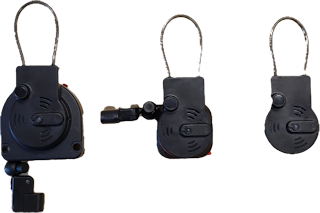 Meet the Sloth Lock Meet the Sloth Lock
The Sloth Lock is simple, yet highly effective. It slows down unauthorized
product removal from retail displays by locking onto the rack and tethering the
item. The rack lock is engineered as part of the alarm top, which is used with
several styles of the CIS alarming tethers.
The Sloth Lock advantages:
-
Discourages opportunistic theft attempts.
-
Creates a visible deterrent effect.
-
Gives associates more opportunities to engage customers.
-
Supports open merchandising without requiring products to be
locked away.
Click here to learn more
The U.S. Crime Surge
The Retail Impact
ORC & Theft Hits $379B Globally
Theft and Shrink Now Cost Retailers $379 Billion a Year Worldwide
 Locked
shelves and plexiglass cases have become the public face of retail
theft. The numbers behind them are harder to see. Organized retail
crime and theft jumped to $379 billion globally, according to
new research from analyst firm IHL Group, and the report points
to a cost that never shows up on a security camera. Locked
shelves and plexiglass cases have become the public face of retail
theft. The numbers behind them are harder to see. Organized retail
crime and theft jumped to $379 billion globally, according to
new research from analyst firm IHL Group, and the report points
to a cost that never shows up on a security camera.
That cost is bad data. IHL finds that despite technological advances,
ground-truth inventory accuracy remains compromised by shrinkage at
every level from the store shelf to the supply chain. When goods
leave a building without being recorded, the system of record starts
lying.
The count says 12 while the shelf says 4
The math behind that number is where the damage spreads. Every stolen
item creates a phantom unit, a product the system believes exists but
doesn't. The replenishment software sees healthy stock and skips the
reorder. The website promises next-day delivery on an item nobody can
find. A customer walks out empty-handed while the dashboard reads green.
Theft is not the only thing corrupting the count. IHL attributes an
additional $248 billion in global inventory distortion to personnel
issues, including understaffing and training gaps. A mis-scanned
pallet or a skipped receiving step produces the same result as a
shoplifter: a record that no longer matches reality.
Both problems feed the same larger figure. IHL puts total global
inventory distortion, the combined cost of out-of-stocks and overstocks,
at $1.73 trillion annually, equal to 6.5% of global retail sales.
Retailers spent $172 billion on fixes. The
count is still wrong
The locked toothpaste aisle has become shorthand for retail crime, and
shoppers mostly read it that way. The IHL data supports a second
reading: the $379 billion in theft also degrades the information
layer of retail, the running count that decides what gets ordered and
what gets promised.
That puts the problem in different hands. Loss prevention teams can
harden stores, but keeping recorded inventory aligned with physical
inventory is an operations job, and it runs through the warehouse and
the receiving dock. IHL notes the industry poured $172 billion into
improvements over the past year, and the losses persist anyway.
Cameras and cases protect the product. Only accurate records protect the
decisions built on top of it.
missoulian.com
The CORCA Debate Continues to Rage
Retail theft bill spurs ‘very large and very dangerous’ surveillance
fears
The Combating Organized Retail Crime Act has won a big House vote
and could be on the fast track in the Senate — and supporters say it
could help fight cybercrime.
 A
bill to battle organized retail theft has wide bipartisan support and
momentum on Capitol Hill, even as opponents say it threatens to
dangerously expand surveillance centered in Immigration and Customs
Enforcement at a time when the agency’s aggressive conduct is under
scrutiny. A
bill to battle organized retail theft has wide bipartisan support and
momentum on Capitol Hill, even as opponents say it threatens to
dangerously expand surveillance centered in Immigration and Customs
Enforcement at a time when the agency’s aggressive conduct is under
scrutiny.
Backers counter that critics are wrong about the bill that they say
only would enhance existing information sharing arrangements, and
could play a role in fighting cyber-enabled crime, too.
At its core, the Combating Organized Retail Crime Act (CORCA)
establishes an Organized Retail and Supply Chain Crime Coordination
Center within ICE’s Homeland Security Investigations division. It
also would create criminal penalties for money laundering proceeds from
selling stolen goods, and a $5,000 threshold for the combined total
value of stolen property over a year for charging purposes.
Backers argue that the bill poses no risk to
anyone but organized retail crime leaders.
A Senate Judiciary Committee spokesperson said the bill doesn’t give
DHS any additional enforcement authorities, and is housed within
DHS’s Homeland Security Investigations to build on the role they
currently have in addressing transnational and organized criminal
activity.
David Johnston, vice president of asset
protection and retail operations for the National Retail Federation,
noted the difference between ICE’s HSI, focused on a variety of criminal
investigations including cybercrime, and its Enforcement and Removal
Operations division that’s focused on finding and evicting those who
violate U.S. immigration laws.
The bill could be one answer to rising cybercrime, he said.
Cyber means have also aided cargo theft with the creation of false
personas and more, Johnston said: “They’re not going and stealing
these trucks with physical violence. They’re driving them right out of
the yard, waving to the security officer because they’ve got this whole
organization behind them that are using these cybercriminal tactics.”
cyberscoop.com
When Shoppers Enter the Crossfire
The Overlooked Bystander Risk in Retail Violence
 By
the D&D Daily staff By
the D&D Daily staff
Much of the conversation around retail violence understandably focuses
on protecting store associates. But violent incidents in retail
environments can create another challenge for loss prevention and
security teams: protecting everyone else who happens to be there.
Customers, delivery drivers, contractors and even people simply
walking through a parking lot can suddenly become part of an incident
that began as a shoplifting confrontation, robbery, domestic dispute or
altercation between customers.
That creates a considerably different safety problem than traditional
loss prevention.
Retailers can train employees on de-escalation procedures, emergency
communication and when not to intervene. Customers receive no such
training. During a violent incident, they may move toward the
disturbance to see what is happening, attempt to intervene themselves,
begin recording with their phones or unknowingly enter an area employees
are trying to clear.
The problem becomes especially complicated in large-format stores,
shopping centers and busy parking lots, where an incident can move
rapidly from one location to another.
For LP and asset protection teams, this expands the concept of
violence prevention beyond simply training associates.
Store layouts, exits, public-address systems, surveillance coverage
and communication procedures can all influence how effectively
employees protect customers when an incident occurs. Employees may also
need clear guidance about directing shoppers away from danger without
placing themselves at additional risk.
Parking lots deserve particular attention. Unlike controlled
employee areas, parking lots bring together shoppers, employees,
delivery workers, rideshare drivers and pedestrians while providing
offenders with multiple avenues of escape.
The broader lesson is that retail violence rarely respects the
boundaries of an LP incident.
A confrontation involving two people can quickly become a safety
event involving dozens more. As retailers continue strengthening
violence prevention programs, preparing employees to avoid confrontation
remains critical — but so does planning for the customers and other
bystanders who may suddenly find themselves in the middle of one.
New Law Aims to Deter Retail Violence
Louisiana's Behind the Counter Protection Act Expands Workplace Violence
Protections
The Louisiana Behind the Counter Protection Act (“LBCPA”), which took
effect on August 1, 2026, aims to deter workplace violence against
employees who work directly with the public in retail, restaurant, and
other customer-facing businesses. The Act strengthens criminal
penalties for certain acts of violence against employees working at
checkout stations, service counters, drive-through windows, customer
service desks, and similar points of transaction.
Although the LBCPA does not impose new compliance obligations on
employers, Louisiana businesses with covered employees should
understand the law and consider incorporating its protections into their
existing workplace-safety practices.
Who is Protected?
The LBCPA defines an “employee” as an individual who performs duties at
or behind a checkout station, service counter, drive-through window,
customer service desk, or similar location used as a point of
transaction between an employee and a customer.
The Act is expressly directed toward workplace violence in retail and
food-service establishments and applies its protections to employees of
a “regulated establishment.” Notably, however, the Act does not
separately define the term “regulated establishment.”
Enhanced Criminal Penalties
The LBCPA enhances Louisiana’s criminal penalties for simple battery
and assault when those offenses are committed against an employee of
a regulated establishment.
jdsupra.com
Maryland violent crime rate drops 18%, outpacing US decline
Memphis Mayor Paul Young talks data centers, crime reduction, and Flock
cameras
&uuid=(email))
Workplace Safety & Incident
Prevention
What Employers Can’t Ignore About Slips, Trips and Falls
Prevention is key to keeping workers safe. But should an
incident arise, do your workers know what to do next?
Slips, trips and falls are often addressed as a housekeeping and
operations issue. But everyone is responsible not just for the
conditions that may lead to slips, trips and falls but also how to
respond to such incidents.
Sometimes, workers get lucky and don’t hurt themselves when they
slip, trip or fall. Other times, they need medical attention.
Knowing how to spot the difference, both for themselves and others,
requires training, education and awareness for what’s at stake.
Technology and wearable devices can help shorten the response
time and ensure that people get the appropriate care they need as
quickly and seamlessly as possible. Those measures matter.
Prevention should always be the first line of defense.
But even strong safety programs can’t prevent every incident.
Floors get wet. Cords get missed. Weather changes quickly. Employees
move through stairwells, parking lots, warehouses, offices,
kitchens, construction areas and customer sites where conditions are
unpredictable.
Before a fall, the central safety question is how to prevent it.
Once a fall occurs, the focus must immediately shift to response:
Can the worker call for help? Does anyone know they are hurt? Can
supervisors, security or emergency responders act quickly enough to
make a difference?
That is the response-time gap: the period between when a worker
is injured and when the emergency response begins. Response time
is already treated as a critical performance measure in emergency
medicine, public safety and disaster response because delays can
affect outcomes. It deserves the same attention in broader workplace
safety conversations about slips, trips and falls, where quickly
reporting the incident, locating the injured employee and delivering
help without delay can prevent further harm.
ehstoday.com
The Brick & Mortar Evolution
Walmart’s stores have ‘evolved’ as e-commerce grows
CFO John David Rainey said brick and mortar is vital as retail
becomes more omnichannel. Meanwhile, Walmart’s Q2 U.S. comps were
softened by drug pricing regulation.
 The
utility of brick-and-mortar stores continues to shift for one
of the largest retailers in the world. The
utility of brick-and-mortar stores continues to shift for one
of the largest retailers in the world.
“The role of our stores has evolved as our model has changed,”
Rainey said on the call. “The more omni we become, the more
important our stores become — not less important, more important.
Between in-store shopping and digital fulfillment, we have more unit
volumes transacted through our stores than ever before, as they are
the last-mile fulfillment nodes for 80% of our e-commerce orders and
100% of our fast deliveries.”
The hit from new maximum fair price regulation in the U.S. was a
talking point for industry analysts, though the strength of the
overall business still shone through.
“Importantly, we think Walmart continues to operate from a
position of strength,” Jefferies analysts said in an emailed
note Thursday. “Underlying trends remain supported by transaction
growth, broad-based share gains, and continued strength across
eCommerce, advertising, marketplace, and membership.”
retaildive.com
TJX blames merchandising missteps for rare miss in the US. Is that
the whole story?
Some analysts believe the off-price
retailer is also suffering the consequences of stiffer competition
and consumers’ resistance to price increases.
US toy industry has best first-half performance in 6 years
NRF: Consumers have a lot of back-to-school shopping left
|
All the News - One Place - One Source - One Time
Thanks to our sponsors/partners - Take the time to
thank them as well please. If it wasn't for them The Daily wouldn't be here
every day for you.
 |
|
&uuid=(email)) |
|

&uuid=(email)) |
|

|
|

Most LP resources are built for
full departments. This session is a conversation with
retailers who don't have large teams but are getting
real results anyway. They'll share what life looked like
before, what it took to get started, the moment they saw
their investments pay off, and the lessons they learned
along the way.
What attendees will take away
-
What success looks like for a lean LP team
-
How to evaluate and implement new technology without
overwhelming your workload
-
What a real return on investment looks like, from
retailers who've seen it firsthand
-
Practical ideas for increasing your team's impact
without increasing headcount
-
Lessons other retailers wish they'd known before
they got started
Register here
|
|
|
&uuid=(email)) |
|
|
 |
|
|
Online Fraud Boosted By AI
AI is making fraud harder to spot and identity harder to prove
Online fraud has become a routine concern for consumers and businesses
that rely on digital accounts, payments and customer service. Experian’s
2026 U.S. Identity & Fraud Report describes a market where scams
extend across messages, websites, documents, voices, images and account
activity.
Fraud used to be treated as an isolated event, such as a forged
check, stolen credit card or false invoice. It has become a regular
part of digital activity, appearing through phishing emails, scam texts,
delivery notices, misleading ads and account alerts.
The growth of online banking, shopping, payments and customer support
has created more opportunities for fraud. For consumers, that can
mean financial losses and declining trust. For businesses, it raises
costs and puts pressure on security systems and customer relationships.
AI makes digital scams easier to create and harder to identify.
Criminals can imitate emails, messages, websites, documents, voices and
customer support interactions. These scams can appear legitimate enough
to persuade people to share information, send money or provide account
access.
Around 60% of consumers have heard of scams using AI-generated images
or videos, 53% are aware of AI-generated phishing messages and 47% know
about deepfake voice impersonation. Nearly half feel more like a
target for fraud than a year ago.
A fraudulent payment or account change may be the final step in a longer
chain of deception. AI-generated phishing is a leading concern for
businesses, alongside document forgery, automated bot attacks and
synthetic identities.
The rise of convincing digital scams makes identity verification more
important. Seventy-one percent of consumers say accurate online
recognition is important.
Behavioral biometrics make 83% of consumers feel secure, while banking
app authentication, physical biometrics, ID verification and
passwordless login also rank highly. Businesses use multiple identity
and authentication signals to assess risk.
helpnetsecurity.com
73% of Ransomware Attacks Target
Medium-Sized Businesses
Ransomware disproportionately targets medium-sized firms, straining
customer relationships
These companies often have the hardest time balancing their roles
as suppliers and customers, according to the risk management firm Black
Kite.
Medium-sized businesses accounted for roughly three-quarters (73%) of
ransomware incidents between 2023 and the first half of 2026,
according to the risk management firm Black Kite.
Manufacturing was the most targeted industry (accounting for more than
25% of those victims), and nearly 30% of mid-market organizations had
at least one known exploited vulnerability, the firm said in a
report published on Tuesday.
The findings add to the challenges facing mid-market firms, which
include large customers demanding accountability and a vast array of
suppliers that the mid-market firms lack the personnel to hold
accountable.
Mid-market firms, defined as those with annual revenue between $10
million and $1 billion, receive comparatively less attention in
cybersecurity discussions than either small businesses, whose
struggles and weaknesses are well understood, or large companies, whose
industry importance leads to widespread media coverage when they suffer
hacks. Black Kite’s report, based on an analysis of 13,336 ransomware
incidents between January 2023 and June 2026, examines the unique
position that mid-market firms find themselves in, a dynamic that
affects their ability to protect their systems.
Companies’ twin roles as suppliers and customers “are usually treated as
separate problems, handled by separate teams under separate budgets,”
the report said. “In a mid-market company they are rarely handled by
anyone at all, and they are the same problem seen from two directions.”
The most victimized sectors — manufacturing, professional services,
construction and wholesale — are full of companies that supply other
companies, meaning that the damage from a cyberattack can quickly
cascade downward and outward. “When one of these companies is attacked,”
Black Kite said, “the incident is recorded against its own name, but the
damage does not stop there.”
cybersecuritydive.com
Detecting AI Misuse
OpenAI previews privacy-focused system for detecting AI misuse
OpenAI is previewing Private Safety Processing with early customers
seeking greater certainty about how their data will be protected as AI
systems become more capable. The system identifies patterns across
related interactions while restricting OpenAI personnel from accessing
the underlying content. The company plans to start rolling it out and
publish a technical white paper in September.
“No AI lab can address emerging risks alone. Private Safety
Processing reflects that approach and is being shaped by customers
across industries, regions, and company sizes,” OpenAI wrote.
ZDR deployments keep content on infrastructure controlled by the
customer. OpenAI is developing another option that would store it on the
company’s infrastructure using customer-controlled encryption keys. In
both configurations, automated systems can identify potential misuse
and return limited safety signals without revealing prompts or responses.
helpnetsecurity.com
US agencies warn of AI-powered attacks on Siemens industrial controllers
AWS limits AI agents’ data access, even when manipulated |
|
 |
|
|
|

|
|
|
Fake Online Stores Preying on
Back-to-School Shoppers
Fake online stores are targeting back-to-school shoppers. Here’s how to
spot them.
The Better Business Bureau says impostor sites can look identical
to brands you trust. Here’s what to look for.
The Better Business Bureau warns that fake online stores are flooding
social media — designed to look exactly like the retailers families
trust — and back-to-school season is prime hunting ground.
According to the BBB, impostor websites copy the logos, layouts and
product listings of well-known brands, then buy ads on social media to
lure shoppers searching for the best deals on laptops, supplies and gear.
If you click and buy, the BBB said, you could end up with nothing. Or
worse.
The U.S. Chamber of Commerce and the U.S. Consumer Product Safety
Commission warn counterfeit products purchased from fake sites
can overheat, malfunction or expose families to hazardous materials.
“It’s easy for a fake site to mimic a famous retailer’s website,”
the BBB said. “If the site is missing contact information, that is a red
flag.”
According to the BBB, scammers build websites that are nearly
identical to legitimate retailers, sometimes with URLs that differ
by just one letter. They run paid ads on social media promoting deep
discounts on popular items. When a shopper clicks the ad and completes a
purchase, the scammer collects the payment and personal information. The
product never arrives.
The Federal Deposit Insurance Corporation (FDIC) said scammers create
fake retail sites “so similar to the sites of popular retailers, it
easily tricks consumers into providing payment information.”
The threat is well-documented. In 2023, scammers built convincing
lookalike websites for Bed Bath & Beyond — complete with the real
company’s logo — and ran social media ads for fake
“going-out-of-business” sales. Shoppers paid and received nothing,
according to the BBB.
atlantanewsfirst.com
AI Traffic to Retail Websites Up 62%
Adobe: AI e-commerce traffic booms, but many retailers lag behind
Artificial intelligence continues to drive higher amounts of
online retail visits, but e-commerce sites are frequently not optimized
for it.
In July 2026, AI traffic to U.S. retail sites was up 62%
year-over-year, sustaining the momentum Adobe has observed in recent
months. From October 2024 through July 2026, Adobe analysis indicates it
is up a significant 1,219%.Traffic from AI sources also continues to
convert better (60% higher) than non-AI traffic, marking the 11th
consecutive month where AI conversion has pulled ahead according to
Adobe.
Adobe data from July 2026 also shows that when visitors arrive at a
U.S. retail site from an AI source, the engagement rate is 14% higher
than non-AI traffic. Specifically, these shoppers spend 59% more
time on the site and are 33% less likely to bounce. AI- referred
visitors also add items to their shopping cart at a 28% higher rate.
However, in April 2026, Adobe data showed that the average score for
homepages came in at 75%. This means roughly one-quarter of the
content on homepages has not been optimized for large language models
that support AI shopping agents. In July, Adobe expanded its analysis to
a broader set of U.S. retail sites and found that homepage visibility
dropped to an average of 61%, meaning nearly 40% of homepage content is
not fully readable by shopping agents.
chainstoreage.com
Walmart e-commerce sales surge as CEO touts 'price, speed and
convenience'
Amazon is betting big on a technology many thought was years away |
|
|
|
&uuid=(email))
|
Las Vegas, NV: 2 arrested after business allegedly bought, sold stolen
goods
LVMPD Organized Retail Crime (ORC) detectives have arrested two suspects
following an investigation into an alleged illegal fencing operation in
the Spring Mountain corridor. Detectives developed information that a
business near Spring Mountain Road and Decatur Boulevard was allegedly
buying and selling stolen merchandise. During the investigation,
detectives gathered evidence involving the purchase and resale of stolen
property, including clothing, toys, alcohol, jewelry, and other
merchandise. Currently, we estimate the value of the stolen
merchandise at more than $100,000, but we are still calculating and
documenting the final total. The investigation also led detectives
to a second suspected location near Tropicana Avenue and Jones
Boulevard, as well as a residence near Flamingo and Jones. On August 19,
2026, LVMPD detectives and officers served search warrants at three
locations as part of a coordinated operation. Major retailers assisted
detectives with identifying and inventorying recovered property.
Detectives have served 12 subpoenas and authored 10 search warrants in
connection with this investigation.
facebook.com
Denver, CO: ‘Booster skirts’ used in Douglas County retail thefts last
month
An organized theft ring in the metro area is using what’s called a
booster skirt to smuggle products out of stores at a high rate, as law
enforcement seeks help to identify the suspects. The Douglas County
Sheriff’s Office has called them the “Booster Skirt Bandits” based on
their intentionally worn attire to conceal high-value stolen items, most
recently from three Walgreens stores around Highlands Ranch. When they
were caught on surveillance camera heading into one of the stores late
last month, they may have looked like they were making a fashion
statement with their long skirts. But Douglas County Sheriff Darren
Weekly said the outfits serve a purpose.
kdvr.com
Burbank, CA: 17 arrested during ‘Summer Blitz' retail theft operation in
Burbank
Seventeen people were arrested in Burbank as part of a statewide
operation targeting organized retail theft, the Burbank Police
Department said Thursday. The three-day enforcement operation, called
“Summer Blitz,” took place Aug. 11-13 and was conducted by Burbank
police in collaboration with the Los Angeles Organized Retail Crime
Association and the California Highway Patrol Organized Retail Crime
Task Force. During the operation, Burbank detectives and officers
worked with loss prevention personnel at several retailers in the Empire
Center, including Marshalls, TJ Maxx, Walmart, Target, REI, Nordstrom
Rack, Lowe’s and Ulta. nbclosangeles.com
Princeton, NJ: Police investigating $4,700 credit card fraud
&uuid=(email))
|
|
|
&uuid=(email)) |
|
|
&uuid=(email)) |
|
|
|
 |
|
|
Shootings & Deaths
New York, NY: Girls stabbed in Dollar Tree, boy shot dead in wave of teen
violence in Brooklyn
A 17-year-old boy was shot and killed in Brooklyn late Wednesday, and police say
they're looking for two masked suspects in the case. They're also investigating
a separate case involving a stabbing at a nearby Dollar Tree. In the first case,
officers responding to a 911 call after 8 p.m. in East New York found the boy,
identified as Ahmir Jordan of Brooklyn, with a gunshot wound to the head inside
a business on New Lots Avenue. He was taken to a hospital, where he was
pronounced dead. Police said the gunshots came from outside the building. A
woman who works nearby said she heard about five shots fired. Two men dressed in
all black with blue surgical masks were being sought by police. Surveillance
video showed two people in black running away at the time of the shooting. No
arrests have been made. It was not immediately clear what happened leading up to
the shots fired, or who was the intended target of the gunfire.
nbcnewyork.com
Jefferson Parish, LA: LaPlace man arrested after shooting outside Elmwood
Shopping Center
A LaPlace man has been arrested after a fight outside the Elmwood Shopping
Center ended in a shooting Wednesday evening, according to the Jefferson Parish
Sheriff's Office. Charlie English III, 44, was booked on attempted second-degree
murder and simple burglary charges, JPSO spokesperson Sgt. Brandon Veal said.
The shooting happened just before 7 p.m. in the shopping center parking lot in
the 1200 block of South Clearview Parkway. Veal said English and a 40-year-old
man started arguing before the fight turned physical. Deputies did not say how
the dispute began. The victim is reportedly the stepfather of English’s
daughter, who is an adult, the sheriff's office said. English is accused of
getting a gun and shooting the man at least once in the abdomen. The victim was
taken to University Medical Center in New Orleans with a non-life-threatening
injury and is expected to survive.
wwltv.com
Costa Mesa, CA: Update: DA Charges Man with Shooting Store Employee in Costa
Mesa
A Costa Mesa man was charged Thursday with shooting a Stater Bros. employee,
paralyzing the victim, outside the grocery store this week. Rodney Otis Rich,
37, was charged with attempted murder, assault with a semiautomatic firearm,
carrying a loaded stolen gun in public, possession of a gun and ammunition by a
felon, all felonies. He was also charged with misdemeanor resisting arrest and
faces sentencing enhancements for attempted premeditated murder, discharge of a
gun causing great bodily injury and causing paralysis to a victim. Rich’s
mother, 63-year-old Tamie Sue Walker was charged with misdemeanor resisting
arrest.
mynewsla.com
Robberies, Incidents & Thefts
Waukesha, WI: Police search for Speedway armed robbery suspect who zip-tied
employee
The Waukesha Police Department is searching for a male suspect who zip-tied a
Speedway employee during an armed robbery on Aug. 20. The Waukesha Police
Department said officers responded shortly after 12:40 a.m. to the Speedway near
Summit Avenue and Delafield Street. An employee at the Speedway was working by
herself when a man entered the gas station wearing a ski mask, armed with a
handgun, police said. The suspect got away with an unknown amount of cash from
the registers. According to police, the suspect forced the employee into a back
room and zip-tied her before running away. Police said the employee was not
hurt. A customer entered the Speedway after the robbery and called police after
discovering the woman tied up in a back room.
wisn.com
Indianapolis, IN: Teen suspects charged as adults in $2M Indy jewelry heist
where employees were duct taped at gunpoint
Two teenagers arrested earlier this month after a $2 million Indianapolis
jewelry heist involving a South American theft gang are now being charged as
adults in Marion County court. Emanuel David Gonzalez Mendez, 16, and Angel Jose
Pinto Guerrero, 17, were charged last week in Marion Superior Court 29 with
felony armed robbery, criminal confinement, resisting law enforcement and
unlawful handgun possession. They are currently being held in jail without bond.
Mendez and Guerrero were two of the five suspects arrested in relation to the
Aug. 10 heist and a subsequent car chase on Interstate 65 that spanned three
counties. After a PIT maneuver stopped their getaway car, police say the
suspects ran away on foot and were eventually caught. The adult suspects have
since been identified as Freibrth Adrian Jose Perreira, 31; Oneiver Alfonso
Sambrano Garcia, 20; and Jonnder David Mercedes Martinez, 31. All were arrested
on a preliminary charge of armed robbery.
fox59.com
Atlanta, GA: Gunman Robs Atlanta Dollar Tree of $800, Police Release Video to
Track Him
Kansas City, MO: Raytown man sentenced to 6 years for armed robbery at CVS
pharmacy in Kansas City
Plymouth Township, PA: Target theft suspect discards firearm during foot pursuit
Winston-Salem, NC: Police search for suspects in robbery of a Winston-Salem CVS |
|
|
|

•
Auto – Miami-Dade
County, FL – Armed Robbery
•
C-Store – Waukesha, WI
– Armed Robbery
•
C-Store - Oconee
County, SC - Armed Robbery
•
C-Store – Baltimore
County, MD – Armed Robbery
•
C-Store –
McKinleyville, CA – Armed Robbery
•
C-Store – Van Buren
County, MI – Armed Robbery
•
Dollar - Atlanta, GA:-
Armed Robbery
•
Grocery – Burlington,
VT – Armed Robbery
•
Hardware – Warsaw, IN
– Robbery
•
Marijuana – Anacortes,
WA – Armed Robbery
•
Music – Los Angeles,
CA – Robbery
•
Pharmacy – Wheaton, IL
– Robbery
•
Pharmacy –
Winston-Salem, NC – Armed Robbery
•
Target - Plymouth
Township, PA - Robbery
•
Vape – Florence, SC –
Armed Robbery
•
Vape
– High Point, NC – Armed Robbery
|
Daily Totals:
• 16 robberies
• 0 burglaries
• 0 shootings
• 0 killed |
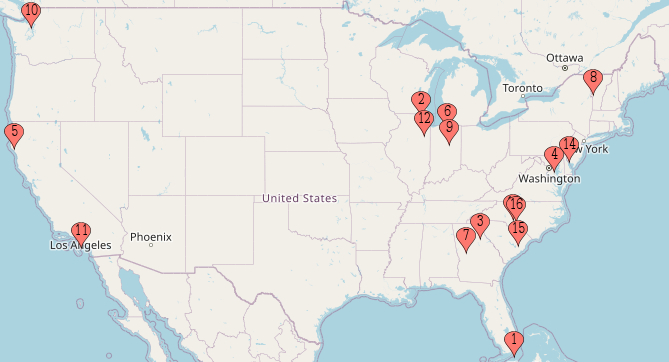
Click map to enlarge
|
|
|
|
|
&uuid=(email)) |
|
|

&uuid=(email))
Feature Your Job Here For 30 Days -
70% Aren't On The Boards
Post your job listing |
|
|
Featured Job Spotlights
Staffing
'Best in Class' Teams
Help Your Colleagues - Your Industry
- Build a
'Best in Class' Community

VP Loss Prevention & Safety
Plano, TX
Leads the enterprise-wide strategy for asset protection, loss prevention,
safety, security, and environmental compliance. Accountable for minimizing
financial and operational risk, strengthening internal controls, and ensuring
regulatory compliance across all locations...

Lead Director, Asset Protection Analytics & Insights
Remote
The Director of AP Analytics and Investigations is responsible for leveraging
analytics, technology, and investigative strategies to support Asset Protection
operations, investigations, and risk mitigation efforts across the
organization...
|
|
Featured Jobs
To apply to any of today's Featured Jobs,
Click Here
|
|
|
|
|
 |
|
|
&uuid=(email)) |
|
|
&uuid=(email)) |
|
&uuid=(email)) |
|
|
&uuid=(email)) |
|

Insight,
humor & heart from
one of LP's most trusted voices |
|
|
Every Trade Show Ends the Same Way.
Somebody packs up with sore
feet, a suitcase full of branded socks, and a notebook containing
exactly three ideas that could actually change their business. Oddly
enough, those three ideas usually justify the whole trip.
Follow this space every day to see more of
'Hedgie's Hot Takes' |
|
|

|
|
See More Events |
Recruiting?
Get your job e-mailed to
everyone... everyday
Post on our
Featured Jobs Board! |
|
|
Not getting the Daily?
Is it ending up in
your spam folder?
Please make sure to add d-ddaily@downing-downing.com to your contact list, address book, trusted sender
list, and/or company whitelist to ensure you receive our newsletter.
Want to know how?
Read Here
|
|
 |

copyright 2009-2029
all rights reserved globally |
&uuid=(email))




&uuid=(email))
&uuid=(email))
&uuid=(email))
&uuid=(email))