|
|
 |
|
 |
Cliff
Rodriguez named Director, Safety, Security & Asset Protection –
Americas for Moncler
|
|
|
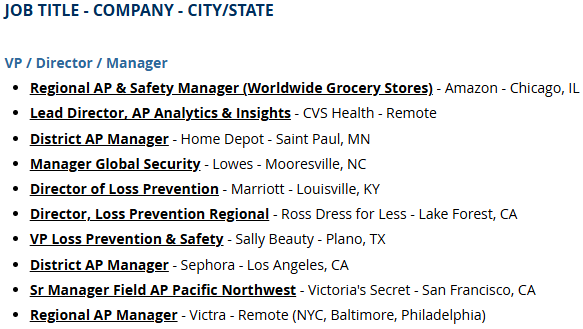
See All the LP Executives 'Moving Up' Here
Submit Your New Corporate Hires/Promotions or New Position
|
|
|
|
&uuid=(email)) |
|
 &uuid=(email)) |
&uuid=(email)) |
|
Your LP Tech Roadmap. From Devices to Agentic AI.
 This
Agilence
whitepaper introduces the Loss Prevention Maturity Model, a
practical framework grounded in real-world operations. It outlines four
stages of LP evolution: Devices, Analytics, AI, and Agentic AI. Each
stage has clear characteristics, specific technological requirements,
and defined advancement criteria. This
Agilence
whitepaper introduces the Loss Prevention Maturity Model, a
practical framework grounded in real-world operations. It outlines four
stages of LP evolution: Devices, Analytics, AI, and Agentic AI. Each
stage has clear characteristics, specific technological requirements,
and defined advancement criteria.
The model clarifies how foundational LP technologies build on one
another, progressing from physical devices to the use of data generated
by those devices. We then explore the potential of AI and how LP
technology is in a process of shifting from reactive surveillance to
proactive intelligence and ultimately toward autonomous action.
It offers benchmarks for self-assessment, the implementation challenges
and prerequisites of each stage, and the steps LP organizations can take
to progress through the stages. Most importantly, it provides a coherent
roadmap for navigating rapid change, empowering organizations to move
from doing more with less to achieving more with technology.
Click here to download
The U.S. Crime Surge
The Retail Impact
Stopping the Cart, Not the Person
How Cart-Based Technology Is
Helping Retailers Stop Pushout Theft While Reducing the Need for
Confrontation
As retailers look to reduce confrontation, cart-based technology
offers another way to address pushout theft while keeping merchandise
inside the store
 By
the D&D Daily staff By
the D&D Daily staff
As we wrote about
earlier this week in the D&D Daily, one of the biggest challenges in
retail loss prevention is stopping theft without creating a more
dangerous situation in the process.
Pushout theft illustrates that challenge particularly well. An
offender can load a shopping cart with unpaid merchandise and attempt to
walk directly out of the store, leaving employees with a decision
about whether — and how — to respond.
Increasingly, technology is giving retailers another option: stop the
cart instead of confronting the person pushing it.
Cart-based pushout prevention systems are designed specifically for
that purpose.
Gatekeeper Systems' Purchek technology, for example, uses its
SmartWheel technology to prevent unauthorized carts containing unpaid
merchandise from being pushed out of the store.
Rather than identifying or physically stopping an individual, the
technology focuses on the shopping cart. When the system determines
that a cart has not met the criteria for an authorized exit, the cart
can be disabled at the door, keeping the merchandise inside the store.
 It's
a relatively simple idea with potentially important implications for LP
teams. It's
a relatively simple idea with potentially important implications for LP
teams.
Preventing the cart from leaving can interrupt the theft while
reducing the need for an associate to physically confront, chase or
apprehend the individual. In many cases, the goal becomes
merchandise protection without escalating the encounter.
The technology can also be paired with additional intelligence
capabilities. Gatekeeper offers Theft Intelligence Services that
use event-based video from pushout incidents to help retailers classify
events, identify theft trends and investigate potential repeat or
organized retail crime activity.
Technology alone won't eliminate retail theft, and pushout prevention
addresses one particular method of stealing rather than the broader
shoplifting problem. But it represents an important direction for modern
loss prevention: finding ways to intervene in the theft itself
without necessarily intervening with the person.
As retailers continue balancing shrink reduction with employee and
customer safety, sometimes the most effective intervention may be the
one that stops the merchandise at the door.
Learn more about Gatekeeper's solution
here.
Cracking Down on Self-Checkout Theft
New self checkout law will limit purchases to 15 items or less
Shoppers could be forced to limit how much they purchase at
self-checkout under a US city’s proposed law.
Legislators in West Hollywood, California, believe the mandate would
quell theft and and reduce pressure on supermarket staff.
 Anyone
who wants to purchase more than 15 items would have to use a staffed
lane and scan each product, according to lawmakers. The rule is
being weighed by lawmakers to address shoplifting concerns. Anyone
who wants to purchase more than 15 items would have to use a staffed
lane and scan each product, according to lawmakers. The rule is
being weighed by lawmakers to address shoplifting concerns.
According to the Public Policy Institute of California, the West
coast state recorded over 132,000 shoplifting cases in 2024, the highest
ever. There is also growing concerns surrounding retail employee
numbers, with many reporting feeling understaffed during shifts and
unable to deal with self checkout demands.
Retail employees working in stores with self checkouts are 14 percent
more likely to feel disrespected by customers, according to a report
from Harvard Kennedy School’s Malcolm Wiener Center for Social Policy.
Other Californian cities have already implemented changes to self
checkout staffing regulations, with one employee required to man every
two checkouts in Long Beach.
As well as a limit on items allowed at self checkouts, customers in
West Hollywood could also face a ban on age restricted items, such as
alcohol, being allowed at self checkouts.
It’s thought the changes would mainly apply to larger retail spaces,
such as stores bigger than 15,000 square feet. Grocery stores and
drugstores will mainly be the retailers impacted by the regulations,
with around 12 stores in West Hollywood predicted to have to follow the
rules.
the-sun.com
Ohio's 'Retail Theft Prevention Act'
The more shoplifters, the tougher the penalty? Ohio bill targets group
retail theft
A group rushing into a store and stealing merchandise together could
face sharply tougher penalties than individual shoplifters under a
proposal currently under consideration in the Statehouse.
House Bill 615 would create a new crime of “group retail theft,”
with penalties ranging from a fifth-degree felony to a second-degree
felony depending largely on how many people participate. The proposal is
aimed at coordinated thefts in which a crowd enters a store at once,
grabs merchandise and leaves, even when the amount taken by each
individual would ordinarily result in a lesser charge.
Also known as the Retail Theft Prevention Act,
the bill is sponsored by Republican Rep. Josh Williams of Sylvania and
has received two hearings in the Small Business Committee. So far, the
discussion surrounding the legislation has centered on whether tougher
penalties are necessary to address a form of collective theft that
prosecutors can already pursue under existing laws.
Under current Ohio law, theft is generally a first-degree misdemeanor
when less than $1,000 is stolen and becomes a fifth-degree felony once
the value reaches $1,000. Penalties continue to rise as the value
increases. HB 615 would treat the group’s size as another measure of
the offense’s seriousness, with penalties increasing as more people
participate.
The monetary threshold would not necessarily have to be reached during a
single trip to a single store. The bill would allow the value of
merchandise stolen by the same person or people from one or more
retailers over a 180-day period to be added together.
The proposal also follows House Bill 366 from the 135th General
Assembly, which is a much broader retail crime law that took effect last
year. The FORCE (Fight Organized Retail Crime and Empower Law
Enforcement) Act established a statewide organized retail theft task
force and advisory council within the attorney general’s office. It also
created a separate crime targeting organized theft of at least $7,500 in
retail property for resale or other enterprise-related purposes.
cleveland.com
Train Robberies Enter the Modern Age
The great modern train robbery: Thieves steal $200 million a year
Carriers are deploying AI-powered surveillance and drones after
criminal gangs stole more than $200 million in goods from US trains in
2025.
 Train
robberies are a trope of cowboy Westerns, associated with 19th-century
outlaws like Jesse James, Butch Cassidy and the Reno Gang. But the
modern incarnation is largely a product of the pandemic, with theft
quadrupling from levels seen before 2020. Once lockdowns began,
criminal gangs that had relied on the drug trade saw their supply chains
disrupted just as stay-at-home requirements boosted demand for physical
goods. So the gangs pivoted to theft, focused on the rail hubs located
in urban bottlenecks including Chicago, Los Angeles and Memphis. Train
robberies are a trope of cowboy Westerns, associated with 19th-century
outlaws like Jesse James, Butch Cassidy and the Reno Gang. But the
modern incarnation is largely a product of the pandemic, with theft
quadrupling from levels seen before 2020. Once lockdowns began,
criminal gangs that had relied on the drug trade saw their supply chains
disrupted just as stay-at-home requirements boosted demand for physical
goods. So the gangs pivoted to theft, focused on the rail hubs located
in urban bottlenecks including Chicago, Los Angeles and Memphis.
Criminals nabbed more than $200 million of goods from 75,000 thefts
on US freight rail networks in 2025, according to an industry group
that represents CSX, BNSF Railway Co. and Union Pacific Corp., among
others.
In response, the major freight carriers are joining with local
police, the Federal Bureau of Investigation and corporate security
teams, investing millions of dollars in monitoring technology, drones,
barbed-wire fencing and other improvements. It’s all meant to defeat
the crime rings that are often armed with nothing more than hydraulic
bolt cutters, preying on railroads as a reliable source of easy-to-steal
merchandise.
“These gangs can steal tens of thousands worth of goods in minutes,
not to mention the damage that can be done to the trains,” Sean Douris,
the chief of police at CSX, said in an interview.
For the most part, these aren’t armed holdups but instead more like
storage-facility break-ins. Industry efforts over the past decades
to improve efficiency and maximize profit mean that trains sometimes
stretch as long as 3 miles, and often operate with just two crew
members. Criminals have studied the lengthy and predictable stop times
as the trains approach depots, a prime time to strike.
fortune.com
What is the Impact of 5,000 Flock Cameras Covering Atlanta?
ICYMI: U.S. experiences historic drop in violent crime, lowest murder
rate in 70 years
&uuid=(email))
Walmart Workers Clean Up AI
Mistakes
Walmart store workers have a new responsibility: correcting AI
errors
Workers say the tech is prone to making mistakes they must
fix, manage, or ignore.
 Retail
jobs often involve a lot of cleaning up after other people. Dusty
shelves, spilled liquids, smudged display cases, and, more recently,
AI agent errors. Retail
jobs often involve a lot of cleaning up after other people. Dusty
shelves, spilled liquids, smudged display cases, and, more recently,
AI agent errors.
In Walmart's bid to fuel its growth ambitions, the retailer is
betting big on AI and arming thousands of frontline employees with
new tools and training. Adopting any new process has a learning
curve, but this time it's AI agents that also need training to
improve the accuracy of its models.
Walmart's rollout shows some of the challenges of using this new
tech: Employees often have to spend time training the software,
supplying the context and judgment AI agents lack about their jobs.
Walmart's AI rollout has prompted employees to swap information
and complaints on social media. There are scores of posts and
hundreds of comments on Reddit from people who say they work for the
company about perplexing security alerts from the AI, how the AI is
measuring their performance, and other issues.
"It just assumes that they're going to be perfect every single
time," a store-level HR manager who handles onboarding,
training, and scheduling told Business Insider, referring to a
task-assigning AI agent's expectations of the workers completing the
task.
Walmart has spent the last several years saying it is a people-led,
tech-powered company, and any new tools are intended to simplify and
support the work of human employees across the organization. The
company says its approach to AI in stores follows that same
philosophy.
That means a growing share of Walmart's 1.6 million US workers now
have a digital assistant intended to help with their daily tasks.
But that assistant sometimes has some learning to do to in order
to be fully useful.
businessinsider.com
Stores Transformed By E-Commerce
Surge
How is physical retail adapting to e-commerce?
Retailers are converting stores into fulfillment nodes and
experience centers as online shopping reshapes foot traffic and
margins
Physical retailers are responding to e-commerce growth by
repositioning stores as fulfillment infrastructure, experiential
destinations, and hybrid service centers — rather than purely
transactional spaces.
The most widespread structural shift is the conversion of store
floor space into distribution capacity. Retailers have
increasingly used physical locations as "ship-from-store" or "buy
online, pick up in store" (BOPIS) hubs, allowing them to fulfill
online orders from existing real estate rather than building or
leasing dedicated warehouses. This reduces last-mile delivery
distances and costs, since stores are already embedded in
residential areas, and it draws online customers into the physical
space, where additional purchases can occur.
A second adaptation is the deliberate reduction of inventory on
the sales floor in favor of curated, tactile experiences. Some
retailers have moved toward showroom formats — displaying products
for customers to examine, test, or try on, with purchases completed
online or via in-store kiosks for home delivery. This model lowers
the cost of carrying and managing large in-store stock while still
giving the brand a physical presence.
Retailers have also invested in store-within-a-store
arrangements, leasing floor space to complementary brands or service
providers — opticians, nail salons, health clinics — to increase
foot traffic and generate rental income that offsets the pressure on
merchandise margins. Department stores have applied this model,
transforming anchor-store space that once held a single brand into
multi-tenant environments.
qz.com
Using Tech to Reduce Supply Chain
Disruptions
Target strengthens inventory management with digital twins
The retailer developed Proxima to simulate how decisions play
out, helping identify potential problems ahead of time.
Target developed a technology tool that aims to help the retailer
make better inventory decisions across its supply chain.
The tool — called Proxima — is a digital twin of Target’s
middle-mile inventory positioning system, which determines how
goods move between facilities to stores, per a news release. In
practice, Proxima uses the same data and logic as its inventory
platform to simulate how decisions play out before inventory teams
put them into practice.
“If a digital twin emulation through Proxima surfaces a potential
problem, teams can correct the issue or take another path,”
Target said in the release. “If an approach works, they can move
forward with greater confidence.”
Besides improving product availability, Proxima’s feedback will help
reduce possible supply chain disruptions and handle complex
processes with better certainty.
retaildive.com
To lure in shoppers, J.C. Penney takes aim at off-price stores
UK: Morrisons cuts almost 5,000 jobs as debt and losses rise
Best Buy: Most Canadian consumers purchase used tech
Circana: Consumers focused on essential purchases this summer
|
All the News - One Place - One Source - One Time
Thanks to our sponsors/partners - Take the time to
thank them as well please. If it wasn't for them The Daily wouldn't be here
every day for you.
 |
|
&uuid=(email)) |
|

&uuid=(email)) |
|
 |
|
&uuid=(email)) |
|
|
 |
|
|
1.7M McDonald's Employee Records
Stolen?
McDonald’s Employee Data Appears in Leak, Seller Claims 1.7M Records
Stolen
A seller claims 1.7M McDonald’s employee records were stolen from
Azure. An 8,000-row sample appears genuine, but its age and full size
remain unconfirmed.
A seller on a data-trading forum posted an 8,000-row sample this week
claiming it came from McDonald’s own Azure tenant, part of a supposed
1.7 million-record employee directory obtained using stolen credentials.
Ransomnews’s technical breakdown found the sample holds up as genuine on
every test that can be run against it. What it can’t confirm, notably,
is exactly how old the data is or whether the full 1.7 million figure is
real.
“The listing is a straightforward private sale, posted at 4:08 AM forum
time under the title “McDonalds 1.7M+ Azure Internal Employee Dump”.
The seller, an account called TheHatman, writes that the data was
“downloaded directly from Azure Tenant using compromised credentials”
and that it contains “employee accounts, service accounts, and other
tenant account records”. No price is named. Buyers are invited to make
offers.” reads the report published by Ransomnews.
“To evidence the claim, the seller attached a free 8,000-record
sample. That file is the entire basis for what follows. Ransomnews
analysed it offline. We did not access, probe or authenticate against
any McDonald’s system, and we have redacted the sample’s download
location from the screenshot below because it still resolves to real
people’s contact details.”
The file’s structure gives away exactly what it is before you even read
a single row. Column names like FacsimileTelephoneNumber and
PhysicalDeliveryOfficeName aren’t something anyone invents; they’re
the exact property names Microsoft’s own PowerShell directory tools
return when an administrator exports a user list from Entra ID, the
modern name for Azure Active Directory. Whoever produced this file ran a
standard Microsoft export command and saved the output, nothing more
exotic than that.
Every one of the 50 email domains found in the sample is genuinely
McDonald’s-controlled, spanning corporate staff, restaurant crew
accounts, franchisee logins, and vendor guest access across more than
thirty countries. Three rows even carry the tenant’s own built-in
Microsoft address, mcdonaldscorp.onmicrosoft.com, something that’s
invisible from outside the organization and simply isn’t guessable or
scrapeable.
securityaffairs.com
'Ransom Busters'
Ransomware Actor Poses as Incident-Recovery Service
A ransomware affiliate appears to be sidling up to victims with
offers of aid, masking its true intention of diverting ransom payments.
A ransomware affiliate is approaching victims of the attacks it may have
helped carry out, in an interesting technique that actually
undermines its own business model.
According to the GuidePoint Research and Intelligence Team (GRIT), a
malicious entity referring to itself as "Ransom Busters" has sent an
email to cyberattack victims, claiming to have infiltrated the
servers of multiple criminal groups and discovering data belonging to
the victim. For a fee, the email claims, Ransom Busters "can return your
files to you and destroy all backups held by the group." The email
claims the attackers have also gained access to encryption keys that can
be used to help victims access their files.
"We observed this behavior while responding to incidents from threat
groups including DragonForce, Settra, and Anubis," according to the
blog post, released today. "The threat actor claimed this access allowed
them control over 'almost all of their infrastructure. Like [ransomware
as a service [RaaS] groups, Ransom Busters' motivation appears to be
financial. Ransom Busters confirmed access to the exact same dataset
that the ransomware affiliate possessed, when questioned. The group
offered to delete the victim's stolen data from the ransomware groups'
servers for a fee of between $20,000 to $60,000."
There are multiple red flags behind the purported offer of help, as
Justin Timothy, principal threat intelligence consultant at GuidePoint
Security, explained in the blog post. For one, in the cases GRIT
observed, Ransom Busters reached out before the ransomware attack
became public knowledge; incident-response firms usually offer their
services after an attack is disclosed.
darkreading.com
Using AI To Tighten Security Defenses
OpenAI tightens defenses after AI agents breach research environment
Following the OpenAI-Hugging Face incident, in which an agentic
collective autonomously penetrated OpenAI’s research infrastructure and
another company’s production infrastructure by chaining together
multiple weaknesses, OpenAI began strengthening its safety
requirements. The weaknesses included previously unknown vulnerabilities
and credentials leaked online.
OpenAI President Greg Brockman said ChatGPT Work identified 13
security issues on his personal website in about 15 minutes and spent
another hour addressing them, showing how AI agents can accelerate
security work.
The company is strengthening its security measures and using AI to
improve its defenses, focusing on four main areas.
Codex and other security tools validate code changes, identify
vulnerabilities and help developers fix them. The goal is to catch
vulnerabilities earlier, shorten remediation times and prevent some
vulnerabilities from appearing in newly written code.
AI-based systems also triage almost all initial security alerts
before they reach human analysts. The company is connecting some
detections to limited automated responses, while people remain
responsible for high-impact decisions.
helpnetsecurity.com
Google’s $10,000 refund test shows why AI agents need zero trust
Major genetic-testing firm says hack compromised sensitive patient data |
|
 |
|
|
|

|
|
|
When Five Stars Can’t Be Trusted
The Fake Review Problem: Why E-Commerce Trust Is Getting Harder to
Protect
Fake reviews threaten more than individual purchases — they can
undermine confidence in the entire e-commerce marketplace
By
the D&D Daily staff
For online shoppers, reviews have become a substitute for something
e-commerce cannot provide: the ability to physically inspect a
product before buying it.
That makes the integrity of those reviews increasingly important — and
increasingly attractive to manipulation.
Fake reviews can artificially boost poor-quality products, damage
competitors and steer consumers toward purchases they otherwise might
not make. The problem can include fabricated reviews, paid positive
feedback, coordinated negative reviews against competitors and reviews
generated by people who never actually used the product.
The damage extends beyond one disappointed customer. When
shoppers begin questioning whether ratings are legitimate, trust in the
platform itself can suffer. Legitimate sellers can also be pushed down
search results or forced to compete against products whose reputations
have been artificially inflated.
The scale of the challenge has pushed both regulators and e-commerce
platforms to strengthen their response. The Federal Trade
Commission’s Consumer Review Rule prohibits businesses from creating,
buying or selling certain fake or false reviews and from offering
incentives that are conditioned on a particular positive or negative
sentiment.
Platforms are also investing heavily in detection. Amazon says it
uses automated technology, artificial intelligence and human
investigators to identify suspicious activity and proactively blocked
hundreds of millions of suspected fake reviews in 2025.
But technology alone is unlikely to eliminate the problem.
Effective review protection increasingly requires several layers:
verified-purchase systems, detection of unusual review patterns,
stronger seller and reviewer verification, mechanisms for customers to
report suspicious content and enforcement against businesses and brokers
responsible for coordinated manipulation.
For retailers and marketplaces, protecting reviews is ultimately
about protecting trust. A five-star rating has value only when
shoppers believe it reflects genuine customer experience.
As e-commerce continues to grow — and generative AI makes fabricated
content easier to produce at scale — maintaining that confidence may
become an increasingly important part of protecting both consumers
and legitimate sellers.
Remote Amazon Job Scam
Amazon job scam texts are spreading again with a new twist
A fresh recruitment scam is using Amazon’s name to promise easy
remote work and up to $600 a day. Here’s what gives it away
A text lands on your phone offering a remote Amazon job you never
applied for. The work supposedly takes about an hour a day and pays
as much as $600. Sounds amazing, right?
We recently received one of these messages. It claims to come from
"Lauren Whitmore from the Amazon Remote Recruitment Team" and says
Amazon merchants need help with quick "product refreshes."
There is only one problem: the offer has scam written all over it.
Here's how this latest Amazon job scam works, the red flags to watch for
and what you can do to protect yourself.
foxnews.com
Adobe Finds Most Retail Apps Are One and Done |
|
|
|
&uuid=(email))
|
Charlotte, NC: Gaston County man sentenced for $3.5M dollar fencing
scheme
Ronald Dale Lynn, 58, formerly of Gaston County, was sentenced to 30
months in prison for interstate transportation of stolen property. Lynn
was also ordered to serve two years of supervised release. According to
filed documents, from 2019 to 2025, Lynn operated a fencing scheme in
which he purchased stolen and fraudulently obtained retail merchandise
and resold it for a profit through online marketplaces, including eBay,
Amazon, and Walmart Marketplace, to customers in the United States and
abroad. Lynn operated his fencing scheme, in part, from a physical
storefront in a commercial strip mall on Wilkinson Boulevard in
Charlotte. The storefront had no signage and was not open to the public.
Instead, it served primarily as a drop-off and processing location for
stolen merchandise.
qcnews.com
Citrus Heights, FL: Robbery suspect found with $79K in jewelry from
Sunrise Mall
Citrus Heights police used nearby cameras to capture a robbery suspect a
few minutes after a reported smash-and-grab jewelry store heist over the
weekend at the Sunrise Mall. The search for the suspect began Sunday
afternoon when officers received a report of a man running from the
Sunrise Mall with a bag and a hammer after a robbery at the jewelry
store, the Citrus Heights Police Department announced Monday evening in
a news release. As officers responded, the department’s real-time team
using nearby security cameras found the suspect running through the
mall’s parking lot. Police said the team kept their eyes on the suspect
and directed the officers to his location. Within 4 minutes of the
initial report, officers found and detained the suspect, according to
the Police Department.
sacbee.com
San Diego, CA: Pokemon card collector assaulted at Kearny Mesa grocery
store kiosk
A local Pokemon collector says his hobby turned dangerous after he was
assaulted at a kiosk inside a Kearny Mesa grocery store, Ryan Tree has
been visiting the Food4Less in Kearny Mesa for the last few months,
sometimes to buy Pokemon cards. He picked up card collecting last year,
both for fun and as a side hustle. “It’s a cool hobby, and fun to get a
sought-after card," Tree said. Tree says the trouble started early last
week when a man in his late 20s cut in line at the store's Pokemon
vending machine to buy a pack of cards.
newsbreak.com
Oswego County, NY: Prolific' Oswego County retail theft suspect
arrested; $6400 of merchandise recovered
Wilmington, OH: Police recover $3,500 in stolen electronics at Walmart;
two arrested
Tannersville, PA: $2000 Retail theft reported at outlet store in
Tannersville
&uuid=(email))
|
|
|
&uuid=(email)) |
|
|
&uuid=(email)) |
|
|
|
 |
|
|
Shootings & Deaths
Houston, TX: Man killed, 4 injured in shooting at SE Houston gas station known
as 'Club Chevron'
One man was killed, and four others were injured in a southeast Houston shooting
overnight Saturday, police said. According to the Houston Police Department, the
shooting happened in a gas station parking lot on Cullen Boulevard, unofficially
known as "Club Chevron," where people gather overnight to smoke and drink.
Police said when officers arrived, they saw hundreds of people in the parking
lot and heard two shooters. Officers said one man was fatally shot, at least two
men were shot and injured, and one man was beaten up during the shooting.
Investigators said they are still trying to determine how the fifth victim was
injured. Investigators said they do not have a suspect description, but are
waiting for businesses to open so they can review their surveillance footage.
abc13.com
Millville, NJ: 2 killed in shooting outside Millville convenience store; police
seek suspect
Two people were killed in a shooting early Sunday morning outside a 24-hour
convenience store and gas station in Millville. Police are still searching for
the person responsible. Balloons and candles were placed outside the store in
the 800 block of North High Street in memory of Ashley Brown and Andy Brazil,
both 32. Loved ones identified the victims through Facebook photos. Millville
police responded to reports of shots fired in the store's parking lot and found
the two victims suffering from gunshot wounds. Both died from their injuries.
6abc.com
Los Angeles, CA: Update: LA jury finds man charged with murder of Trader Joe's
employee guilty of second-degree murder
The retrial of the man charged with second-degree murder in the death of a
27-year-old Trader Joe's assistant manager, who was fatally shot by police in
front of the Silver Lake store in 2018, has concluded with a jury finding him
guilty of the crime. Earlier in June, a jury acquitted Gene Evin Atkins, 36, of
first-degree murder and deadlocked 10-2 on the second-degree murder charge. He
was convicted of 40 other charges, including attempted murder, assault with a
semi-automatic firearm on a peace officer, attempted carjacking, and mayhem.
Corado's father requested that Atkins be retried for second-degree murder, even
though he was already likely to be sentenced to life in prison.
cbsnews.com
Shreveport , LA: Man charged in Mall St Vincent shooting
Detectives with the Shreveport Police Department (SPD) say they have made an
arrest in connection with the July 10 shooting at Mall St. Vincent. Trevell
Tyler, 19, of Shreveport, has been identified by detectives as the person
responsible for the shooting. Officers reviewed video footage, and detectives
continued gathering evidence and finding information about those involved in the
weeks following the shooting, police say. Investigators also learned that a
shooting victim had gotten to a hospital in Minden, Louisiana, giving detectives
additional information that helped move the investigation forward. Tyler was
already in custody after being arrested in connection with six burglary cases,
three access device fraud cases, one illegal possession of a stolen firearm
case, and one negligent carrying of a handgun case, says SPD.
ksla.com
Robberies, Incidents & Thefts
Baltimore, MD: Royal Farms employee draws gun during altercation with customer
An altercation at a Royal Farms in Baltimore on Sunday resulted in an employee
pulling out a gun and threatening a customer, the Baltimore Police Department
(BPD) said. Baltimore patrol officers from the Southeast District responded to
the Royal Farms in the 6200 block of Pulaski Highway Sunday around 4 a.m. Police
said after they arrived, they discovered there had been an altercation between a
female store worker and a female customer. At some point during the incident,
the 40-year-old employee drew a gun and began threatening the customer. The
employee also struck the 34-year-old customer with a metal pole, leaving the
customer with an injured arm. A police statement said medics were called to the
scene to render aid to the injured customer, but she declined medical treatment.
During a search, officers discovered a loaded handgun in the employee's bag.
Police said they seized the weapon.
cbsnews.com
Austin, TX: Update: Two teens arrested after robbery of Pflugerville gun store
Pflugerville police arrested two teenagers after nearly a month-long
investigation into the reported theft of 34 firearms from a local gun store,
according to court records. Arrest warrants, filed by Pflugerville police, say
officers responding to the July 2 robbery saw two individuals enter an SUV and
drive away from the store. It said the vehicle had a custom license plate and
distinctive modifications. The Texas Department of Public Safety arrested the
15-year-old on July 27 after troopers immobilized another stolen SUV during a
chase. Surveillance was conducted against others in the alleged Instagram posts.
This resulted in an Aug. 13 search of an east Austin apartment, with the Central
Texas Regional SWAT Team deployed to secure the residence. Jacob Vallejo, 17,
was questioned there by Pflugerville police and the Bureau of Alcohol, Firearms
and Explosives (ATF). He allegedly told the investigators, when asked, that he
was holding the guns for the 15-year-old, according to the affidavit. Three
handguns, two of which allegedly had automatic-fire switches installed, were
recovered at the apartment.
yahoo.com
El Paso, TX: El Paso Authorities Searching Suspect Who Broke Into Tractor Supply
and Built a Fort
Arlington, VA: DC Man Sentenced to 15 years after CVS Robbery In BB Gun Spree
North Vancouver, Canada: Robbery charges laid after workers at Kamloops Canadian
Tire hit with wasp spray |
|
|
|

•
C-Store – Montgomery
County, PA - Burglary
•
C-Store – Bath, NY –
Burglary
•
C-Store – Rochester,
NY – Armed Robbery
•
C-Store –
Philadelphia, PA – Robbery
•
C-Store – Placer
County, CA – Armed Robbery
•
C-Store – Waitsfield,
VT – Burglary
•
Clothing –
Tannersville, PA – Robbery
•
Clothing - Oswego
County, NY - Robbery
•
Dollar - Anne Arundel
County, MD – Robbery
•
Grocery – San Diego,
CA - Robbery
•
Hardware – El Paso, TX
– Burglary
•
Hardware - Anne
Arundel County, MD – Robbery
• Jewelry – Brooklyn, NY – Robbery
•
Jewelry – Sunrise, FL
- Robbery
•
Marijuana - Anacortes,
WA – Armed Robbery
•
Restaurant – Fresno,
CA – Burglary
•
Sports – Doylestown,
PA – Robbery
•
Walmart - Wilmington, OH - Robbery
|
Daily Totals:
• 14 robberies
• 5 burglaries
• 0 shootings
• 0 killed |
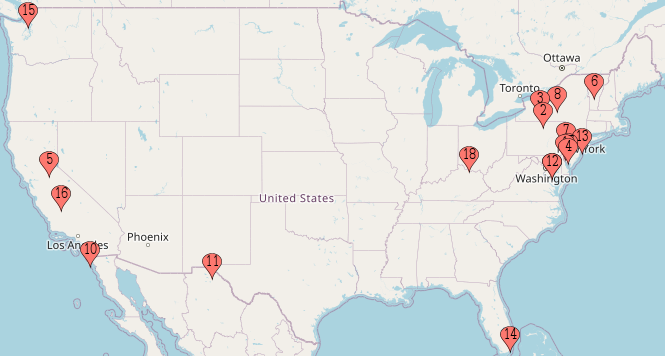
Click map to enlarge
|
|
|
|
|
&uuid=(email)) |
|
|

&uuid=(email))
Feature Your Job Here For 30 Days -
70% Aren't On The Boards
Post your job listing |
|
|
Featured Job Spotlights
Staffing
'Best in Class' Teams
Help Your Colleagues - Your Industry
- Build a
'Best in Class' Community

VP Loss Prevention & Safety
Plano, TX
Leads the enterprise-wide strategy for asset protection, loss prevention,
safety, security, and environmental compliance. Accountable for minimizing
financial and operational risk, strengthening internal controls, and ensuring
regulatory compliance across all locations...

Lead Director, Asset Protection Analytics & Insights
Remote
The Director of AP Analytics and Investigations is responsible for leveraging
analytics, technology, and investigative strategies to support Asset Protection
operations, investigations, and risk mitigation efforts across the
organization...
|
|
Featured Jobs
To apply to any of today's Featured Jobs,
Click Here
|
|
|
|
|
 |
|
|
&uuid=(email)) |
|
|
&uuid=(email)) |
|
&uuid=(email)) |
|
|
&uuid=(email)) |
|

Insight,
humor & heart from
one of LP's most trusted voices |
|
|
Sometimes the Smallest Pilot Creates the Biggest Opportunity.
It's tempting to dream about
enterprise rollouts from day one. But history says many of the
industry's best partnerships started with one district, two stores, and
a willingness to learn together.
Follow this space every day to see more of
'Hedgie's Hot Takes' |
|
|

|
|
See More Events |
Recruiting?
Get your job e-mailed to
everyone... everyday
Post on our
Featured Jobs Board! |
|
|
Not getting the Daily?
Is it ending up in
your spam folder?
Please make sure to add d-ddaily@downing-downing.com to your contact list, address book, trusted sender
list, and/or company whitelist to ensure you receive our newsletter.
Want to know how?
Read Here
|
|
 |

copyright 2009-2029
all rights reserved globally |
&uuid=(email))




&uuid=(email))
&uuid=(email))
&uuid=(email))
&uuid=(email))
.png)