|
|
|
&uuid=(email)) |
|
 |
|
Gatekeeper Systems names Matt Howard Vice President, Head of Product
.png) Matt
brings over 14 years of product leadership at the intersection of retail store
systems, enterprise technology, and platform transformation. Most recently, he
served as VP of Product at T2 Systems (a Verra Mobility company), where he drove
adoption of the product operating model and partnered with engineering to shift
the organization from legacy release cycles to modern CI/CD deployment. Matt
brings over 14 years of product leadership at the intersection of retail store
systems, enterprise technology, and platform transformation. Most recently, he
served as VP of Product at T2 Systems (a Verra Mobility company), where he drove
adoption of the product operating model and partnered with engineering to shift
the organization from legacy release cycles to modern CI/CD deployment.
Before that, Matt held progressively senior product roles at Lowe's and Target
Corporation, leading cross-functional teams through major platform
modernizations, including overseeing the design and rollout of Target's
self-checkout technology across 1,600+ stores. He holds an MBA from Indiana
University's Kelley School of Business.
Matt will own
Gatekeeper's product strategy and align our roadmap across hardware, AI, and
SaaS as the company continues building an integrated, AI-driven IoT platform.
Congratulations, Matt! |
|
See All the LP Executives 'Moving Up' Here
Submit Your New Corporate Hires/Promotions or New Position
|
|
|
|
&uuid=(email)) |
|
 &uuid=(email)) |
&uuid=(email)) |
|
In Case You
Missed It
Interface Systems Releases 2026 Retail Loss Prevention Benchmark
Report
Annual study of
1.6 million monitoring events across 18,258 U.S. retail locations
shows AI-powered technologies and interactive remote video
monitoring deliver measurable results for retail loss prevention
teams
 St.
Louis, MO –
Interface
Systems, a leading provider of AI-powered security and expert
remote video monitoring for restaurants, retailers, and commercial
businesses, recently released its
2026 Retail Loss Prevention Benchmark Report, an annual
study based on 1.6 million remote monitoring events across 18,258
U.S. retail locations and 51 brands throughout 2025. St.
Louis, MO –
Interface
Systems, a leading provider of AI-powered security and expert
remote video monitoring for restaurants, retailers, and commercial
businesses, recently released its
2026 Retail Loss Prevention Benchmark Report, an annual
study based on 1.6 million remote monitoring events across 18,258
U.S. retail locations and 51 brands throughout 2025.
The report provides operational data at a scale to help retail loss
prevention leaders understand when risk peaks, which threats
escalate fastest, and which intervention strategies prove most
effective across thousands of monitored locations.
Click here to read more
The U.S. Crime Surge
The Retail Impact
Safer Workers, Smarter Theft
Prevention
Protecting Workers and Deterring Theft: Body Cameras Reach the Sales
Floor
Highlights from the International Council of Shopping Centers
Security Summit
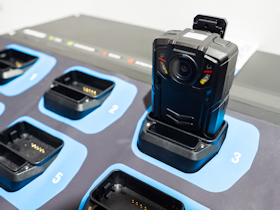 Last
month in Columbus, Ohio, the International Council of Shopping Centers
(ICSC) Security Summit brought together the people who keep shopping
centers safe—operators, property owners, loss-prevention leaders, and
the security professionals they contract with. One item on the agenda
was body-worn cameras, a technology I have spent years studying and, as
a retired New York City police officer, wearing myself. But the most
valuable topic of the day ran through nearly every session: The
retail floor has become a dangerous place to work, the public safety net
is stretched thin, and private operators are increasingly being asked to
fill the gap themselves. Last
month in Columbus, Ohio, the International Council of Shopping Centers
(ICSC) Security Summit brought together the people who keep shopping
centers safe—operators, property owners, loss-prevention leaders, and
the security professionals they contract with. One item on the agenda
was body-worn cameras, a technology I have spent years studying and, as
a retired New York City police officer, wearing myself. But the most
valuable topic of the day ran through nearly every session: The
retail floor has become a dangerous place to work, the public safety net
is stretched thin, and private operators are increasingly being asked to
fill the gap themselves.
Those conditions reframe much of what is often dismissed as “more
surveillance” into something closer to a private response to a community
problem. To formulate that response, we must ask ourselves three
questions: 1) How do we protect workers on the floor? 2) How do we deter
retail theft? 3) How can we do both without building more intrusive
surveillance infrastructure?
The Threat Is No Longer Mostly About
Merchandise
The best measure of danger is not in stolen merchandise, but in human
exposure. Security guards experience nonfatal workplace violence at
a rate dramatically higher than the average employee across occupations,
and protective-service workers account for nearly a fifth of all
workplace homicides in the United States. The cost of confronting a
coordinated theft crew falls on the worker long before it shows up in a
shrink report; thus, body cameras used in retail settings should be
treated as worker-protection tools first and loss-prevention tools
second.
Why Theft Deterrence Has Landed on the Private
Sector
The most important fact about retail theft today is not how much of it
there is, but how little of it law enforcement is able to respond to,
record, or act on. A striking 64 percent of retailers report fewer
than half of their theft incidents to police, usually for practical
reasons such as limited law-enforcement response, high dollar thresholds
for prosecution, and cases that too often go nowhere. This is why most
retail theft never generates a police report or enters the official
crime statistics.
That calculation is understandable from both sides. Departments are
overextended, and officers know which reports are likely to move or not.
The result is a self-reinforcing cycle in which low reporting
produces weak data, weak data undercuts the case for resources and
prosecution, and lack of response drives reporting lower still.
Governance Is Where the Real Decisions Are Made
The most consequential choices in any body camera program have little to
do with the device. Activation rules, ownership of footage, access
controls, transparency, and retention—all controlled by
operators—separate a defensible program from a latent liability.
The summit left little doubt that the question for operators is no
longer whether body cameras are coming to retail, but how well they will
be implemented. Approached thoughtfully, a program can protect the
workers on the floor, help deter theft, and avoid building surveillance
infrastructure faster than the rules required to govern it. When handled
this way, technology becomes an asset to the people it is meant to
protect rather than a liability waiting to surface.
rstreet.org
The CORCA Debate Heats Up
Rep. Thompson Defends Vote for Retail Crime Bill Amid Concerns over DHS
Surveillance Expansion
 A
bipartisan proposal intended to combat organized retail crime is drawing
increasing criticism from civil liberties advocates, who argue
the legislation extends far beyond addressing theft and instead would
significantly expand the Department of Homeland Security’s surveillance
authority and its role in domestic law enforcement. A
bipartisan proposal intended to combat organized retail crime is drawing
increasing criticism from civil liberties advocates, who argue
the legislation extends far beyond addressing theft and instead would
significantly expand the Department of Homeland Security’s surveillance
authority and its role in domestic law enforcement.
The Combating Organized Retail Crime Act, known as CORCA, passed the
U.S. House with broad bipartisan support, including votes from
Northern California Democratic Reps. Mike Thompson and John Garamendi,
alongside 143 other House Democrats.
Supporters say the measure gives law enforcement additional tools to
dismantle organized retail theft rings, while critics contend the
legislation creates new surveillance infrastructure, broadens
data-sharing between government agencies and private corporations, and
strengthens the role of ICE at a time when many Democrats have pledged
greater oversight of the agency.
The debate has intensified following reports that Senate sponsors are
exploring attaching the legislation to the National Defense
Authorization Act, an annual defense measure that is widely
considered must-pass legislation.
Aiden Cotter, a federal policy expert who has criticized the legislation
and recently authored an opinion article in The Hill, said the title of
the bill masks provisions that substantially expand DHS authority.
Rep. Mike Thompson defended his vote in a statement provided to the
Vanguard.
“When retailers are robbed, consumers feel less safe and business owners
face financial hardship. Unfortunately, organized retail theft is on
the rise nationwide and state and local law enforcement are overwhelmed.
That’s why I joined 143 other Democrats in supporting this popular,
bipartisan bill,” Thompson said.
“This bill helps local, state, and the federal government target and
prosecute serious criminals running organized crime rings — and
importantly, it does not grant the federal government any new authority
to collect data on Americans.”
davisvanguard.org
Industry Leaders Urge Passage of CORCA
Organized thieves are treating N.J. like an ATM. Here’s who you can
call. | Opinion
From Port Newark-Elizabeth to the highways that carry freight across the
Northeast, New Jersey is a gateway for American commerce. Sadly,
it has also become a prime target for cargo theft.
Thieves target high-demand goods such as food, electronics and
everyday consumer products because they can be resold quickly and
are nearly impossible to trace. Organized theft rings operate throughout
New Jersey as part of coordinated multi-state schemes, treating cargo
theft like a business with repeatable tactics and steady returns.
They have mastered cyber tactics that repeatedly put them one step ahead
of law enforcement, so much so that the FBI issued a public warning to
the transportation industry this month.
The impact is staggering. Cargo theft costs the trucking industry an
estimated $18 million every day. Major U.S. railroads reported
losses exceeding $200 million last year, a 50% year-over-year
increase. According to Verisk CargoNet, cargo theft incidents in New
Jersey rose 50% in 2025, the largest year-over-year increase of any
state.
That can change now.
U.S. Sens. Cory Booker and Andy Kim have an opportunity to help the
Senate pass the Combating Organized Retail Crime Act, or CORCA, a
bipartisan bill that would finally create a coordinated federal response
to increasingly sophisticated cargo theft operations.
CORCA would improve real-time data sharing and give law enforcement
the tools needed to track and dismantle criminal networks before the
next shipment vanishes. The House of Representatives recently passed the
bill, and the Senate is the final hurdle before it reaches the White
House.
For New Jersey, the stakes could not be higher. Every stolen
shipment hurts local businesses, squeezes truckers and rail workers and
ultimately contributes to higher prices at the checkout counter.
nj.com
More ORC Store Closures
Organized retail theft is closing stores in vulnerable Seattle
neighborhoods, King County prosecutors warn
The King County Prosecuting Attorney’s Office is charging organized
retail theft cases daily, but said it needs significantly more staff
and funding to keep pace with the volume of crimes driving some stores
out of vulnerable neighborhoods.
Casey McNerthney of the King County Prosecuting Attorney’s Office said
prosecutors handle cases that escalate beyond simple misdemeanor
shoplifting — commercial burglaries, felony thefts, and organized
retail crime rings that repeatedly target the same businesses.
The office has a single senior deputy prosecutor, Stephanie Sato,
dedicated full-time to organized retail crime. McNerthney called her
work essential but said the caseload far exceeds what one person can
manage.
Sato attends multiple monthly coordination meetings, including an East
Side gathering where retailers and law enforcement discuss trends, the
Washington Attorney General’s Task Force, and a group called WA ORCA —
the Washington Organized Retail Crimes Association. Those sessions
help investigators connect suspects across multiple stores and
jurisdictions.
Sato urged business owners to take specific steps to help prosecutors
build felony cases: Document the date, time, and physical
descriptions of suspects; capture surveillance stills of them entering,
exiting, and concealing merchandise; and compile itemized lists of
stolen goods with values.
She also stressed the importance of filing a police report after
every incident, even when business owners feel overwhelmed.
McNerthney acknowledged that small business owners, often operating with
just a few employees, find the documentation burden exhausting.
But Sato has made herself available to help, offering to visit
businesses and train staff on how to respond.
mynorthwest.com
McAllen Crime Rate Falls to 40-Year Low, New Data Shows
Madison police fix annual report following crime data errors
&uuid=(email))
Proactive Safety Shift
Redefining Workplace Safety: The Expanding Role of Environmental
Monitoring
As environmental risks become measurable and predictable through
real-time monitoring, organizations are shifting from reactive to
proactive safety practices.
Ask most EHS professionals to describe an average industrial
environment, and the mental image is pretty consistent: a warehouse, a
manufacturing floor, a construction site. Heavy machinery. Forklifts.
Workers lifting, climbing, operating equipment. The hazards are
physical, the injuries are predictable, and the safety playbook (i.e.
engineering controls, PPE, behavior-based programs) has been refined
over decades.
That picture isn’t wrong. But it’s getting smaller.
A quiet but significant shift is underway in how organizations define
workplace safety risk. Two forces are pushing the boundaries outward
at the same time: a broader category of hazards being pulled into the
safety ecosystem, and a much wider range of environments now being
recognized as industrial sites. Together, they’re redefining what it
means to manage risk at work and expanding the addressable problem
considerably.
For the last several years, the safety conversation has centered on
human risk factors: falls, struck-by events, musculoskeletal injuries
from lifting and repetitive motion, and more. These are the hazards that
drive injuries. They’re historically where programs get built and
budgets get allocated.
There’s a second category of risk that has largely flown under the
radar: environmental conditions. It turns out those conditions are
doing great damage, both financially and to worker safety, than most
organizations initially accounted for.
ehstoday.com
AI on the Job
Here’s what hiring managers and workers think of AI on the job
Artificial intelligence is increasingly showing up in the workplace,
but most participants agree it will not eliminate the need for humans.
Nine-in-10 U.S. hiring managers say AI will never replace the need
for actual employees at their company, and 92% say their company is
committed to preserving a human element in the workplace. Among employed
job seekers whose company uses AI that responded to a recent Express
Employment Professionals-Harris Poll survey, 82% say generative AI will
never replace the need for actual employees where they work.
These findings occur as AI use continues expanding in the workplace.
Eight-in-10 (79%) surveyed hiring managers say their companies use AI,
including 43% who say it's used regularly.
The top areas where hiring manager respondents say their companies most
often rely on people are:
Three-quarters of respondents from companies with two to nine
employees say they prioritize human interaction in customer service,
compared with 51% of respondents from companies with 500 or more
employees.
chainstoreage.com
Convenience is Critical for Shoppers -
Physical Stores Remain Key
ICSC: Consumers value stores for 'simplicity,' 'immediacy'
Convenience is key for consumers – and visits to physical stores are
still playing an important role in making the shopping experience
easier.
According to a new survey from ICSC, shoppers are willing to pay for
convenience in some situations, but many are prioritizing savings and
evaluating whether convenience is worth it. A wide majority (90%)
said they would accept slower shipping in exchange for savings, but
61% noted that lower cost matters more than convenience when shopping
online.
Seven-in-10 respondents said that retailers should offer shipping
that is both free and fast. Sixty percent are willing to accept
slower shipping for savings, while still expecting both free and fast
shipping as the standard.
ICSC noted that as online shopping becomes more expensive and complex
with shipping and transportation costs in flux, stores offer
consumers simplicity, immediacy and flexibility. Nearly six-in-10
(57%) consumers value stores for avoiding shipping fees and delivery
wait times, while 63% value immediate access to products. Sixty-one
percent said they value the ability to see or try products before
buying, while 44% value easier returns and exchanges.
“Our research shows that shoppers are willing to make tradeoffs when the
value is clear, while also placing a premium on transparency and
flexibility,” said Tom McGee, president and CEO of ICSC. “Physical
stores remain an important part of that equation because they help
solve many of the practical challenges consumers encounter when shopping
online.”
chainstoreage.com
RELATED: For luxury, the in-store
experience still reigns
Nominations Are Open
Canadian Security Director of the Year
The Security Director of the Year award program, now in its 21st
year, recognizes outstanding leaders in corporate security.
Past winners have included security leaders in banking, airports,
municipal government, education, health care, retail and more.
If you know a senior security leader employed in an end-user
environment, consider nominating them for Security Director of the Year.
Judges look for qualities including leadership, project management,
problem-solving, mentorship and volunteerism.
The winner will be featured in the fall issue of Canadian Security.
The deadline for entries is July 31, 2026.
The winner should be available for interviews on short notice upon
contest closing. Nominations must adhere to nomination criteria and will
be accepted at the discretion of Canadian Security.
canadiansecuritymag.com
US Consumers Expect To Spend More For Holiday Season 2026
Numerator: Consumers of all ages utilizing AI tools
Survey: Grocers continue investments despite cost pressures, slim
margins
Walmart is lowering prices on thousands of items
|
All the News - One Place - One Source - One Time
Thanks to our sponsors/partners - Take the time to
thank them as well please. If it wasn't for them The Daily wouldn't be here
every day for you.
 |
|
&uuid=(email)) |
|

&uuid=(email)) |
|
|

|
|
Strengthen Retail Security and Enhance Workplace Safety
with Off-Duty Law Enforcement
Discover how off-duty law
enforcement enhances safety and
deters crime while protecting employees and assets.
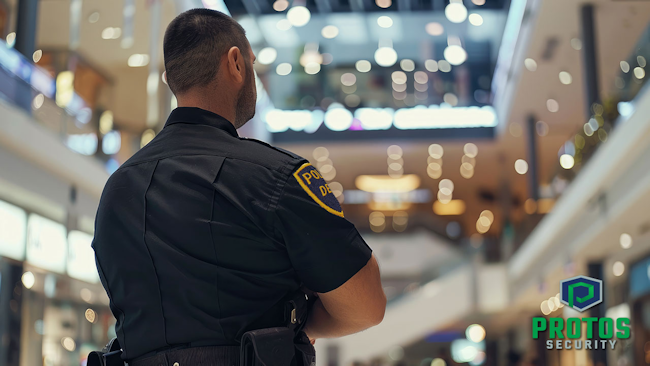
Retailers are under more pressure than ever to prevent theft, ensure
employee safety and maintain business continuity across stores. Criminal
activities are on the rise, and they can severely disrupt operations,
leading to financial losses and a tarnished reputation. Workplace
security not only safeguards assets and sensitive information but also
protects employees and visitors, fostering a safe and productive
environment.
 Hiring
off-duty law enforcement is a proven way to level up your retail
security strategy. Off-duty personnel are uniquely positioned to deter
criminal activities, respond swiftly in emergencies and provide an added
layer of protection. By integrating off-duty law enforcement into your
security strategy, you can create a safer, more secure workplace
environment. Hiring
off-duty law enforcement is a proven way to level up your retail
security strategy. Off-duty personnel are uniquely positioned to deter
criminal activities, respond swiftly in emergencies and provide an added
layer of protection. By integrating off-duty law enforcement into your
security strategy, you can create a safer, more secure workplace
environment.
Protos Security's workplace security blog explores ways that
off-duty law enforcement can benefit retailers and increase workplace
safety by:
-
Creating Safer Store
Environments: Law enforcement provides a strong visual deterrent and
offers peace of mind to both employees and shoppers.
-
Deterring Theft and
Workplace Threats: Regular patrols, surveillance and expert situational
awareness reduce the risk of crime before it starts.
-
Responding Swiftly to
Emergencies: Off-duty law enforcement react quickly to high-stress
situations, minimizing harm and restoring order with calm precision.
When you need trained law enforcement,
Protos Security offers second- to-none coverage through the nation’s
largest off-duty law enforcement network. With 60,000 off-duty personnel
and more than 1,400 agencies, we provide expertise when and where you
need it.
Want to reduce shrink, strengthen operations and keep your workplace
secure?
Learn More Here
 |
|
&uuid=(email)) |
|
|
 |
|
|
Prioritizing AI Agent Security
How to prioritize AI agent security by business impact
Inventory has to show which agents create business risk and how far
damage could spread if they are misused, compromised or left
unmanaged.
Prioritizing agent risk starts with understanding how each agent
operates, what it can reach and which business process it can affect.
Access: what can the agent read,
write, update or delete? Read-only access to public documentation
creates limited exposure. Write access to customer records, financial
data, support tickets or identity configurations can turn an agent from
automation into incident.
Permission scope: many agents
inherit permissions from users, service accounts, OAuth grants or API
keys. A tool connected for a narrow task may retain access long after
the workflow changes. That is how trust drifts across applications.
Authentication succeeds, tokens remain valid and downstream services
keep honoring access that no one has revalidated.
Data sensitivity: agents that touch
source code, customer PII, contracts, employee records, healthcare or
financial data deserve higher scrutiny. Retention also matters when
sensitive information is sent to services with unclear security or
data-handling policies.
Exposure: is the agent internal
only, or can external users, partners or public links interact with it?
A support agent exposed through a customer portal, a public chatbot
connected to internal content or an agent tied to a shared workspace has
a larger attack surface than one restricted to a small internal team.
Credential design: long-lived API
keys, shared service accounts and broad OAuth grants increase the blast
radius of any failure. Short-lived, scoped access reduces it.
Credentials should be evaluated as part of the agent, not as a separate
identity-management task.
Ownership: every agent should have a
named human owner who understands its purpose, access, data use and
expected behavior. Orphaned agents are especially risky because no one
is accountable for reviewing permissions, approving changes or
responding when behavior shifts.
Reachability: what systems can be
affected if the agent is compromised or manipulated? A prompt injection
against an agent connected to email, file storage, CRM and ticketing
systems can lead to a cross-application incident.
helpnetsecurity.com
&uuid=(email))
First in the Nation AI Audit Law
Illinois becomes first state to require third-party audit of AI models
Illinois Gov. JB Pritzker (D) on Monday signed a bill making the state
the country’s first to mandate that the largest artificial intelligence
labs obtain third-party audits of their safety plans. Pritzker signed
the Artificial Intelligence Safety Measures Act, or S.B. 315, in
a ceremony Monday, stating people “want protection from the risks of
AI.”
The bill mirrors similar legislation in California and New York but
goes a step further by mandating frontier labs with more than $500
million in revenue to submit third-party audits of their safety plans
every year.
The third-party evaluations are intended to secure oversight of these
AI firms “by qualified experts without financial conflicts of
interest,” Pritzker added.
Like the legislation in California and New York, the bill also
requires large frontier developers to create, publish and annually
update an AI framework with assessments on catastrophic risks,
cybersecurity and more.
The bill passed the state Legislature earlier this year with
bipartisan support and received endorsements from ChatGPT maker OpenAI
and Anthropic, which created the landmark Claude model.
“As AI systems become more powerful and the federal government is
unwilling to step in, states have a responsibility to protect our
people from the dangers of AI while still harnessing the unique
potential of the technology,” Pritzker said in a press release Monday.
Washington has stalled on getting most AI-related legislation
across the finish line amid partisan and intraparty debates.
thehill.com
Curbing 'Uncontrollable' Risk
Microsoft wants to keep your AI agents from going rogue
Microsoft has introduced Microsoft Execution Containers (MXC), a
cross-platform, policy-driven execution layer for AI agents on
Windows and Windows Subsystem for Linux (WSL), now available in early
preview.
Developers can define constraints for their applications and agents, and
Windows enforces them at runtime through MXC. The SDK provides an
abstraction layer over isolation primitives, eliminating the need for
developers to manage low-level isolation details.
“Containment bounds what agents can access and do, so
non-deterministic behavior doesn’t translate into uncontrollable risk.
Agent behavior is dynamic and often generated at runtime. The agent
often uses models to generate complex code for each prompt that can
read, act and chain multiple operations,” Dana Huang, Corporate VP,
Windows Security, and Logan Iyer, Corporate VP, Windows Platform +
Developer at Microsoft, explained.
helpnetsecurity.com
Your company already adopted AI and nobody is governing access
Researchers make the case for a cybersecurity AI scientist |
|
 |
|
|
|

|
|
|
AI Transforms Online Shopping
Experience
AI Shopping Assistants Are Changing
E-Commerce
Retailers explore how conversational AI is reshaping the online
customer experience.
 By
the D&D Daily staff By
the D&D Daily staff
Artificial intelligence has become a familiar part of online shopping,
but its role is rapidly expanding beyond product recommendations and
automated customer service. Retailers are increasingly integrating
AI-powered shopping assistants that can answer questions, compare
products, provide personalized suggestions and guide customers through
the buying process in real time.
Unlike traditional website search tools, conversational AI allows
shoppers to describe what they need in natural language. A customer
looking for a backpack, for example, can specify a budget, preferred
features and intended use without manually filtering through dozens of
product pages. The AI can then narrow the selection and explain why
certain products may be a better fit.
For retailers, the technology has the potential to improve conversion
rates while reducing customer frustration. Faster product discovery
can shorten the purchasing journey, and AI-generated responses may help
address common questions that might otherwise require live customer
support.
The technology also presents operational opportunities. AI
assistants can surface complementary products, explain return policies,
provide inventory information and assist with post-purchase support.
Many platforms now integrate these capabilities directly into retailers'
websites rather than directing customers to separate chat applications.
Despite the benefits, retailers continue to approach AI deployment
carefully. Generative AI systems can occasionally produce inaccurate
or misleading responses, making oversight and regular testing essential.
Companies must also ensure customer data is handled responsibly and that
AI-generated recommendations comply with privacy regulations and
consumer protection standards.
Another consideration is maintaining consumer trust. Many
retailers are choosing to clearly identify when customers are
interacting with AI while providing easy access to human support when
needed. Transparency can help manage expectations and improve confidence
in automated interactions.
As AI capabilities continue to mature, conversational shopping
assistants are likely to become a standard feature of e-commerce rather
than a competitive differentiator. Success will depend not only on
the sophistication of the technology, but also on how effectively
retailers balance automation, accuracy and the human experience
throughout the online shopping journey.
Fighting Online Counterfeits Worldwide
Temu Becomes First E-Commerce Marketplace to Join Italy's National
Anti-Counterfeiting Initiative VER.O
Temu deepens partnership with consumer rights group CODICI to
support Italy's Verify the Original initiative to combat online
counterfeiting.
Global e-commerce platform Temu and Centro per i Diritti del Cittadino (CODICI),
a leading Italian consumer rights organization, today announced a
strategic collaboration under the VER.O – Verifica l'Originale (Verify
the Original) Project, a national initiative designed to strengthen
consumer awareness, support reporting of potentially non-compliant
products, and promote safer online purchasing practices.
Temu is currently the first e-commerce marketplace participating in the
VER.O framework, which is funded by the Italian Ministry of Business and
Made in Italy (MIMIT). The initiative involves collaboration with
institutional stakeholders, enforcement authorities, and selected
private-sector partners, including the Italian Patent and Trademark
Office (UIBM), the Guardia di Finanza, and the ICQRF (Central
Inspectorate for the Protection of Quality and Fraud Repression of Agri-food
Products).
Through VER.O, consumers are encouraged to actively flag products
they suspect to be non-authentic or non-compliant. These reports are
collected through CODICI's digital tools and routed through dedicated,
fast-tracked channels established with participating partners like Temu,
supporting a structured and efficient review of relevant cases.
prnewswire.co.uk
Sunbury residents push to let voters decide on proposed Amazon data
center
Filing shows Amazon cut 57 tech jobs in Washington state in recent weeks |
|
|
|
&uuid=(email))
|
Irvine, CA: Irvine detectives arrest two suspects linked to regional
Lululemon heists
An extensive investigation by the Irvine Police Department has ended a
lucrative retail crime spree hitting high-end athletic apparel stores
across Southern California. On June 15, 2026, officers at the Irvine
Spectrum Center responded to a grand theft at the local Lululemon, where
a group of thieves grabbed handfuls of apparel worth over $3,000 and
fled to a waiting vehicle. Following up on the June heist, Irvine
Spectrum Officers and Detectives tracked down and arrested two primary
suspects in Carson: Nasir Jandre Isles, 21 and Zahkia Kamillah Ahmad,
23.
newsantaana.com
Tangipahoa Parish, LA: Suspects sought in Dollar store theft
investigations
Tangipahoa Parish Sheriff’s Office is asking for the public’s help
identifying and locating several suspects accused of stealing thousands
of dollars of merchandise from several area discount stores in the past
several months.
hammondstar.com
Hastings, MN: Woman Charged After Prosecutors Allege More Than $1,800 in
multiple Walmart Theft Attempts and Theft
&uuid=(email))
|
|
|
&uuid=(email)) |
|
|
&uuid=(email)) |
|
|
|
 |
|
|
Shootings & Deaths
Beaverton, OR: Suspect killed by officer after armed robbery at dispensary
Police say an armed robbery at a Beaverton dispensary led to a deadly
officer-involved shooting Sunday night. Beaverton police said officers responded
just before 10 p.m. to a report of an armed robbery at Nectar, 8705 SW Hall
Blvd. Minutes later, officers located a suspect believed to be involved. At some
point during contact, police said an officer-involved shooting occurred. The
suspect died at the scene. Police have not released the suspect’s name. Nectar
confirmed the shooting did not happen inside the store, but it remains unclear
exactly where it took place.
koin.com
New York, NY: 46-year-old man fatally shot in the head on NYC street
A 46-year-old man was gunned down in front of a liquor store in the Bronx on
Monday night, according to authorities. The victim was discovered with a gunshot
wound to the head in front of a liquor store near the intersection of Archer
Street and White Plains Road in Parkchester just before 8:15 p.m., according to
the NYPD. Surveillance footage reviewed by News12 captured the victim standing
in a group when a gunman emerged wearing a long blue raincoat, tapped him with a
gun, and fired it.
nypost.com
Oshkosh, WI: Update: State clears Oshkosh officer in fatal Fleet Farm shooting
A Wisconsin Department of Justice review has determined that an Oshkosh Police
Department officer was justified in fatally shooting a man outside a Fleet Farm
store in May after the man pointed a stolen handgun at the officer. The incident
occurred May 10, in the parking lot of Fleet Farm, 177 N. Washburn St. Robert
Lapp, 85, was pronounced dead a short time after being struck by gunfire. Lapp
entered Fleet Farm at approximately 8:08 a.m. and asked to see a handgun at
the gun counter. Store employees had removed the magazine from the firearm
before handing it to Lapp. While handling the gun, Lapp loaded ammunition from
his pocket into the weapon.
wbay.com
Fresno, CA: 2 people shot in north Fresno between Villaggio and River Park
shopping centers
An investigation is underway after police say two people were shot near popular
shopping centers in north Fresno. It happened after 4 am Tuesday in the area of
Blackstone and Nees, near the Villaggio and River Park shopping centers.
Authorities say three people were in a car going south on Blackstone when
someone fired at them. Two passengers were shot. One was hit in the chest area,
and the other was hit in both of his legs. The man shot in the legs has been
released from the hospital. The other victim remains in the hospital for
treatment and is expected to survive.
abc30.com
Gainesville, FL: One shot, critically wounded during robbery attempt outside
Dollar General store
Gainesville Police are searching for the gunman who shot and critically wounded
one person outside a Limestone Parkway store late Monday night. “Late last night
police responded to the Dollar General on Limestone Parkway for a shooting,”
spokesman Kevin Holbrook said. “An adult male was shot in the abdomen area, was
transported to Northeast Georgia Medical Center in critical condition.”
Initial information indicates another man attempted to rob the victim.
wgtjradio.com
Washington, DC: Accused Thief shot in buttocks after Armed Robbery at DC store,
5 others arrested
An armed robbery led to a shooting Monday evening and the arrest of six people
hours later, according to Metropolitan Police Department (MPD) police reports.
Officers responded around 5:09 p.m. to the 1400 block of H Street NE for reports
of a shooting. When they arrived, they found a man, conscious and breathing,
with an apparent gunshot wound. MPD said he was taken to a nearby hospital.
Police said the shooting happened inside a store in the 1429 block of H Street
NE. According to the police report, a witness told officials that three men
entered the store pretending to shop. When an employee asked if they needed
assistance, one of the men allegedly pulled out a gun and pointed it at the
victim, while another man pointed a firearm at another employee. A third
individual was also reportedly armed. Police said a struggle broke out between
the victim and one of the suspects. During the fight, the suspect allegedly
fired a shot, hitting the victim. At the same time, another employee fought with
a second suspect.
wjla.com
Cincinnati, OH: 1 shot outside a Cincinnati Save a lot store
A male was shot in front of a Bond Hill store Tuesday. Cincinnati Police say the
male was shot in the leg at the Save A Lot on East Seymour just after 11 a.m. He
took himself to the hospital and is expected to recover, according to police.
Investigators didn't release any information about a possible suspect.
local12.com
Robberies, Incidents & Thefts
Waterville, OH: Waterville Police searching for man accused of attempted armed
robbery at Kroger
The Waterville Police Department is searching for the person accused of trying
to rob a Kroger on Sunday while allegedly armed with a weapon. Police said a
white man gave a note to a Kroger employee at the service desk saying he was
armed and demanding money around 5:45 p.m. The employee refused the demand, and
the man left in an older-model red Dodge Ram pickup truck without a rear license
plate, according to officers. Kroger staff then contacted police. Waterville
officers said they got to the store within two minutes of the call, but the man
had already left the area.
13abc.com
Easton, CA: Thief rides giraffe while stealing donations outside thrift store in
Easton
A bizarre theft outside a thrift store involved a suspect riding a giraffe while
taking donated items left in front of Small Town Thrift Store in Easton. The
store owner said the thief was stealing donations from in front of the business
around 9 p.m. on Thursday. “When I confronted him about stealing my donations
from in front of my store, he said they shouldn't have donated them at night,”
the owner said. A few hours later, a pickup pulled up and took more items.
kmph.com
Vanderburgh County, IN: Boost Mobile employee arrested after stealing over $9K
in merchandise
Texarkana Police Recover Stolen Harvest Food Bank Truck In Dallas Using License
Plate Readers
Dartmouth, Nova Scotia, Canada: Three face charges after two Canadian Tire
stores robbed, employee sprayed with irritant |
|
|
|

•
C-Store – West
Rutland, VT – Burglary
•
C-Store – Akron, OH –
Armed Robbery
•
C-Store –
Philadelphia, PA – Armed Robbery
•
C-Store – Washington
DC – Armed Robbery / Susp wounded
•
Dollar – Marion
County, SC – Armed Robbery
•
Grocery – Derry, PA –
Burglary
•
Jewelry – San
Francisco, CA – Robbery
• Jewelry – Miami, FL – Robbery
• Jewelry – Round Rock, TX – Robbery
•
Liquor – Scranton, PA
- Burglary
•
Marijuana - Beaverton,
OR – Armed Robbery / Susp killed
•
Restaurant – Rockford,
IL – Burglary
•
Restaurant – Little
Rock, AR – Burglary
•
Shoes – East Lampeter
Township, PA – Robbery
•
Thrift – Easton, CA -
Burglary
•
Thrift – Pittsburgh,
PA – Robbery
•
Tobacco – Monroe, NC –
Burglary
•
Vape – Spotsylvania,
VA – Burglary
•
Vape – Jonesboro, AR –
Robbery
•
Walmart – Calera, AL – Robbery
|
Daily Totals:
• 12 robberies
• 8 burglaries
• 2 shootings
• 1 killed |
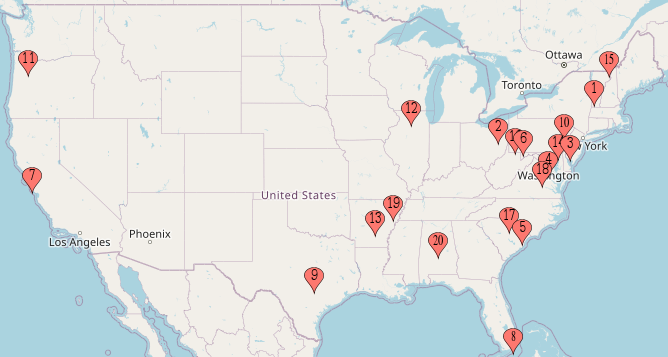
Click map to enlarge
|
|
|
|
|
&uuid=(email)) |
|
|

&uuid=(email))
Feature Your Job Here For 30 Days -
70% Aren't On The Boards
Post your job listing |
|
|
Featured Job Spotlights
Staffing
'Best in Class' Teams
Help Your Colleagues - Your Industry
- Build a
'Best in Class' Community

District Asset Protection & Safety Manager
South San Francisco
This position provides evaluation, communication, coordination, recognition, and
enforcement in the areas of safety, health, environment, and asset protection on
a district level. This position works with Stores, and Corporate management to
control inventory shrink...
|
|
Featured Jobs
To apply to any of today's Featured Jobs,
Click Here
|
|
|
|
|
 |
|
|
&uuid=(email)) |
|
|
&uuid=(email)) |
|
|
|
|
&uuid=(email)) |
|

Insight,
humor & heart from
one of LP's most trusted voices |
|
|
Feedback deserves a follow-up.
Asking for feedback and doing nothing with
it is worse than not asking at all. You don’t have to implement every
idea, but you do need to acknowledge it. Even a quick, “We heard you,
here’s why we’re not acting right now,” shows respect.
Follow this space every day to see more of
'Hedgie's Hot Takes' |
|
|

|
|
See More Events |
Recruiting?
Get your job e-mailed to
everyone... everyday
Post on our
Featured Jobs Board! |
|
|
Not getting the Daily?
Is it ending up in
your spam folder?
Please make sure to add d-ddaily@downing-downing.com to your contact list, address book, trusted sender
list, and/or company whitelist to ensure you receive our newsletter.
Want to know how?
Read Here
|
|
 |

copyright 2009-2029
all rights reserved globally |
&uuid=(email))




&uuid=(email))
&uuid=(email))
&uuid=(email))
&uuid=(email))